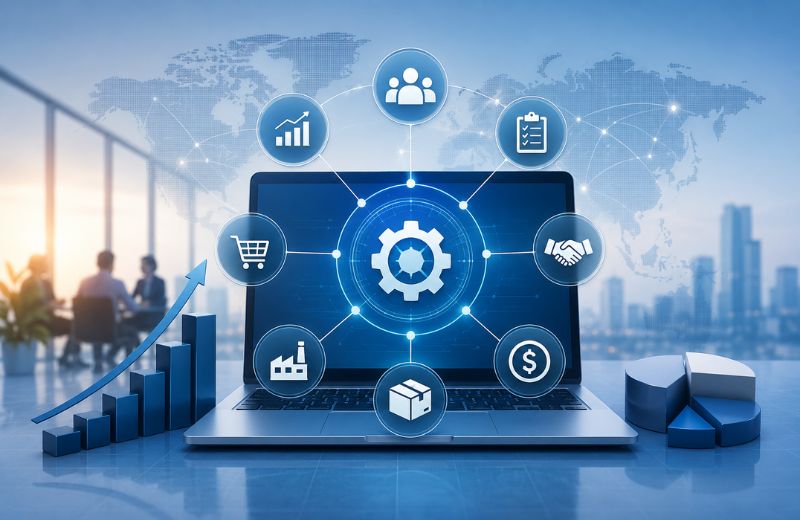

Disconnected systems, manual processes, and limited visibility can slow growth and make decision-making harder than it needs to be. Choosing the right ERP solution provider helps bring your operations, data, and teams together on a single platform, improving efficiency across the business. For Indian companies looking to scale, the right partner does more than implement software. They help create a smoother transition, stronger adoption, and long-term value from your ERP investment.
Why ERP Adoption Is Growing Rapidly in India
India’s business environment has shifted. Compliance requirements are stricter. Supply chains are more complex. Customer expectations are higher than ever before.
The Push Towards Digital Operations
More Indian companies are moving away from spreadsheets and siloed software. They want integrated systems that give real-time visibility across finance, operations, inventory, and HR. An ERP solution provider helps businesses make that shift without losing momentum or disrupting existing operations.
The growth of GST compliance, e-invoicing mandates, and MSME digitisation initiatives has further pushed ERP adoption forward. Businesses that once managed with basic accounting tools are now actively looking for something more robust. The demand is real, and it is only increasing.
What to Look for in an ERP Solution Provider
Not all providers are built the same. Some specialise in manufacturing. Others focus on retail, distribution, or services. Choosing one that understands your industry is critical.
Industry Experience and Implementation Track Record
A reliable ERP solution provider should have a proven track record in your specific sector. Ask for case studies. Ask to speak with existing clients. Understanding how they handled similar implementations tells you far more than a polished sales pitch ever will.
Also look at the size of businesses they typically serve. A provider experienced with large enterprises may not be the right fit for a growing mid-sized company that needs quicker decisions and leaner support. Match the provider to your scale, not just your aspirations.
Support after go-live matters just as much as implementation quality. Find out what their post-deployment support looks like, how quickly they respond to issues, and whether they offer training for your team.
Understanding SAP ERP Pricing Before You Commit
Cost is always part of the conversation, and rightly so. ERP investments are significant, and businesses need clarity before they commit.
Breaking Down What You Actually Pay For
SAP ERP pricing is structured around several components, including licensing, implementation, customisation, and ongoing support. Many businesses focus only on the licence cost and underestimate the total investment required. A good ERP solution provider will walk you through the full cost picture upfront, not reveal it in stages after you have already signed.
SAP ERP pricing varies depending on the number of users, the modules selected, and whether you opt for cloud-based or on-premise deployment. Cloud models typically involve a subscription fee, which can be more manageable for growing businesses. On-premise solutions may require a higher upfront investment but offer more control over data and customisation.
Always ask for a detailed breakdown. Understand what is included in the base package and what attracts additional charges. That clarity helps you plan properly and avoid budget surprises mid-implementation.
The Importance of Choosing a Local Partner With Global Expertise
Global ERP platforms work best when implemented by someone who understands local business realities.
Why Local Knowledge Makes a Real Difference
An ERP solution provider with strong India-specific expertise understands GST structures, statutory compliance, local reporting requirements, and the practical challenges Indian businesses face daily. That contextual knowledge reduces customisation time and implementation risk considerably.
Global platforms like SAP are powerful, but they need to be configured for the Indian market to deliver their full value. A provider who has done this repeatedly for Indian clients brings speed, accuracy, and confidence to the table.
Conclusion
Choosing an ERP solution provider is not simply about implementing new software. It is about finding a partner that understands your business, supports your growth, and helps you get lasting value from your investment. Take the time to assess experience, industry knowledge, support capabilities, and long-term fit. The right partnership can streamline operations, improve decision-making, and create a stronger foundation for future growth, making the selection process well worth the effort.