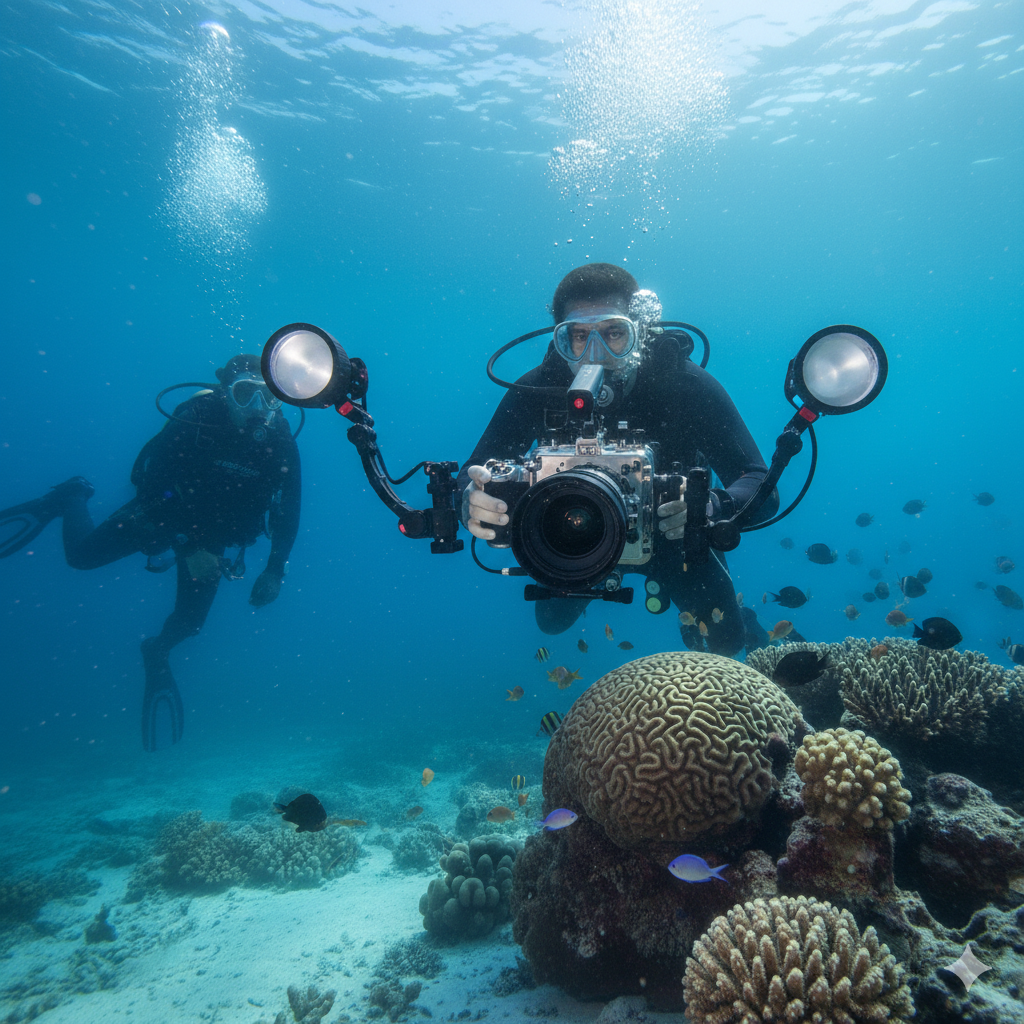

Imagine dropping down onto a pristine reef, framing up a rare manta ray, and realizing your lens has completely fogged over. Worse yet, imagine looking down and seeing a steady stream of bubbles escaping your housing door.
In underwater photography, a single shortcut taken can easily transition into a scenario where your gear gets flooded. That’s why keeping the gear safe down there deep in the blue requires a tight, methodical assembly that combines physical sealing with smart digital settings before your boots ever hit the dive boat.
So, if you also find yourself yearning to dive with total peace of mind and focus entirely on the creative side of shooting, then do not cut back on groundwork and ensure you learn exactly how to prep a camera for underwater photography.
In A Nutshell
- O-Ring Maintenance: The exact steps to pull, clean, inspect, and lubricate your primary waterproof seals.
- Defeating Fog: Using moisture-control inserts and temperature management to keep your lens completely clear.
- Pressure Verification: How to properly operate a manual vacuum pump system to guarantee water tightness.
- Internal Menu Prep: Critical settings to adjust, from focus tracking to disabling destructive internal flashes.
Prep For Perfection: Setting Up A Camera For Underwater Photography
● The O-Ring Process: Pulling, Cleaning, & Sealing the Housing Door
The main rubber O-ring is the primary defence against water intrusion, but it only works if it is completely clear of debris. To clean it, use a plastic O-ring remover tool, never a sharp metal object or knife, which can score the delicate groove. Gently pry the rubber ring out of its channel and wipe it down with a lint-free microfibre cloth.
Next, run your bare fingertips across the rubber loop to feel for invisible grains of sand, salt crystals, or hair. Once clean, apply a tiny, pea-sized drop of manufacturer-approved silicone grease, drawing the loop through your fingers until it has a slight sheen.
Avoid over-greasing, as excess grease acts like a magnet for hair and dirt, which will compromise the camera for underwater photography.
● The Fogging Defence: Eliminating Internal Humidity & Condensation
When a camera runs inside a sealed housing, its processor generates heat. When that warm air hits the cold plastic or aluminium housing shell underwater, moisture condenses on the inside of your glass lens port, completely blurring the shots.
To prevent this, always close and lock housing in a cool, low-humidity environment, such as an air-conditioned room, rather than on a hot, humid boat deck.
Slide a fresh silica gel pack or moisture-absorbing strip into the gaps between the camera and the housing wall. Make sure the pack sits flat and does not block any moving mechanical arms or dials on your camera for underwater photography.
● The Pressure Check: Verifying Seals With a Manual Vacuum Pump
Visual inspections cannot guarantee a housing is safe, which is why a vacuum leak-detection system is an absolute lifesaver. First, insert the camera and lock the main housing clips securely.
Locate the housing’s one-way valve, remove the protective cap, and attach your manual vacuum pump hand tool. Pump the handle until the internal electronic LED indicator turns from blinking red to a solid green, signaling that you have successfully pulled a negative pressure vacuum.
Leave the housing on a flat surface for 15 to 20 minutes; if the light stays green, the seals are perfectly airtight, and it is entirely safe to submerge your camera.
● The Menu Configuration: Disabling Glare & Setting Focus Modes
Before sealing the camera body away, adjust specific menu settings that are impossible to tweak once underwater. First, turn off the camera’s automatic focus-assist lamp; if left on, its beam will strike the interior wall of the lens port, creating blinding white glare across the image.
Next, switch the autofocus from single-shot to continuous or tracking mode to keep up with drifting marine life. Finally, remember to turn off any built-in pop-up flashes to avoid internal reflections, giving complete manual control over external strobes attached to your camera for underwater photography.
Conclusion
Preparing your camera for a dive is all about accuracy, patience, and not rushing decisions on the boat deck. A dirty O-ring or lack of control over internal humidity will always lead to cloudy lenses, salt-damaged electronics, and missed shots.
And when combining these physical safety procedures with a specialized optical device such as the best fluorescent light filter, you can rest assured that the system is absolutely watertight and perfectly calibrated so that you can focus solely on capturing incredible images in the deep.