
The rapid advancement of quantum computing is transforming the future of cybersecurity, creating both groundbreaking opportunities and significant security challenges for enterprises across the globe. While quantum technology promises revolutionary progress in areas such as scientific research, artificial intelligence, financial modeling, and complex data analysis, it also introduces serious risks to the cryptographic systems that currently protect modern digital infrastructure. Traditional encryption methods like RSA and Elliptic Curve Cryptography (ECC), which secure enterprise networks, banking platforms, healthcare records, cloud systems, and government communications, could eventually become vulnerable to quantum-powered cyberattacks.
As organizations continue accelerating digital transformation initiatives, the need to adopt Post-Quantum Cryptography (PQC) has become an urgent strategic priority rather than a distant future concern. Cybersecurity leaders increasingly recognize that preparing for the quantum era requires immediate planning, comprehensive risk assessment, and modernization of existing security frameworks. One of the most alarming concerns raised by experts is the emergence of “Harvest Now, Decrypt Later” attacks. In this scenario, cybercriminals collect encrypted data today with the intention of decrypting it in the future once quantum computing capabilities become sufficiently advanced.
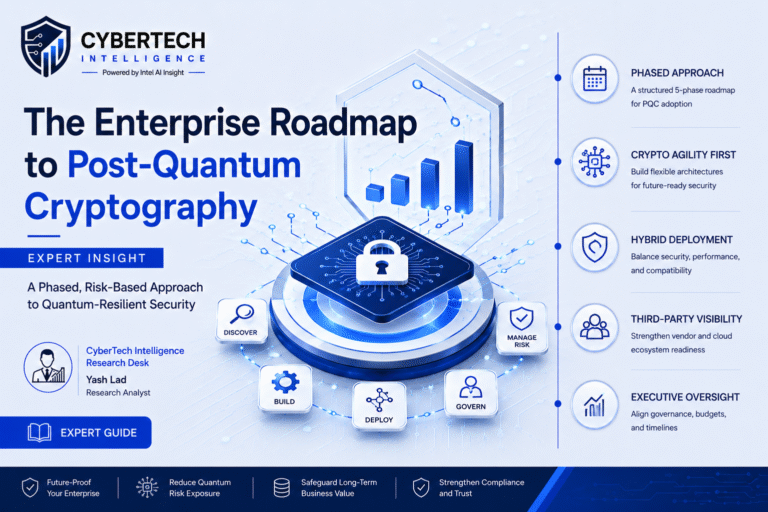
Post-Quantum Cryptography offers a forward-looking approach designed to help enterprises future-proof their security infrastructure against evolving quantum threats. A successful quantum-readiness strategy begins with evaluating current cryptographic dependencies and identifying systems that may become vulnerable in the future. Organizations must understand where encryption is used across their networks, applications, cloud environments, and communication channels in order to prioritize critical assets and prepare for secure migration.
An important component of this transition is the implementation of crypto-agility strategies. Crypto-agility enables organizations to quickly adapt and replace outdated cryptographic algorithms without causing major disruptions to business operations. By building flexible and adaptable security architectures, enterprises can respond more effectively to future technological advancements and emerging cybersecurity risks.
The transition toward quantum-safe security also requires the adoption of hybrid cryptographic models. These models combine traditional encryption techniques with quantum-resistant algorithms during the migration phase, allowing enterprises to maintain operational continuity while gradually integrating next-generation security standards. Hybrid approaches reduce risk by ensuring compatibility with existing infrastructure while simultaneously preparing systems for the post-quantum future.
In recent years, the development of NIST-approved Post-Quantum Cryptography standards has provided organizations with clearer direction for implementing quantum-resistant security measures. Businesses are now aligning their cybersecurity strategies with these evolving standards to ensure regulatory compliance and strengthen long-term resilience. As governments and regulatory bodies continue emphasizing the importance of quantum preparedness, enterprises that proactively modernize their security infrastructure will be better positioned to meet future compliance expectations.
Beyond technical implementation, quantum readiness delivers broader business advantages. Organizations that invest early in quantum-safe security measures can strengthen customer trust, reduce long-term cyber risk, and improve overall operational resilience. In an increasingly security-conscious digital economy, strong cybersecurity practices are becoming a competitive differentiator. Enterprises that demonstrate proactive protection of sensitive data are more likely to build credibility with customers, investors, and business partners.
The importance of Post-Quantum Cryptography extends across multiple industries and technologies. From protecting cloud platforms and enterprise communications to securing Internet of Things (IoT) ecosystems and critical infrastructure, quantum-safe encryption will play a crucial role in safeguarding the future digital landscape. Industries such as healthcare, finance, telecommunications, and government services are expected to be among the most heavily impacted by quantum-related cybersecurity challenges.
However, transitioning to quantum-safe security is not a one-time upgrade. It is an ongoing strategic journey that requires collaboration between cybersecurity professionals, IT teams, compliance officers, and executive leadership. Organizations must develop clear migration roadmaps, conduct continuous risk assessments, and invest in workforce awareness and cybersecurity innovation. Building adaptable security frameworks today will help enterprises remain resilient as quantum technologies continue to evolve.
Read the Full Expert Insight @ https://tinyurl.com/mr2n2crx
Contact Us
1846 E Innovation Park Dr, Suite 100, Oro Valley, AZ 85755
Phone: +1 (845) 347-8894, +91 77760 9266