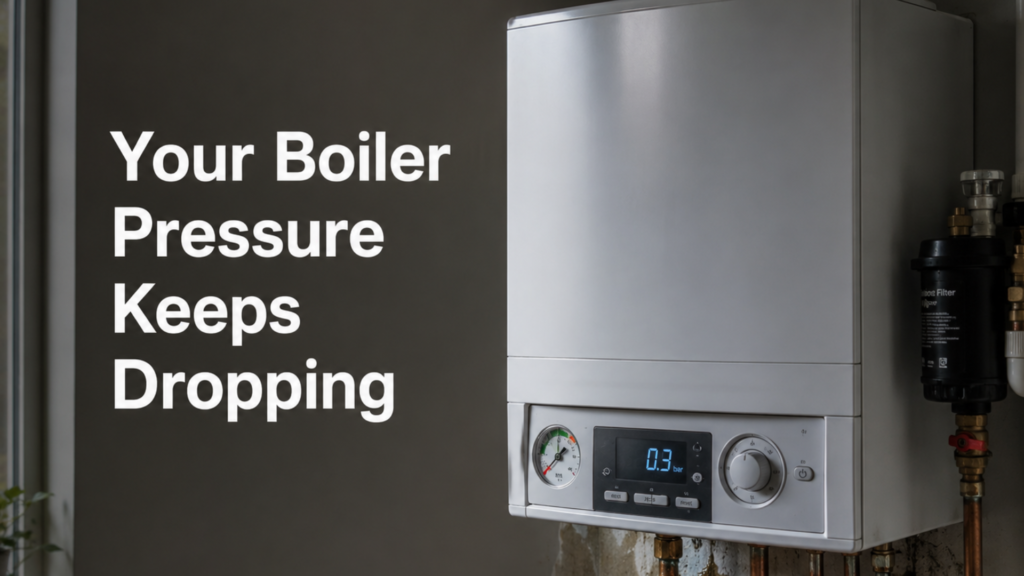

A boiler that constantly loses pressure is one of the most common warning signs of a hidden heating system leak. Many homeowners in Surrey and Rutland repeatedly top up their boiler pressure without understanding the real cause behind the problem.
While some pressure loss happens naturally over time, frequent drops usually point to a deeper issue within the heating system. Ignoring the warning signs often leads to expensive property damage, higher energy bills, and long-term heating problems.
Modern leak detection technology now allows engineers to find hidden leaks quickly and accurately without unnecessary disruption to the property. Professional investigation helps homeowners fix the root problem before it becomes a major repair project.
What Boiler Pressure Means
Most modern combi boilers operate within a sealed heating system. The system maintains pressure so hot water can circulate efficiently through radiators and pipework.
When pressure drops too low, the boiler may:
- Stop heating properly
- Display warning codes
- Shut down completely
- Require constant repressurising
A healthy boiler normally maintains stable pressure for long periods. If homeowners need to refill pressure regularly, the system likely has a hidden issue.
Common Reasons Boiler Pressure Drops
Several different problems can cause pressure loss within a heating system.
1. Hidden Central Heating Leaks
Hidden leaks are one of the most serious causes of pressure loss. Water escapes slowly from damaged pipes beneath floors, behind walls, or inside ceilings.
Because these leaks remain concealed, homeowners often do not notice them immediately.
Over time, hidden heating leaks may cause:
- Damp flooring
- Warped floorboards
- Mould growth
- Water stains
- Structural damage
Professional specialists like vortex leak detection use non-invasive technology to locate concealed heating leaks without damaging large areas of the property.
2. Faulty Pressure Relief Valve
The pressure relief valve protects the boiler from excess pressure. If the valve becomes faulty or blocked, water may escape from the system unexpectedly.
Signs of a faulty valve include:
- Water dripping outside
- Sudden pressure drops
- Boiler warning messages
3. Damaged Expansion Vessel
The expansion vessel helps regulate pressure inside the heating system. If it fails, the boiler may struggle to maintain stable pressure levels.
This issue often requires professional inspection and repair.
4. Bleeding Radiators Too Often
Removing trapped air from radiators slightly reduces system pressure. However, frequent bleeding combined with repeated pressure loss usually indicates another underlying problem.
5. Corroded Pipework
Older heating systems in Surrey and Rutland properties often contain ageing pipework that becomes vulnerable to corrosion over time.
Small cracks or weakened joints may slowly leak water beneath flooring or inside walls.
Warning Signs of a Hidden Heating Leak
Many homeowners assume pressure loss is a normal boiler issue when hidden leaks are actually responsible.
Some common warning signs include:
Damp Smells
Persistent musty smells often indicate trapped moisture beneath floors or inside walls.
Warm Patches on Floors
Leaking heating pipes sometimes create warm areas on tiles, carpets, or wooden flooring.
Increased Heating Bills
Heating systems work harder when pressure drops regularly. This often increases energy usage and monthly heating costs.
Visible Damp or Mould
Hidden leaks eventually create visible signs of moisture damage around skirting boards, ceilings, or walls.
Constant Repressurising
If the boiler needs topping up every few days or weeks, the system likely has a leak somewhere within the pipework.
Why Early Leak Detection Matters
Small heating leaks rarely stay small for long. Delaying investigation allows water damage to spread throughout the property.
Early leak detection helps prevent:
- Expensive structural repairs
- Damaged flooring
- Ceiling collapse
- Timber rot
- Mould contamination
- Boiler breakdowns
Professional leak tracing also reduces unnecessary disruption during repairs.
Modern Leak Detection Methods
Traditional plumbing investigations often involve lifting floors or breaking walls to search for leaks. Modern technology now makes the process far more accurate.
Thermal Imaging
Thermal cameras identify heat patterns caused by escaping hot water beneath surfaces.
This method works especially well for:
- Underfloor heating leaks
- Central heating pipework
- Concealed radiator pipes
Acoustic Leak Detection
Specialist acoustic equipment listens for sound frequencies created by escaping water under pressure.
Engineers use this method to locate:
- Underground leaks
- Pipe leaks beneath concrete
- Internal heating system leaks
Tracer Gas Technology
Tracer gas testing injects harmless gas into heating pipework. The gas escapes through the damaged section and becomes detectable using specialist sensors.
This method provides excellent accuracy for difficult hidden leaks.
Older Homes in Surrey & Rutland Need Extra Attention
Many homes across Surrey and Rutland feature older plumbing systems hidden beneath solid flooring or behind renovated walls.
Properties with:
- Older boilers
- Original copper pipework
- Underfloor heating
- Property extensions
- Loft conversions
often face higher risks of hidden heating leaks.
Regular inspections help prevent serious problems before they escalate.
Insurance and Leak Detection
Many insurance providers now request specialist leak detection reports before approving trace and access claims.
Professional reports usually include:
- Leak location findings
- Moisture readings
- Thermal images
- Photographic evidence
- Repair recommendations
This documentation helps homeowners support insurance claims more effectively.
How Professional Leak Detection Saves Money
Some homeowners delay investigations because they worry about costs. In reality, hidden leaks often become much more expensive when left unresolved.
Professional leak detection helps reduce:
- Water waste
- Heating inefficiency
- Repair costs
- Emergency plumbing callouts
- Property damage
Locating leaks early often prevents major renovation work later.
Homeowners who notice regular boiler pressure loss should always investigate the issue properly instead of repeatedly topping up the system.
A professional inspection from vortex leak detection services can identify the exact source of hidden heating leaks while minimising disruption to the property.
Final Thoughts
Boiler pressure should remain relatively stable within a healthy heating system. Frequent pressure loss often signals hidden leaks that require professional attention.
Homeowners across Surrey and Rutland benefit greatly from early investigation and non-invasive leak detection methods. Modern technology allows engineers to pinpoint concealed leaks accurately without unnecessary damage to floors or walls.
Addressing the issue early helps protect the property, reduce heating costs, and avoid larger repairs in the future.
Frequently Asked Questions
1. Is it normal for boiler pressure to drop slightly?
Yes. Small pressure changes over long periods are normal, but frequent pressure loss usually indicates a problem within the heating system.
2. Can hidden leaks cause boiler pressure loss?
Yes. Hidden central heating leaks are one of the most common causes of repeated pressure drops in sealed systems.
3. How do engineers find hidden heating leaks?
Specialists use thermal imaging, acoustic testing, tracer gas systems, and moisture detection equipment to locate concealed leaks accurately.
4. Can hidden heating leaks damage my home?
Yes. Hidden leaks may cause damp, mould, structural damage, flooring issues, and increased heating costs if left untreated.
5. Should I keep topping up my boiler pressure?
Repeatedly topping up pressure without fixing the underlying problem may worsen the issue. Professional investigation is always recommended.