
Introduction
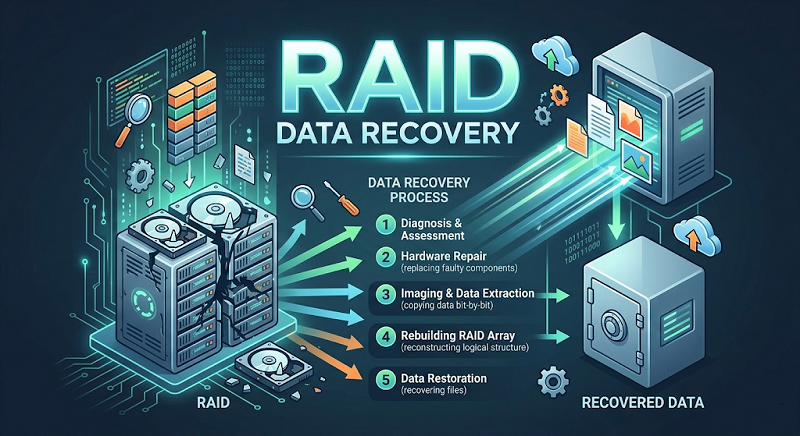
RAID (Redundant Array of Independent Disks) is a data storage technology that combines multiple physical drives into a single logical unit, providing increased performance, data redundancy, and fault tolerance. However, despite its many advantages, RAID systems are not immune to failures or data loss. In such cases, RAID data recovery becomes crucial in order to retrieve valuable information and restore the system back to its normal functionality. This comprehensive guide aims to shed light on the RAID data recovery process, explaining its importance, techniques, and best practices.
Understanding RAID Data Recovery
RAID data recovery refers to the process of extracting data from failed or damaged RAID systems. Problems such as disk failures, controller malfunctions, power issues, or accidental deletions can lead to data loss in RAID configurations. The main goal of RAID data recovery is to salvage as much data as possible from the failed array and restore it to a usable state.
Common Causes of RAID Data Loss
Disk Failures: RAID systems usually employ multiple disks to store data. If one or more disks fail, it can result in data loss across the entire array.
Controller Failures: RAID controllers manage the data distribution and redundancy across the disks. A malfunctioning or failed controller can lead to data loss or corruption.
Power Surges and Outages: Sudden power surges or outages can cause data corruption or lead to system instability, resulting in data loss.
Human Errors: Accidental data deletions or formatting errors can occur, leading to the loss of valuable information stored in the RAID array.
RAID Data Recovery Techniques
- Hardware RAID Data Recovery: In this technique, specialised hardware tools and techniques are utilized to recover data from faulty RAID systems. These tools help bypass hardware-level failures and extract the data directly from the disks.
- Software RAID Data Recovery: Software-based RAID recovery is often used when logical or software-level issues are the cause of the data loss. Specialised data recovery software is employed to repair damaged RAID configurations and recover the data.
- Remote RAID Data Recovery: In certain scenarios where physical access to the RAID system is not possible or practical, remote RAID data recovery techniques can be employed. Experts remotely connect to the system to assess the damage and recover the data.
Best Practices for RAID Data Recovery
- Immediate Action: As soon as a RAID failure is detected, it is crucial to stop using the system and avoid any attempts at DIY recovery. Further usage can potentially aggravate the issue and make data recovery more challenging.
- Professional Assistance: RAID data recovery is a complex process that requires expertise, specialised tools, and a controlled environment. It is advisable to consult professional data recovery service providers who specialise in RAID recovery.
- Proper Assessment: Data recovery expert begin by assessing the nature and severity of the RAID failure to determine the most appropriate recovery strategy. This assessment helps in understanding the type of RAID configuration, the damaged components, and the possible recovery options.
- Clean Environment: Data recovery labs maintain a clean and controlled environment to prevent contamination or further damage to the failed RAID system. Dust and other particles can adversely affect the recovery process.
Conclusion
RAID data recovery is a critical process used to retrieve lost or damaged data from RAID arrays. Understanding the causes of RAID failure, the available recovery techniques, and the importance of professional assistance can greatly improve the chances of successful data recovery. By following best practices and seeking expert help, businesses and individuals can minimise the risks associated with RAID data loss and ensure the protection of their valuable data.
Controller Failures: RAID controllers manage the data distribution and redundancy across the disks. A malfunctioning or failed controller can lead to data loss or corruption.