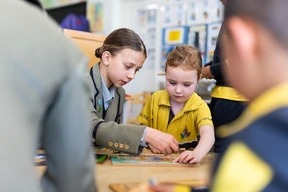

The earliest years of a child’s life play a major role in shaping how they learn, communicate, build relationships, and understand the world around them. Educational research consistently identifies early childhood as a critical period for cognitive, emotional, and social development. Because of this, the role of an early learning centre has become increasingly important in supporting strong educational foundations and lifelong learning habits.
Modern early childhood education goes beyond supervision or childcare alone. High-quality early learning environments are designed to encourage curiosity, communication, creativity, and emotional wellbeing through structured yet flexible learning experiences. Educational programs increasingly combine play, inquiry, collaboration, and intentional teaching to help children develop confidence and independence during their formative years.
At Firbank Grammar School, Early Learning Centres are integrated within the Junior School environment and designed to provide children with educational, social, and joyful learning experiences that nurture both wellbeing and school readiness.
Understanding the Role of an Early Learning Centre
An early learning centre is an educational environment created specifically for young children before formal primary schooling. Unlike traditional childcare models focused mainly on care routines, contemporary early learning centres combine nurturing support with educational frameworks that promote learning and development.
Programs often include:
- Play-based learning
- Language and communication activities
- Creative arts and movement
- Outdoor exploration
- Early literacy and numeracy experiences
- Social interaction and collaborative play
- Inquiry and problem-solving activities
The purpose is not to accelerate academic achievement prematurely but to help children develop foundational capabilities that support future learning.
Firbank’s Early Learning Centres offer flexible programs across Brighton and Sandringham campuses and are designed as part of a broader learning journey extending through later school years.
Why Early Childhood Education Is So Important
The first years of life are marked by rapid brain development. During this stage, children form connections that influence communication, emotional regulation, behaviour, and learning patterns.
High-quality early childhood education can support children in developing:
- Confidence and independence
- Social and emotional awareness
- Communication and language skills
- Creativity and imagination
- Early reasoning and problem-solving
- Physical coordination and wellbeing
Educational frameworks such as Australia’s Early Years Learning Framework emphasise the importance of Belonging, Being and Becoming as foundations for healthy child development. Firbank’s ELC philosophy aligns with these principles by recognising the importance of community, wellbeing, and individual growth.
The philosophy highlights that children learn most effectively when they feel safe, supported, and connected within their environment. This sense of belonging encourages confidence and positive engagement with learning.
Play-Based Learning and Child Development
One of the defining characteristics of contemporary early education is play-based learning. Educational experts increasingly recognise that children learn best when actively engaged in meaningful experiences rather than through rigid instruction alone.
Play-based learning allows children to:
- Explore ideas independently
- Develop imagination and creativity
- Strengthen social skills
- Build emotional resilience
- Practise communication and cooperation
- Experiment and solve problems
Firbank’s Early Learning philosophy places strong emphasis on guided and open-ended play experiences across both indoor and outdoor environments. Children are encouraged to take appropriate risks, explore interests, and develop confidence through engaging experiences that build on their existing knowledge and skills.
The school’s educational handbook further explains that children learn through play, imagination, inquiry, creativity, and social interaction. Influenced by the Reggio Emilia approach and intentional teaching practices, the program supports children as capable and sophisticated thinkers.
Inquiry Learning in Early Childhood Education
Inquiry-based learning is increasingly used in modern early education because it supports curiosity and active participation. Rather than simply memorising information, children investigate ideas, ask questions, and construct understanding through exploration.
Firbank’s Early Learning Centres are part of the International Baccalaureate Primary Years Programme (PYP), which encourages inquiry as part of the learning process.
Inquiry learning helps children:
- Ask questions confidently
- Explore and investigate ideas
- Build independence
- Develop communication skills
- Connect learning with real-life experiences
Educational discussions around inquiry learning often emphasise that children naturally seek understanding through exploration and curiosity when educators guide rather than direct every experience.
At Firbank, inquiry learning is combined with intentional teaching to ensure children receive both guidance and freedom to discover ideas in developmentally appropriate ways.
Wellbeing and Belonging in Early Learning
Emotional wellbeing is a central focus of effective early childhood education. Young children learn best when they feel secure, valued, and supported by trusted relationships.
Firbank’s philosophy highlights the importance of belonging not only for children but also for educators and families. The school recognises families as important partners in the learning journey and encourages strong community connections.
The ELC Prospectus explains that learning spaces are intentionally designed to be flexible, welcoming, and responsive to individual children’s needs and interests. Natural materials and stimulating environments encourage imagination, discovery, and environmental awareness.
Wellbeing in early learning may support:
- Positive relationships
- Emotional regulation
- Social confidence
- Security and belonging
- Stronger engagement with learning
These foundations often influence how children approach education throughout later schooling.
Preparing Children for Future Learning
An important purpose of an early learning centre is helping children transition smoothly into formal schooling. Early learning experiences introduce routines, communication expectations, and collaborative learning in age-appropriate ways.
Firbank’s Early Learning Centres benefit from being located within Junior School campuses and connected to broader school facilities including libraries, music, and sporting spaces.
This integrated environment helps children gradually build familiarity with school settings while maintaining supportive and developmentally appropriate learning experiences.
Schools increasingly recognise that school readiness is not simply about literacy or numeracy. It also involves:
- Emotional confidence
- Communication skills
- Social interaction
- Curiosity and independence
- Positive learning behaviours
Children who develop these capabilities often experience smoother educational transitions and stronger engagement with future learning.
Conclusion
An early learning centre plays an essential role in supporting children during one of the most significant stages of development. Through high-quality early childhood education, children build communication skills, emotional wellbeing, creativity, confidence, and curiosity that form the foundation for lifelong learning.
By combining play-based learning, inquiry, wellbeing, and intentional teaching, modern early learning environments help children become engaged, capable, and confident learners prepared for future educational experiences.