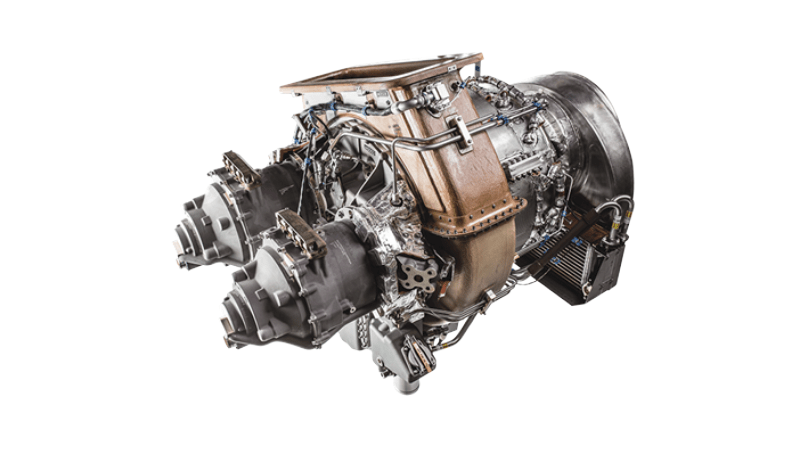

High-cycle narrowbody operations place different demands on APU assets than long-haul widebody schedules. For operators running Boeing 737 and Airbus A320 family fleets on short-haul, high-frequency routes, Honeywell auxiliary power unit maintenance planning carries specific risks that are not always reflected in how fleet teams approach the problem. The operators who manage APU costs most effectively are those who understand where the common planning errors occur and adjust their programs accordingly.
Treating Cycle Accumulation as a Calendar Problem
The first mistake is planning Honeywell APU maintenance around calendar intervals rather than actual cycle accumulation. Life-limited parts on the GTCP131 and GTCP331 series are tracked in cycles, not hours or calendar time. An operator running eight or ten flights per day accumulates cycles far faster than one running two or three. A maintenance planning model built on time-based intervals rather than cycle-based tracking will consistently underestimate how quickly a unit approaches its LLP thresholds.
The correction is straightforward: track CSN per unit against the applicable Honeywell-defined limiter values and build shop visit projections around cycle accumulation rates drawn from actual fleet data. Generic interval guidance based on industry averages is not a substitute for unit-level tracking on a high-cycle fleet.
Managing LLP Limiter Values at the Fleet Level
The second mistake is managing LLP limiter values at the fleet level rather than the unit level. Fleet-level averages obscure the variation between individual units. A fleet where the average limiter value appears healthy may contain individual units that are significantly closer to their thresholds than the average suggests. When those units reach their limits unexpectedly, the operator faces unscheduled removals that could have been anticipated with unit-level tracking.
Maintenance teams should maintain a current record of TSN, CSN, TSO, CSO, and LLP limiter status for every unit in the fleet, reviewed on a rolling basis. Units approaching their planning threshold should trigger a sourcing process, not a reactive search at the point of removal.
Starting the Sourcing Process Too Late
The third mistake is waiting until a unit is removed before beginning the sourcing process. For high-volume models like the GTCP131-9A and GTCP131-9B serving the 737 NG fleet, supply is generally broad enough that last-minute sourcing is possible, though not ideal. However, operators who enter the market under AOG pressure pay more, have less time to review documentation, and have less leverage to negotiate redelivery conditions.
The better approach is to begin sourcing when a unit’s limiter value reaches the operator’s defined planning threshold, which should be set well above the minimum acceptance value for incoming units. That gap between the planning threshold and the minimum acceptance value is the window in which the operator can source deliberately, compare options, and execute a transaction on favorable terms.
Accepting Units Without Verifying Documentation
A fourth mistake specific to high-cycle operations is accepting incoming units without fully verifying the documentation package under time pressure. When an aircraft is on the ground and the maintenance team is working against a dispatch deadline, there is pressure to install quickly and resolve paperwork later. This approach creates airworthiness exposure and frequently results in documentation disputes that take longer to resolve than the original delay would have.
Every unit accepted into service should arrive with FAA/EASA Form 8130-3, full ATA 106 ownership trace, a non-incident statement, AD compliance records, and current LLP status including CSN and remaining life. Building a documentation verification checklist into the procurement process eliminates most of these problems before the unit reaches the aircraft.
Setting a Minimum Acceptance Standard and Applying It Consistently
Some operators define a minimum LLP limiter value for incoming units but waive it under AOG pressure when the only available unit falls short of that threshold. A unit accepted below the minimum acceptance standard will require a shop visit sooner than planned, generating additional cost and ground time that offsets any short-term benefit from getting the aircraft back in service quickly.
Minimum acceptance standards exist to protect the operator’s long-term maintenance economics. Applying them consistently, even under pressure, is what separates a structured APU program from one that reacts to each event in isolation. When a unit that meets the standard is not immediately available, the right response is to broaden the supplier search, not to lower the standard. Working with a lessor who maintains direct inventory across multiple Honeywell APU models gives operators more options at that moment and reduces the frequency with which the standard comes under pressure in the first place.
Source : Honeywell Auxiliary Power Unit