The Morocco eVisa for Pakistan Citizens allows Pakistani travelers to explore Morocco for tourism purposes by applying through an online visa system, depending on eligibility conditions and supporting documents. This makes travel planning easier for those who want to visit famous destinations like Marrakech, Casablanca, and the Sahara Desert. Pakistani tourists must ensure they meet the required criteria such as a valid passport, travel itinerary, and proof of accommodation before applying.
For tourism travel, the Morocco eVisa for Pakistan Citizens helps simplify the entry process and reduces the need to visit an embassy in some eligible cases. It is mainly designed for short stays, allowing visitors to enjoy Morocco’s rich culture, historic sites, and vibrant markets. However, approval depends on individual application review, and travelers should carefully follow all instructions to ensure a smooth approval process.
Which Morocco eVisa Type Fits Your Travel Plans?
Choosing the right visa for traveling to Morocco depends on the purpose of your visit, such as tourism or business activities. Each eVisa type is designed to match specific travel needs, with clear rules on entry, stay duration, and validity to help travelers plan their trip smoothly.
Tourist eVisa: Best for leisure travel, sightseeing, cultural visits, and holidays.
No. of Entries: Single
Maximum Stay: 30 Days
Validity: 180 Days
Business eVisa: Suitable for meetings, conferences, and professional or commercial activities.
No. of Entries: Single
Maximum Stay: 30 Days
Validity: 180 Days
Purpose-based selection: Applicants must choose the visa type according to their travel reason.
Short-term visit only: Both visas are for temporary stays, not long-term residence or employment.
What Documents Are Needed to Complete the Application for Morocco eVisa ?
To apply for a visa to travel to Morocco, applicants must submit a set of essential documents that help verify identity, travel purpose, and eligibility for entry. These documents ensure the application process is smooth and meet immigration requirements for approval.
Passport bio-data page: A clear copy of your valid passport showing personal details, photo, and passport number.
Recent passport-size photo: A colored, recent photo that meets standard visa photo requirements.
Additional supporting documents (for certain nationalities only):
Option A: Valid residence permit from another country
Option B: Valid multiple-entry sticker visa from eligible countries
Extra documents for business eVisa applicants:
Invitation letter from a company in Morocco
Meeting or appointment confirmation
Proof of business cooperation or partnership
What Are the Processing Timeframes and System Turnarounds?
For travelers applying for a visa to enter Morocco, processing timeframes depend on the service level chosen during the application, allowing applicants to match approval speed with their travel plans. Standard processing usually takes 3–6 working days and is suitable for those who plan their trips in advance, while rush processing takes around 2–4 working days for more urgent travel needs, and super rush processing can be completed in just 1–2 working days for last-minute or emergency travel. These different system turnarounds help ensure flexibility, but final approval time may still vary depending on application accuracy and document verification.
How to Apply for a Morocco eVisa Online?
Applying for a visa to travel to Morocco online is a simple digital process designed to make tourism and business travel faster and more convenient. The eVisa system allows applicants to complete everything online, from form submission to receiving approval by email, without visiting an embassy.
Step 1: Fill out the online application form: Enter accurate personal details, passport information, and travel plans.
Step 2: Upload required documents: Submit a clear passport bio-data page, recent photo, and any supporting documents if needed.
Step 3: Pay the visa fee online: Complete secure payment using available online methods.
Step 4: Wait for processing: Your application is reviewed based on selected processing speed (standard, rush, or super rush).
Step 5: Receive eVisa approval: Once approved, the eVisa is sent to your email for download and use.
What Is the Sustainable Tourism Tax in Morocco?
The sustainable tourism tax in Morocco is a small mandatory fee charged to visitors staying in hotels, riads, or other registered accommodations, aimed at supporting environmental protection, cultural preservation, and the development of tourism infrastructure. This tax is usually included in the hotel bill and varies depending on the type and rating of the accommodation.
Accommodation-based charge: Applied per night in hotels, guesthouses, and riads.
Supports tourism development: Helps fund infrastructure, heritage sites, and environmental projects.
Varies by hotel category: Luxury hotels typically charge higher rates than budget accommodations.
Automatically added: Usually included in the final hotel invoice at checkout.
Not related to visa fees: It is separate from the Morocco eVisa or entry requirements.
Mandatory payment: All registered accommodations are required to collect this tax from tourists.
What Currency Is Used in Morocco for Tourists?
The main currency used for travelers in Morocco is the Moroccan Dirham (MAD), which is the official and only legal currency accepted for most transactions within the country. Tourists will need to exchange their foreign currency or use international cards to pay for goods, services, hotels, and transport during their stay.
Official currency: Moroccan Dirham (MAD) is the only legal currency used in daily transactions.
Cash usage common: Cash is widely preferred in markets, small shops, and local transport.
Card payments accepted: Credit and debit cards work in hotels, restaurants, and larger stores.
Currency exchange available: Foreign currency can be exchanged at banks, airports, and authorized exchange offices.
ATM access: ATMs are available in cities and tourist areas for withdrawing local currency.
No free use of foreign currency: USD or EUR are not generally accepted for direct payments.
Can I Carry Sports Equipment on Morocco Flights?
Yes, you can carry sports equipment when traveling to Morocco, but it depends on airline rules, baggage allowance, and the type of equipment you are bringing. Items such as bicycles, surfboards, golf bags, or ski gear are usually allowed as special or oversized baggage, but they must be declared in advance and properly packed according to airline safety guidelines. In most cases, additional charges may apply for carrying sports equipment, and some items may need to be checked in separately rather than taken as cabin baggage. It is always recommended to confirm with your airline before departure to avoid delays or extra fees at the airport.
Which Countries Are Eligible for the Morocco eVisa?
The Morocco eVisa is available only to citizens of selected countries, meaning not every nationality can apply directly. Eligibility is based on government-approved lists and may also depend on holding valid visas or residence permits from certain regions. Travelers should always confirm their status before starting the application process.
Selected nationalities only: The Morocco eVisa is issued to citizens of specific approved countries, not all global travelers.
Eligibility list varies: The list of eligible countries can change based on immigration policy updates.
Visa or residence-based eligibility: Some travelers may qualify if they hold a valid visa or residence permit from countries like the US, UK, Schengen Area, Canada, or Australia.
Passport requirement: Applicants must have a valid passport with sufficient validity (usually at least 6 months).
Travel purpose matters: Eligibility may differ for tourism, business, or transit purposes.
Supporting documents required: Even eligible applicants must provide travel details, accommodation proof, and financial documents.
Not all African or Asian countries are included: Many nationalities still require a traditional embassy visa instead of an eVisa.
Final approval is case-based: Meeting eligibility does not guarantee approval; each application is reviewed individually.
What Happens if I Overstay My Morocco eVisa?
Overstaying your allowed time in Morocco under an eVisa can lead to penalties, travel restrictions, and complications during departure. Immigration authorities strictly monitor entry and exit dates, and even a short overstay may be recorded in your travel history, which can affect future visits.
Fines may apply: You may be required to pay a penalty before leaving the country.
Immigration questioning: Officers may ask for reasons and review your travel record at exit.
Travel record impact: Overstaying is recorded and may affect future visa approvals.
Risk of entry ban: Serious or repeated overstays can lead to temporary or long-term bans.
Delay at departure: You may experience delays at the airport while clearing immigration issues.
Future application issues: It may reduce your chances of getting a Morocco visa again.
What Are the Top Tourist Places in Morocco?
The country offers an incredible mix of natural landscapes, ancient architecture, and vibrant urban centers that provide memorable travel experiences for international visitors.
Marrakech: A vibrant city centered around the historic Jemaa el-Fnaa square, where traditional storytellers, local food stalls, and bustling spice markets create an unforgettable atmosphere.
Fes: Home to Fes el Bali, one of the oldest and most extensive preserved medieval urban centers in the world, featuring intricate tilework and historic open-air leather tanneries.
Chefchaouen: A striking, peaceful town nestled in the Rif Mountains, famous for its beautifully washed, bright blue residential alleyways and quiet mountain backdrop.
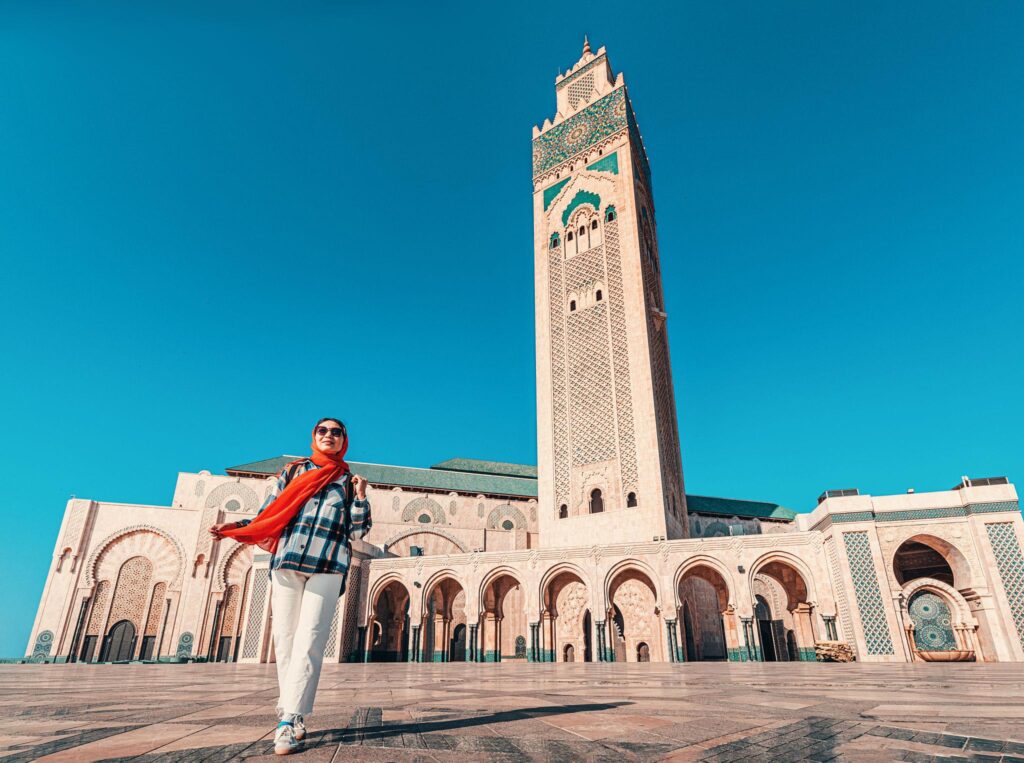
Casablanca: A modern coastal commercial hub home to the magnificent Hassan II Mosque, showcasing exceptional craftsmanship right on the edge of the Atlantic Ocean.
The Sahara Desert: A stunning landscape where travelers can take camel treks across the golden dunes of Merzouga and spend nights under the stars in traditional desert camps.
Can I Shop Duty-Free in Morocco Without a Passport?
To shop duty-free while traveling through Morocco, you are required to present your original physical passport, as it is used to verify your identity and confirm that you are a departing international traveler. Duty-free purchases are strictly linked to your passport details and flight information, which allows the tax exemption to be applied legally.
Passport required: A physical passport is mandatory for all duty-free purchases.
No photocopies accepted: Digital copies or photocopies are not valid for tax-free shopping.
Linked to travel details: Purchases are recorded with your passport number and flight itinerary.
Proof of departure: Duty-free items are only allowed for passengers exiting the country.
Tax exemption condition: Goods must be exported out of Morocco to qualify for duty-free benefits.
Airport verification: Shops at airports verify documents before completing transactions.
How Much Luggage Is Allowed for Morocco eVisa Travelers?
Travelers entering Morocco with an eVisa follow the same airline baggage rules as other international passengers. The luggage allowance is not fixed by the eVisa itself but depends on your airline, ticket class, and travel route. However, there are general standards and travel guidelines you can keep in mind before flying.
No eVisa-specific baggage limit: The Morocco eVisa does not set or change luggage allowance rules.
Airline rules apply: Each airline determines checked and cabin baggage limits based on your ticket type (economy, business, etc.).
Standard checked baggage: Most airlines allow around 20–30 kg for economy class checked luggage on international flights.
Cabin baggage allowance: Usually 7–10 kg of hand luggage is permitted, along with a small personal item.
Budget airlines may charge extra: Low-cost carriers often have stricter baggage limits and additional fees for extra weight.
Connecting flights matter: If you have layovers, the strictest airline in your itinerary may apply baggage rules.
Excess baggage fees: Any luggage above the allowed limit is charged per kilogram at airport check-in.
Special items rules: Sports equipment, baby items, or fragile goods may require separate handling or additional fees.
Can I Get a Refund if I Cancel My Morocco eVisa Application?
Refund policies for a Morocco eVisa depend on the stage of your application and the processing rules set by the issuing authority. In most cases, once payment is made and the application is submitted, refunds are limited or not available. It is important to understand the cancellation and refund conditions before applying.
Non-refundable application fee: In most cases, the Morocco eVisa fee is non-refundable once payment is completed, even if you cancel later.
Before submission cancellation: If you cancel before submitting your application, some systems may allow stopping the process, but payment refund is still usually not guaranteed.
Rejected applications: If your eVisa is refused, the processing fee is typically not refunded.
Duplicate payments: Refunds may be possible only in cases of technical errors or double payment.
Processing stage matters: Once the application is under review, cancellation options are very limited.
Bank processing time: If a refund is approved (rare cases), it may take several business days to reflect in your account.
Check policy before applying: Always review the official terms and conditions before paying the fee to avoid losses.
Conclusion:
Securing a Morocco Short Stay eVisa offers a reliable and convenient path for Pakistani nationals to explore this remarkable North African country. By organizing your required documents in advance, especially your valid passport and required third-country residence permits or multiple-entry visas, you can ensure a smooth, worry-free application process. Selecting the ideal processing option for your timeline allows you to focus on planning your itinerary, managing your local currency needs, and preparing for the distinct cultural traditions awaiting you. Navigating these clear entry requirements sets the stage for an extraordinary journey filled with vibrant markets, stunning landscapes, and historic discoveries.