
Walking better After Knee Replacement Surgery is one of the biggest goals for patients. Many people undergo knee replacement because pain, stiffness, and arthritis have made walking difficult for years. After surgery, the journey shifts from pain relief to movement recovery.
For patients in Greater Noida, the right orthopedic care, physiotherapy plan, and home habits can help improve mobility in a safe way. When people search for the Best Hospital in Greater Noida, they should look for a place that supports the complete recovery journey, not just the surgical procedure.
See Recovery as a Step-by-Step Process
Knee replacement recovery happens in phases. The early phase focuses on safe movement, swelling control, and basic walking. The next phase improves knee bending, straightening, and muscle strength. Later, patients work on balance, stairs, endurance, and daily independence.
Expecting instant mobility can create frustration. A better approach is to set small goals: standing safely, walking to the bathroom, bending a little more, climbing a step, or walking outside with support.
Small improvements add up over time.
Begin With Confidence, Not Fear
Fear is common after surgery. Patients may worry about pain, falling, or damaging the new knee. This fear can make them move less, which may increase stiffness.
Guided movement helps build confidence. A physiotherapist can teach how to stand, sit, walk, turn, and use support safely. Family members should encourage movement but avoid forcing the patient.
Confidence grows when the patient feels safe.
Use Walking Aids Correctly
Walkers, crutches, and sticks are not signs of weakness. They are tools for safe recovery. Using them properly can protect the knee and reduce fall risk.
Patients should not stop using support too early. Walking without support before balance and strength return may lead to limping or strain. The decision to reduce walking support should be made with the doctor or physiotherapist.
Correct height and correct technique are important.
Make Physiotherapy a Daily Priority
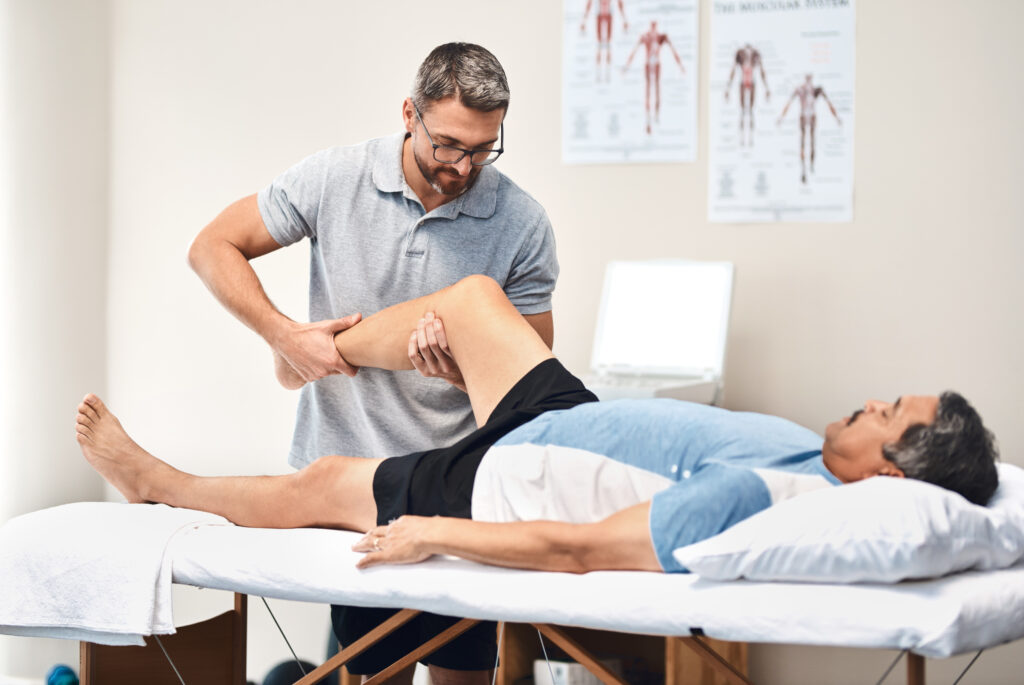
Physiotherapy is one of the strongest foundations of mobility recovery. It improves flexibility, strengthens muscles, reduces stiffness, and trains the body to walk correctly.
Patients may be asked to do simple exercises several times a day. These may include ankle movements, thigh tightening, knee bending, straight leg raises, and supported walking.
The most important thing is consistency. Missing exercises repeatedly can slow progress. Doing too much can increase swelling. A balanced plan is best.
Keep the Knee Moving Gently
After surgery, stiffness can develop if the knee is kept still for long periods. Gentle movement helps maintain flexibility. Patients should change positions and walk short distances as advised.
Long sitting can make the knee feel tight. Instead of sitting for hours, patients can take small movement breaks. Even a few minutes of safe walking may help reduce stiffness.
Work on Muscle Strength Beyond the Knee
Better walking depends on more than the knee joint. The thigh muscles, hips, calves, and lower back all support movement. When these muscles are weak, the patient may feel unstable.
Strengthening exercises help patients stand from a chair, climb stairs, and walk longer distances. These should be started gradually and under guidance.
A hospital recognized as the Best Orthopedic Hospital in Greater Noida should focus on functional recovery, not only pain relief.
Learn Safe Sitting and Standing
Many patients struggle with getting up from a chair after knee replacement. This daily movement needs strength, balance, and proper technique.
A firm chair with armrests is better than a low sofa. Patients should place the operated leg carefully, use their arms for support, and stand slowly. Sudden twisting should be avoided.
Practicing this movement safely improves independence at home.
Take Stairs With Care
Stairs require more control than flat walking. Patients should start stair practice only when advised. Handrails are necessary in the beginning.
Going step by step is safer than rushing. If there is pain, weakness, or fear, stair practice should be supervised.
As strength improves, stair climbing becomes easier and more natural.
Control Swelling to Improve Movement
Swelling can limit bending and make the knee feel heavy. Elevation, rest breaks, medicines, and cold therapy may be advised by the doctor.
Patients should avoid standing for too long in the early phase. If swelling increases after activity, the routine may need adjustment.
Sudden severe swelling, wound problems, fever, or unusual pain should not be ignored.
Choose Comfortable Footwear
Footwear affects walking quality. Slippery footwear can increase fall risk. Very soft or unstable footwear may reduce balance.
Patients should use comfortable shoes with good grip. Walking barefoot on slippery floors should be avoided, especially during early recovery.
Create a Safe Walking Space at Home
Home safety is a major part of mobility recovery. Clear walking areas, remove loose mats, improve lighting, and keep essential items nearby.
Bathrooms should be made safer with anti-slip mats and support if needed. Patients should avoid wet floors and sudden turns.
A safe environment encourages regular movement.
Stay Connected With Your Doctor
Follow-up visits help monitor recovery. The doctor can check wound healing, pain level, knee movement, and walking progress. Physiotherapy plans may also change as the patient improves.
Patients should not compare their recovery with others. Age, health condition, muscle strength, and pre-surgery mobility all affect progress.
Greater Noida Patients Need Complete Orthopedic Care
For people looking for the Best Hospital in Greater Noida, complete care should include diagnosis, surgery, rehabilitation support, and follow-up. Prakash Hospital focuses on patient-centered orthopedic care with attention to recovery and mobility improvement.
Patients searching for the Best Orthopedic Hospital in Greater Noida should choose a team that explains the recovery plan clearly and supports patients after discharge.
Conclusion
Improving mobility After Knee Replacement Surgery takes time, effort, and expert guidance. Walking aids, physiotherapy, home safety, swelling control, and strengthening all play an important role.
With regular practice and the right medical support, patients can gradually walk better, move more confidently, and return to daily activities with greater independence.