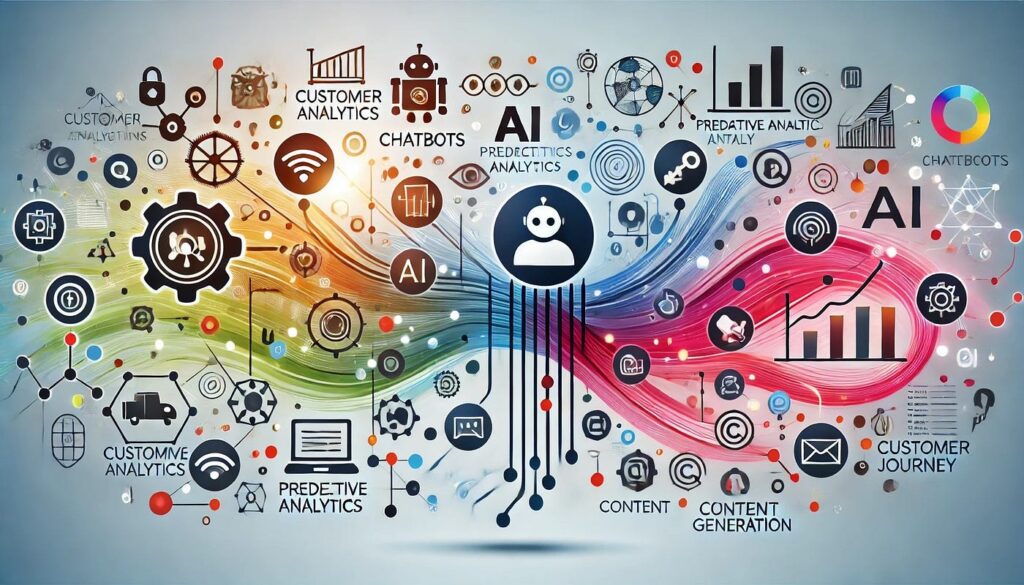

Today’s buyer journey has become a circular path rather than a linear one. From websites to social media, search engines, review platforms, emails, chats, and mobile apps—customers compare brands here before they make a purchase decision. As a result, businesses have incorporated generative AI customer experience strategies to know more about the customers and to provide more meaningful interactions at every touchpoint.
Personalization is no longer optional. According to McKinsey, 71% of consumers expect companies to deliver personalized interactions, and 76% are frustrated when this does not happen. This indicates that customer data goes beyond marketing. Trust, engagement, and revenue growth hinge on it.
What Is Generative AI Customer Experience?
The generative AI customer experience is all about how to nurture, improve, and personalize every single interaction with the customer using generative ai tools. They disciplined customer data, detected trends, and created helpful content like product recommendations, email replies, chatbot responses, support summaries, or custom-tailored offers.
Instead of showing the same message to every customer, machines with artificial intelligence can recognize what might be the next need for each buyer. For instance, an online store can tailor recommendations by leveraging browsing history, previous purchases, location, and funded and abandoned cart behavior.
Why Customer Data Matters in the Buyer Journey
Businesses rely on customer data for better understanding of intent. It indicates without any doubt what people look for, click on, leave from, and purchase. Leveraged properly, this data serves to enhance customer experience throughout the entire journey.
Examples of some main types of customer data:
- Website visits and page behavior
- Purchase history and order value
- Email opens and clicks
- Search queries and product views
- Chatbot and support conversations
- Customer reviews and feedback
- Loyalty program activity
This is where generative AI transforms the data into insights ready to be put into practice. The more advanced systems can help brands understand if one is browsing, comparing, ready to purchase, or likely to churn.
How AI Personalizes Each Stage of the Buyer Journey
Awareness Stage
At the awareness stage, customers are learning about a problem or need. AI is great for businesses looking to produce supportive blog content, posts on social media & ads, or search-optimized and customer-intent-focused answers.
As an example, a travel business could target users looking for family-friendly hotels by tapping their AI customer data and presenting destination guides to these users as opposed to general promotions.
Consideration Stage
During consideration, customers compare options. Using generative AI, every product recommendation, comparison page, FAQ, or email sequence can be tailored to each visitor.
This is where AI customer experience trends to hyper-personalize. AI personalization is described by IBM as a method for personalizing customer experiences in near-real time across multiple channels based on behavior.
Purchase Stage
The purchase phase is ripe for AI to eliminate friction. You can provide intelligent chat support, respond to a product inquiry, offer related deals, and remind customers of items left in their cart.
For instance, a customer who abandons a checkout page might see a custom message highlighting product advantages and shipping & payment options. It seems less embarrassing than just having a general reminder.
Post-Purchase Stage
AI can increase retention post-purchase. It can push care instructions, reorder reminders, loyalty rewards, review requests, and personalized recommendations for an upgrade.
Strong post-sale personalization ensures that no one feels neglected after the sale.
Benefits of Using AI Customer Data
From the data, businesses that have started using generative ai customer experience strategies can be rewarded in several ways:
- Better customer engagement through relevant messaging
- Faster support through AI-powered chat and summaries
- Higher conversion rates from personalized recommendations
- Improved customer loyalty through timely follow-ups
- Smarter marketing decisions based on real behavior
- Lower support workload for repetitive customer questions
According to the 2024 global AI survey from McKinsey, The share of surveyed companies that reported regular use of generative AI in their organizations increased nearly twofold over the previous ten months (from 33 percent to 65 percent). It is an indicator of how rapidly AI is embedding into the operations of business and customer engagement.
Best Practices for Responsible Personalization
AI personalization is more effective when it comes across as a help rather than an invasion. Take care with customer data businesses need to use transparently
Important practices include:
- Limit the data collected to only what is necessary for providing useful personalization
- Gradient better customer consent and privacy
- Avoid overly aggressive targeting
- Manual review of AI messages before fully automated
- For complex matters, keep human check support around
- Customer profiling based on the way they act
- Responsible customer data use: IBM also points to hyper-personalized interactions, proactive engagement and omnichannel integration as top customer experience trends.
Conclusion
Personalization of the buyer Journey with AI customer data shifts businesses from generic communication to real and meaningful customer experiences. Get it right, and generative ai customer experience can turbocharge content, drive smarter recommendations, expedite service, and build loyalty.
The best brands will not utilize and automate AI to send messaging. They will use it to gain clearer insights into customers and serve them more mindfully. Ai Customer Experience trends you should adoptThe way ai continues to develop rapidly, companies that blend data, personalities and literacy with human touch will be well better off for earning the respect trust and long-term growth.