
Shipping is one of the most important parts of running a successful online store. A customer may love your product, trust your website, and feel ready to buy, but if the delivery experience feels slow, expensive, or confusing, they may leave before completing the order. This is why ecommerce shipping solutions are no longer just a backend operation. They directly affect sales, customer satisfaction, repeat purchases, and brand reputation.
For online businesses, shipping is more than moving a package from one place to another. It includes order processing, carrier selection, delivery speed, tracking, returns, packaging, cost control, and customer communication. A strong shipping system helps ecommerce brands deliver products faster, reduce mistakes, save money, and create a smoother shopping experience.
Whether you run a small online shop or a growing ecommerce brand, choosing the right ecommerce shipping solutions can help you compete with larger companies and meet modern customer expectations.
What Are Ecommerce Shipping Solutions?
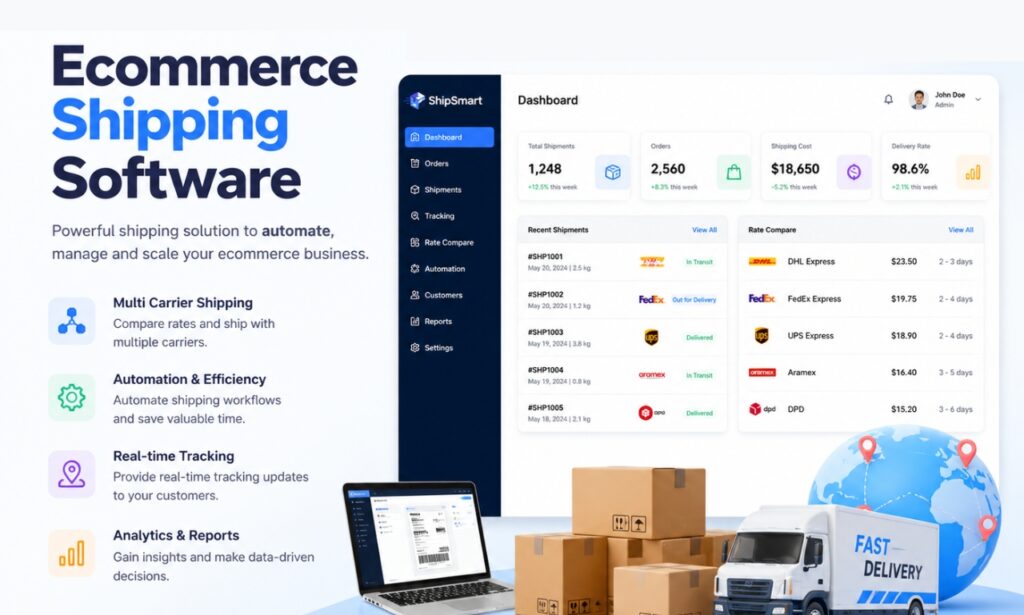
Ecommerce shipping solutions are tools, systems, and services that help online businesses manage the complete shipping process. They help store owners calculate shipping rates, print labels, connect with carriers, track packages, manage returns, and keep customers updated about their orders.
Instead of handling every shipping task manually, ecommerce businesses can use shipping software or integrated platforms to make the process easier and more accurate. These solutions often connect with online stores built on platforms such as Shopify, WooCommerce, Magento, BigCommerce, or custom ecommerce websites. Once an order is placed, the shipping solution can automatically pull the order details, suggest the best shipping option, generate a label, and provide tracking information.
The goal is simple: make shipping faster, more reliable, and less stressful for both the business and the customer. Good ecommerce shipping solutions help reduce manual work, avoid costly errors, and give customers a better post-purchase experience.
Why Ecommerce Shipping Matters for Online Stores
Shipping plays a major role in how customers judge an ecommerce brand. Many shoppers expect fast delivery, affordable rates, clear tracking, and easy returns. If a business cannot meet these expectations, customers may choose a competitor.
One of the biggest reasons shipping matters is cart abandonment. Customers often leave a website when they see high shipping costs at checkout. Even if the product price is attractive, unexpected delivery fees can make the total cost feel too expensive. A smart ecommerce shipping strategy helps businesses show accurate rates, offer free shipping when possible, and create pricing options that feel fair to the customer.
Shipping also affects customer trust. When buyers receive their order on time and in good condition, they are more likely to buy again. On the other hand, delayed shipments, poor tracking, damaged packages, or complicated returns can damage the customer relationship. In ecommerce, the delivery experience is part of the product experience.
For growing brands, shipping also affects profit margins. If shipping costs are not managed properly, they can reduce profit quickly. The right shipping solution helps businesses compare carrier rates, choose cost-effective services, and avoid overpaying for delivery.
Key Features of Effective Ecommerce Shipping Solutions
A good ecommerce shipping solution should make daily operations easier while improving accuracy and customer experience. One important feature is real-time shipping rate calculation. This allows customers to see accurate delivery costs during checkout based on product weight, size, destination, and shipping method.
Another important feature is carrier integration. Most ecommerce businesses work with multiple shipping carriers such as USPS, UPS, FedEx, DHL, or local delivery services. A shipping solution should allow businesses to compare different carriers and select the best option based on speed, cost, and reliability.
Automated label printing is also very useful. Instead of manually entering customer addresses and package details, shipping software can generate labels directly from order data. This saves time and reduces human errors.
Order tracking is another must-have feature. Customers want to know where their package is and when it will arrive. A strong shipping solution automatically sends tracking updates by email or SMS, helping customers feel informed and reducing support questions.
Return management is also important. Ecommerce returns are common, especially in fashion, electronics, beauty, and lifestyle products. A shipping solution with easy return label generation and return tracking can make the process smoother for both the customer and the business.
Types of Ecommerce Shipping Solutions
There are different types of ecommerce shipping solutions, and the right choice depends on the size, budget, and goals of the business. Some businesses use simple shipping plugins that connect directly to their ecommerce platform. These are useful for small stores that only need basic label printing, rate calculation, and tracking features.
Shipping software platforms are more advanced. They allow businesses to manage orders from multiple sales channels, compare carrier rates, automate shipping rules, and handle bulk label printing. This type of solution is helpful for brands selling across their website, Amazon, eBay, Etsy, Walmart Marketplace, or social commerce platforms.
Third-party logistics providers, also known as 3PL companies, offer a more complete solution. They store inventory, pick and pack orders, ship products, and sometimes handle returns. This is a strong option for businesses that want to outsource fulfillment instead of managing warehouses and shipping operations themselves.
Some larger ecommerce brands use custom shipping systems. These are built specifically for their business model and may include advanced automation, warehouse management, inventory syncing, and international shipping support. While custom systems can be powerful, they usually require a higher budget and technical support.
How Ecommerce Shipping Solutions Improve Customer Experience
Customer experience does not end after someone clicks the buy button. In many cases, the shipping experience determines whether a customer feels satisfied with the purchase. A well-planned ecommerce shipping solution helps create a smooth experience from checkout to delivery.
Clear shipping options give customers confidence. Some buyers want the cheapest option, while others need fast delivery. When an online store offers multiple choices, customers feel more in control. For example, a store may offer standard shipping, express shipping, local delivery, and free shipping above a certain order value.
Fast and accurate tracking also improves customer satisfaction. Customers do not want to guess where their order is. Automated tracking updates reduce anxiety and make the delivery process feel transparent. This also reduces the number of customer service messages asking about order status.
Professional packaging and reliable delivery also support brand image. A damaged or late package can make even a great product feel disappointing. Ecommerce shipping solutions help reduce these risks by improving order accuracy, carrier selection, and fulfillment speed.
Returns are another major part of customer experience. A simple return process can increase trust, especially for first-time buyers. When customers know they can return a product easily, they feel safer making a purchase.
Choosing the Right Ecommerce Shipping Solution
Choosing the right ecommerce shipping solution depends on your business needs. A small store with a limited number of orders may not need a complex system. A simple platform integration or shipping plugin may be enough. But as order volume grows, manual shipping becomes harder to manage. At that point, a more advanced solution can save time and reduce mistakes.
The first thing to consider is your order volume. If you ship only a few orders per week, basic tools may work well. If you ship dozens or hundreds of orders per day, you need automation, bulk label printing, and stronger carrier management.
The second factor is your sales channels. If you sell only through one website, your needs are simpler. But if you sell on multiple platforms, you need a solution that can bring all orders into one dashboard. This helps avoid confusion and keeps fulfillment organized.
Shipping destinations also matter. Domestic shipping is usually easier to manage than international shipping. If you sell worldwide, you need features such as customs forms, international carrier support, duty and tax handling, and delivery estimate tools.
Cost is another key factor. The cheapest solution is not always the best. You should compare monthly fees, transaction fees, carrier discounts, automation features, and support quality. A slightly higher-cost solution may save more money in the long run if it reduces errors and improves efficiency.
Ecommerce Shipping Strategies That Help Increase Sales
A good shipping solution works best when it is supported by a smart shipping strategy. One of the most popular strategies is free shipping. Customers love free shipping, but businesses must use it carefully. Instead of offering free shipping on every order, many stores set a minimum order value. For example, “Free shipping on orders over $75” can increase average order value while still protecting profit margins.
Flat-rate shipping is another useful strategy. It gives customers a simple and predictable shipping cost. This works well when products have similar sizes and weights. It also makes checkout easier because customers do not feel surprised by changing delivery fees.
Real-time carrier rates are useful for stores with products of different sizes or delivery locations. This allows customers to pay the actual shipping cost based on their order details. It can be fair and accurate, especially for heavier products.
Local delivery and pickup options can also improve sales for businesses serving specific cities or regions. These options can reduce shipping costs and give nearby customers faster access to products.
Another smart strategy is clear shipping communication. Customers should know delivery times, processing times, return rules, and shipping costs before they place an order. When shipping information is easy to understand, customers are more likely to trust the store.
Common Ecommerce Shipping Mistakes to Avoid
Many online stores lose money or customers because of simple shipping mistakes. One common mistake is hiding shipping costs until the final checkout step. This can frustrate customers and lead to abandoned carts. It is better to provide shipping information early and clearly.
Another mistake is offering free shipping without calculating profit margins. Free shipping can increase conversions, but it can also reduce profits if not planned correctly. Businesses should consider product cost, packaging cost, carrier fees, and average order value before offering free delivery.
Poor packaging is another issue. If products arrive damaged, customers may request refunds, leave negative reviews, or avoid buying again. Good packaging protects the product and supports a professional brand image.
Slow fulfillment can also hurt the customer experience. Even if the carrier is fast, delays in processing orders can make delivery feel slow. Ecommerce shipping solutions can help by automating order processing and reducing handling time.
A lack of tracking updates is another common problem. Customers expect order visibility. Without tracking, they may contact support frequently or feel unsure about their purchase. Automated tracking updates solve this issue and create a better experience.
The Future of Ecommerce Shipping Solutions
Ecommerce shipping is becoming more advanced as customer expectations continue to grow. Fast delivery, flexible shipping options, real-time tracking, and easy returns are now standard expectations in many markets. Businesses that want to stay competitive need shipping systems that can support speed, accuracy, and transparency.
Automation will continue to play a bigger role. More ecommerce brands will use shipping software to automate carrier selection, label printing, tracking updates, inventory syncing, and return processing. This will help businesses reduce manual work and focus more on growth.
Sustainability is also becoming more important. Many customers care about eco-friendly packaging, lower-emission shipping options, and responsible fulfillment practices. Ecommerce businesses may need to consider recyclable materials, right-sized packaging, and greener delivery options.
International ecommerce will also continue to expand. Brands that want to sell globally need shipping solutions that simplify customs, duties, taxes, and cross-border tracking. A strong international shipping setup can help businesses reach new customers without creating operational confusion.
In the future, the best ecommerce shipping solutions will not only move packages. They will help brands improve customer loyalty, protect profits, and create a better buying experience from start to finish.
Final Thoughts
Ecommerce shipping solutions are essential for any online business that wants to grow. They help simplify order fulfillment, reduce errors, control costs, improve delivery speed, and keep customers informed. More importantly, they turn shipping from a stressful backend task into a powerful part of the customer experience.
The right shipping solution depends on your business size, order volume, sales channels, delivery locations, and customer expectations. A small store may start with basic shipping tools, while a growing brand may need advanced software or a third-party fulfillment partner. What matters most is building a system that is reliable, clear, and scalable.
When ecommerce shipping is done well, customers receive their orders on time, trust the brand more, and feel confident buying again. That is why investing in the right ecommerce shipping solutions is not just an operational decision. It is a growth decision.