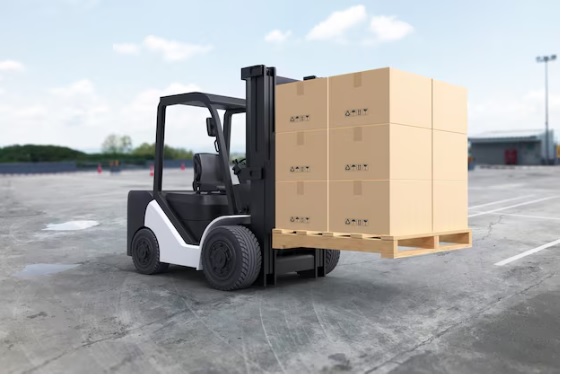

Nowadays, warehouse activities must operate rapidly, efficiently, and accurately at all times. Some warehouses depend on manually operated forklifts, thus making their operations slow, inefficient, and even posing a threat to the safety of the workers. With increasing demands, it becomes increasingly difficult for warehouses that have not evolved from such practices to scale efficiently.
This is where an autonomous forklift proves its worth. It helps warehouses automate the transport of pallets, enhance efficiency, and minimise dependence on human labour. Autonomous forklifts are engineered to work constantly, choose optimised paths, and accommodate changes in the layout of warehouses. As companies strive to build more efficient systems, autonomous forklifts have emerged as crucial components to improve productivity and safety in workflow management.
Enabling Smarter Material Movement with Autonomous Forklifts
An autonomous forklift contributes to achieving a more organised material flow in the warehouse environment. Rather than depending on human operators to drive the machinery, they travel along defined routes and perform their duties accurately, ensuring the timely transportation of pallets to the appropriate destination.
Such consistency results in better coordination among the inbound, storage, and outbound activities. Furthermore, it eliminates idle time since the forklifts are constantly busy carrying out their assigned duties. Consequently, greater efficiency is achieved in terms of optimal resource utilisation while the operations stay smooth. This is beneficial for warehouses since it eliminates interruptions and brings stability into the process.
Improving Decision-Making and Operational Control
Smart operations in warehouses are not only based on automation but also depend on the quality of decision-making. An autonomous forklift can help achieve this because of its ability to offer continuous and reliable data, along with controlled execution of material handling tasks.
As all movements are tracked through digital systems, there will be improved visibility of activities. It becomes much simpler for employees to plan, allocate resources, and make quick adjustments based on facts rather than assumptions. Improved coordination among different functions will lead to greater control and more efficient use of both machinery and labour.
Strengthening Workflow Visibility and Control
The primary strength of using autonomous forklifts in a warehouse is the high degree of control it brings to operations within the facility. Each operation can be assigned in advance, with managers being able to observe the progress of operations in real-time.
Visibility makes it easy to coordinate activities across all different functions. The transportation of the pallets can be coordinated with the subsequent process stages, such as picking and sorting, without any delay. This can even be done when the forklift is integrated with other systems, such as an auto sorting system, where its main function would still be effective transportation without interrupting the operational flow.
Operational Benefits at Scale
As the warehouse expands, ensuring efficiency becomes difficult. This is where the autonomous forklift comes in handy, as it helps the warehouse scale without making things difficult or complicated.
- Continuous operation without fatigue improves productivity across shifts
- Reduced manual dependency helps manage labor shortages effectively
- Optimised routes minimise congestion and improve flow inside the facility
- Consistent handling reduces product damage and operational errors
With these advantages, the warehouse can expand its capacity without compromising on its performance metrics. Eventually, this ensures proper cost management and reliable performance even during peak business periods.
How Addverb Enables Smarter Warehouse Operations with Autonomous Forklifts
Addverb provides an advanced autonomous forklift, FlowT, designed to improve material movement across warehouse environments. FlowT is built to handle repetitive pallet transport tasks, handling a payload of 1000-2000 Kg at a speed of 1.5 m/s while maintaining high levels of safety, precision, and operational consistency.
The solutions provided by Addverb fit seamlessly into any existing warehousing process to create improved synchronisation between all phases of the operation. Although these solutions may be used alongside other solutions like an auto sorting system, the emphasis is placed on making sure that the flow of pallets is managed efficiently. This solution helps warehouses establish smart operations by improving efficiency and automating processes.
Conclusion
Moving towards smarter warehouse operations requires improvement in the movement of goods within the warehouse environment. The autonomous forklift forms the cornerstone of this evolution through introducing consistency, transparency, and efficiency into the process of pallet handling at various stages of operation.
Through minimising reliance on manual labour and facilitating scalability in workflows, such systems ensure that the warehouses function effectively and adapt to varying requirements. The autonomous forklift offered by Addverb aids this process by enabling automated, sustainable operations.