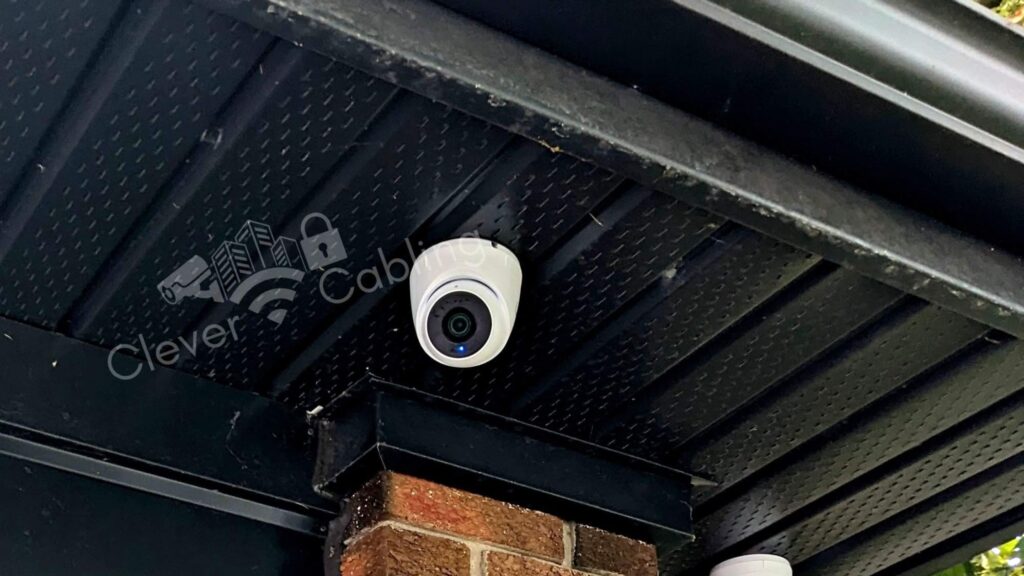

A lens sees only what it faces, but a thief looks for what it misses. Experts eliminate blind spots by using strategic overlapping fields of view and precise height adjustments to ensure no dark corners remain. They calculate the exact focal length needed for every specific corner of a property. Mapping out a site involves identifying structural obstacles like pillars or overhangs before a single screw enters a wall. Modern security camera installation in Mississauga requires this level of surgical precision to turn a Swiss-cheese surveillance net into a solid wall of digital eyes. Professional installers prioritize high-traffic entry points while simultaneously covering the periphery that leads to those entrances.
Overlapping Coverage Patterns
Security professionals never rely on a single camera to protect a large zone. They utilize a technique called “the buddy system” for hardware. One camera monitors an area, while a second camera monitors the first one’s blind spot. Every device has a dead zone directly beneath its housing. Placing cameras in a daisy-chain formation ensures that an intruder cannot tamper with one unit without being captured by another. Technicians use wide-angle lenses for general situational awareness and narrow-angle lenses for detailed identification.
Lenses with a fixed focal length are often swapped for varifocal options during the setup phase. Varifocal lenses allow for manual adjustment of the field of view to crop out useless data like brick walls or empty sky. This focuses the sensor’s pixels entirely on the “action zone.” Shadows and foliage also change with the seasons. A clear view in winter might be completely obscured by maple leaves in July. Experts account for growth patterns and sunlight glare to maintain visibility year-round.
Where Are the Most Common Blind Spots Located?
Most property owners look at eye level, but criminals look for the shadows. Blind spots frequently hide behind large HVAC units, detached garages, and deep porch alcoves. Natural dips in the landscape or decorative stonework can create pockets where a person can crouch unseen. Professionals walk the perimeter to find these hiding spots from a trespasser’s perspective. They look for “dead ground” where the camera’s angle of depression is too steep to catch movement near the foundation.
- Roofline Gaps: Areas directly under the eaves often stay hidden if the camera is mounted too high without a tilt bracket.
- Secondary Entries: Basement windows and side gates are often neglected in favour of the front door.
- Obstruction Zones: Large parked vehicles or dumpsters can block 40% of a camera’s view if placement isn’t elevated.
- Fence Corners: Standard 90-degree corners often have a “V” shaped sliver of invisibility if the camera is mounted right on the corner post.
Leveraging Height and Angle for Maximum Depth
Height is a double-edged sword in surveillance. Mounting a camera too high provides a great bird’s-eye view but only captures the top of a suspect’s hat. Placing it too low makes it vulnerable to physical damage or lens masking. Professionals aim for the “sweet spot,” usually between nine and twelve feet. This height remains out of easy reach while maintaining a shallow enough angle to capture facial features. Tilt angles are calibrated using digital levelling tools to ensure the horizon line doesn’t waste half the sensor’s resolution.
Wide-dynamic range (WDR) settings help eliminate “lighting blind spots.” These occur when a camera faces a bright window or streetlamp, turning the foreground into a black silhouette. Professionals tune the sensor to balance these extremes. Proper calibration ensures that a person walking from a dark alley into a bright parking lot remains visible the entire time. Every degree of rotation is calculated to prevent the camera from staring at a static obstacle like a downspout.
Why Does Professional Placement Beat DIY Setups?
Homeowners often mount cameras where it is easiest to run the wires, not where the view is best. A professional security camera installer prioritizes the line of sight above installation convenience. They use specialized tools to test the signal strength and image clarity before permanent mounting. Professionals also understand the “pixel density” required for legal evidence. Having a view of the driveway is useless if the resolution is too low to read a license plate at twenty feet.
- Infrared Reflection: DIY setups often face cameras toward glass, causing night-vision glare that blinds the unit. Professionals avoid glass reflections entirely.
- Cabling Security: Exposed wires are a massive blind spot in a system’s physical integrity. Pros hide cabling within conduits or wall cavities.
- Storage Optimization: High-end setups use bit-rate management to ensure the most critical areas are recorded in the highest quality.
- Redundancy: Systems are designed so that if one camera fails, the neighbouring units can still provide basic coverage of that zone.
The Bottom Line
Securing a property requires a strategy that looks beyond the obvious. Clever Cabling handles the technical heavy lifting of mapping out complex environments. They focus on removing the hidden gaps that standard off-the-shelf kits usually leave behind. Their team ensures every square inch of a Mississauga property is accounted for through meticulous planning and high-grade hardware. Quality surveillance is about more than just buying a camera; it is about the expertise of a security camera installer who knows how to outsmart a prowler. Eliminating blind spots ensures that the security system provides a complete, uninterrupted story of everything happening on the premises.