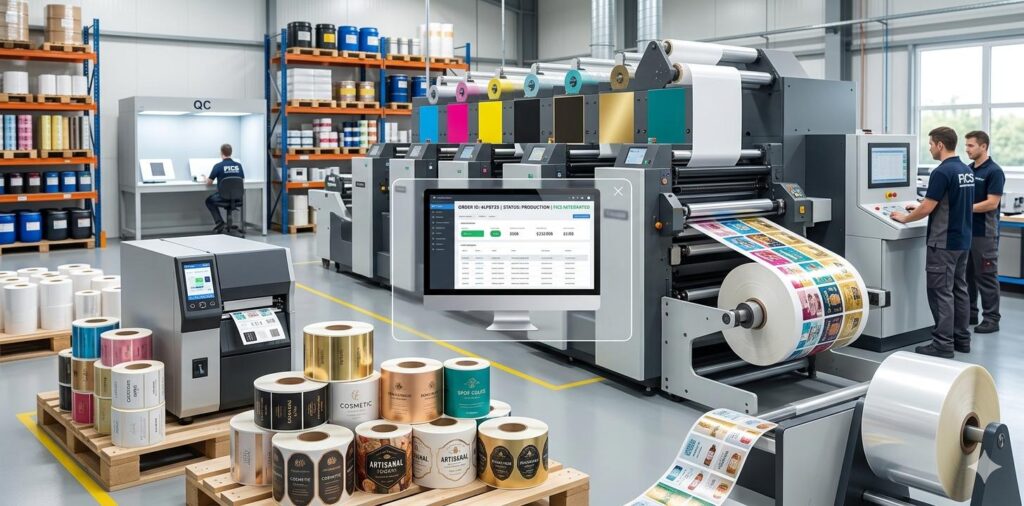

In the competitive world of retail and logistics, the first point of physical contact a consumer often has with a product is its label. This small piece of material carries a massive responsibility, acting as a silent salesman, a legal safeguard, and a critical data carrier all at once. For businesses ranging from artisanal home-grown startups to multinational corporations, navigating the world of label printing services is essential for maintaining a professional image and ensuring that products stand out on crowded shelves. A label is far more than just a sticker; it is a complex combination of chemistry, design, and manufacturing technology that reflects the quality of what lies inside the package. As consumer expectations for transparency and sustainability grow, the importance of high-quality, durable, and aesthetically pleasing labeling has never been more pronounced.
Modern label printing services have evolved significantly from the basic paper-and-glue methods of the past. Today, they offer an incredible array of customizations including various substrates, finishes, and specialized adhesives tailored for specific environments—from the deep-freeze requirements of the food industry to the chemical resistance needed for industrial supplies. Investing in professional printing ensures that your brand’s colors remain vibrant, the text stays legible despite handling, and the adhesive remains firm under stress. This guide explores the multifaceted nature of the labeling industry, providing insights into how businesses can leverage professional printing to tell their story, protect their assets, and streamline their distribution workflows.
Understanding the Landscape of Labeling Solutions
When exploring label printing services, it is vital to recognize that different products require different technical solutions. The environment in which a product is stored and used dictates the materials required. For example, a label for a craft beer bottle must withstand moisture, refrigeration, and friction during transport, whereas a shipping label for an e-commerce package focuses primarily on barcode clarity and cost-effective high-volume production. Professional service providers help brands navigate these choices, offering expertise in material selection that prevents common issues like peeling, fading, or smudging.
Furthermore, the scale of production plays a major role in determining the best approach. Some services specialize in short-run digital printing, which is ideal for seasonal products or small-batch tests, while others excel in long-run flexographic printing for mass-market goods. By understanding the capabilities of various label printing services, business owners can find a partner that aligns with their growth trajectory. The goal is to move beyond mere identification and toward a labeling strategy that adds tangible value to the product lifecycle through enhanced durability and premium visual appeal.
Identifying Different Types of Labels
The variety within the industry is vast, catering to every conceivable niche. Pressure-sensitive labels are perhaps the most common, featuring a “peel and stick” application that is highly versatile and works on almost any surface. On the other hand, shrink sleeve labels offer a 360-degree canvas by wrapping around the entire container, which is popular in the beverage and nutraceutical industries. There are also specialized thermal labels used in logistics and retail for pricing and tracking, where heat is used to create the image rather than traditional ink.
Beyond these, brands may require specialty labels such as tamper-evident seals for pharmaceuticals or heavy-duty industrial tags that can withstand extreme UV exposure and weather. Each of these types serves a specific functional purpose, and choosing the right one requires a deep understanding of the end-user experience. Professional label printing services act as consultants in this regard, ensuring that the technical specifications of the label match the physical demands of the product’s journey from the factory to the consumer’s home.
Key Elements of a High-Quality Label
A successful label is the result of balancing aesthetics with functionality. The first key element is the substrate—the base material upon which the design is printed. Common substrates include paper, bopp (biaxially-oriented polypropylene), and vinyl. Paper is excellent for dry goods and offers a classic look, but bopp is the industry standard for products that might encounter oil or water, as it is highly resistant to moisture. Choosing the wrong substrate can result in a label that looks cheap or, worse, falls off before the customer even buys the product.
The second element is the finish, which can drastically alter the perception of the brand. A matte finish often communicates a premium, sophisticated, or “organic” feel, while a high-gloss finish makes colors pop and provides a more energetic, modern look. Specialized finishes like spot UV, foil stamping, or embossing add tactile dimensions that invite the customer to touch the product. These “haptic” qualities are proven to increase the likelihood of a purchase by creating a physical connection between the consumer and the brand.
Adhesives and Durability Factors
The science of adhesives is often overlooked but is arguably the most critical component of the labeling process. Permanent adhesives are designed to stay put for the life of the product, whereas removable adhesives are necessary for items like glassware or gift products where the customer will want to peel the label off without leaving a sticky residue. There are also “all-temperature” adhesives that are essential for products that are labeled in cold warehouses but sold in ambient temperatures.
Durability is not just about the adhesive; it also involves the ink and protective coatings. For products exposed to sunlight, UV-resistant inks are a necessity to prevent the “sun-bleached” look that can make a product appear old or expired. Laminates—a thin layer of clear film applied over the print—provide an extra layer of protection against scratches and chemical exposure. Professional label printing services will typically conduct testing to ensure that the combination of ink, substrate, and adhesive can survive the specific stressors of your product’s environment.
The Design and Pre-Press Process
Designing for print is significantly different from designing for a digital screen. One of the most important aspects of working with label printing services is the “pre-press” stage, where digital files are checked for technical accuracy. This includes ensuring that the color profile is set to CMYK (for process printing) or Pantone (for spot colors), and that all fonts are outlined to prevent errors. A common mistake is not accounting for the “bleed” area—the extra bit of design that extends past the trim line to ensure that no white edges appear if the cutting process shifts slightly.
Resolution is another non-negotiable factor; designs must be created at 300 DPI or higher to ensure that fine text and barcodes are crisp and scannable. In the center of this complex workflow, many companies utilize sophisticated management tools like FICS to track orders and maintain data integrity, ensuring that the final printed product matches the approved proof exactly. Good design also considers the “die-line,” which is the physical shape the label will be cut into. While standard rectangles and circles are cost-effective, custom shapes can make a brand much more memorable and distinctive on the shelf.
Tips for Effective Label Design
When designing, remember that “less is often more.” In a retail environment, you only have a few seconds to capture attention. Clear hierarchy is essential: the brand name and the product type should be the most prominent elements. Use high-contrast color palettes to ensure legibility, especially for mandatory information like ingredients, warnings, or nutritional facts. It is also wise to consider how the label will look when applied to the container; a flat design might look different when wrapped around a curved bottle.
Don’t forget the importance of the barcode. A beautiful label is useless if the barcode won’t scan at the checkout. Always leave a “quiet zone” of blank space around the barcode and ensure it is printed in a high-contrast color (usually black on a white background). Professional label printing services often provide templates and digital proofs that help designers visualize the final product before the expensive printing plates are made or the digital presses start rolling.
Printing Technologies and Methods
The choice of printing technology depends on the quantity, complexity, and required durability of the project. Digital printing has revolutionized label printing services by allowing for high-quality, full-color prints without the need for expensive plates. This makes it perfect for small to medium-sized orders and allows for “variable data printing,” where every single label in a batch can be unique (useful for serialized tracking or personalized marketing). Digital printing offers a fast turnaround and the ability to make design changes on the fly without significant cost.
Flexographic printing, however, remains the king of high-volume production. This method uses flexible relief plates and a rotary press system to print at incredibly high speeds. While the initial setup costs are higher due to plate making, the cost per unit drops significantly as the volume increases. Flexography is also excellent for achieving precise Pantone color matching and can handle a wider variety of specialized inks, such as metallic or neon colors. Understanding the break-even point between digital and flexo is a key part of choosing the right service for your business.
Modern Finishing Techniques
Once the labels are printed, they undergo finishing processes that give them their final shape and texture. Die-cutting is the process of cutting the labels into their specific shapes using either a metal “cookie-cutter” style die or a laser. Laser die-cutting is a modern alternative that requires no physical tools, allowing for incredibly intricate shapes and fast setup times. After cutting, the labels are “stripped” of their excess material (the matrix) and wound onto rolls or cut into individual sheets.
Roll labels are preferred for machine application in high-speed bottling or packaging lines, whereas sheeted labels are often better for hand-application or small office use. Some label printing services also offer “overprinting” capabilities, where a base design is printed professionally, and the business can then print their own batch numbers or expiration dates on top using a thermal transfer printer. This hybrid approach offers the best of both worlds: professional brand aesthetics and localized, real-time data control.
Cost Considerations and Budgeting
The cost of label printing services is influenced by several variables, and understanding them can help you optimize your budget. The most significant factor is usually the volume; because of setup times and material waste during press calibration, ordering 5,000 labels is often not much more expensive than ordering 1,000. It is almost always more cost-effective to order a six-month or one-year supply at once rather than doing small monthly reprints.
Material choice also plays a role; premium textures, clear films, or metallic papers carry a higher price tag than standard semi-gloss paper. The number of colors also matters in traditional printing, though it is less of a factor in digital printing. Additionally, custom die shapes require a one-time fee for the creation of the cutting tool. To get the best value, brands should be transparent with their printing partner about their budget and performance requirements, as the printer can often suggest alternative materials that achieve a similar look at a lower price point.
Avoiding Hidden Costs in Printing
Hidden costs often arise from poor file preparation or last-minute changes. If a printing service has to spend hours fixing your design files so they are “press-ready,” they will likely bill you for that time. Similarly, rush fees can significantly inflate a bill if you haven’t planned your lead times properly. Most professional label printing services have a standard turnaround time of 5 to 10 business days, so planning ahead is the easiest way to save money.
Shipping is another factor to consider, especially for large rolls of labels which can be quite heavy. Finding a regional provider can reduce shipping costs and allow for faster delivery. Finally, always ask for a physical or high-resolution digital proof. The cost of a proof is negligible compared to the cost of printing thousands of labels with a typo or the wrong shade of red. Taking the time to verify every detail before the final run is the ultimate cost-saving measure.
Common Mistakes to Avoid
One of the most frequent errors in the world of labeling is choosing a material that is incompatible with the application surface. For instance, some plastics emit gases (outgassing) that can cause paper labels to bubble or peel over time. Similarly, applying a label to a surface that is damp, oily, or too cold will result in immediate failure unless a specialized adhesive is used. Always provide your label printing services partner with a sample of the container you are using so they can recommend the perfect combination of materials.
Another mistake is ignoring the “application environment.” A label applied at room temperature might stay on perfectly, but if the product is then immediately placed in a blast freezer, the adhesive may crystallize and lose its bond. Conversely, labels on products used in hot environments, like under a car hood or near a stove, need heat-stabilized materials. Communication is key; tell your printer exactly where the product will be stored and how it will be used to avoid catastrophic labeling failures.
Future Trends in Labeling
The labeling industry is moving rapidly toward sustainability and smart technology. Eco-friendly label printing services now offer materials made from recycled content, FSC-certified paper, and even compostable films made from wood pulp or corn starch. “Wash-away” adhesives are also gaining popularity, as they allow labels to be easily removed during the recycling process, making plastic and glass containers more likely to be successfully repurposed. Brands that prioritize these green solutions are finding favor with environmentally conscious consumers.
In addition to sustainability, “Smart Labels” are the next frontier. These incorporate technologies like QR codes, NFC (Near Field Communication), or RFID tags. These features allow customers to scan a label with their phone to see the product’s origin, verify its authenticity, or access exclusive marketing content. For businesses, RFID-enabled labels streamline inventory management by allowing thousands of items to be scanned simultaneously without line-of-sight. As these technologies become more affordable, they will become a standard offering for high-end label printing services.
Conclusion: Partnering for Success
In the final analysis, choosing the right label printing services is about finding a partner that understands the unique pulse of your brand and the technical demands of your industry. A label is much more than a finishing touch; it is a critical component of your product’s success and your brand’s integrity. From the initial design phase to the final application on the production line, every decision made—whether it’s about the substrate, the adhesive, or the printing method—impacts how your customer perceives your value.
By avoiding common pitfalls, embracing new technologies, and focusing on quality over the lowest possible price, you can ensure that your labels do exactly what they were meant to do: protect, inform, and sell. As the market continues to shift toward more personalized and sustainable solutions, staying informed and working with expert printers will give your business a distinct advantage. Remember that your label is your brand’s ambassador in the physical world; make sure it represents you with clarity, durability, and style.