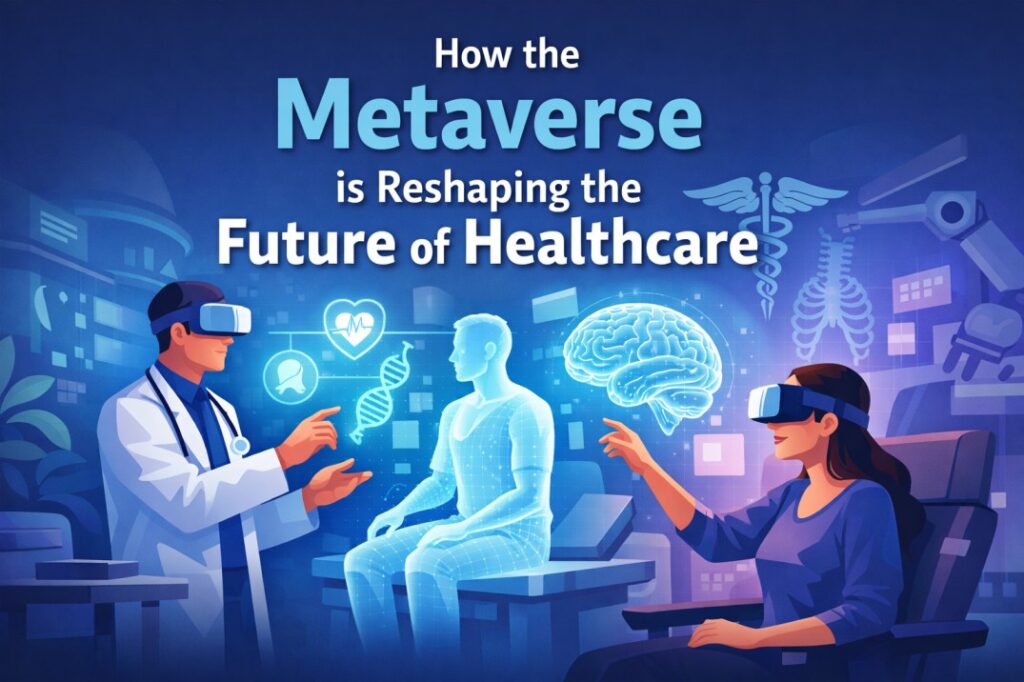

An idea that was initially confined to games and entertainment, the metaverse is gradually becoming a part of areas like healthcare as well. The metaverse is making healthcare experiences to be immersive, interactive, and data-driven by integrating virtual reality (VR), augmented reality (AR), and artificial intelligence (AI). This digital ecosystem is transforming the nature of care delivery and experience, through virtual consultations and medical trainings simulations.
The challenges facing healthcare systems all over the world are mounting pressure on them to enhance access, efficiency, and patient outcomes. In this regard, new technologies like the metaverse present new avenues to fill disparities in the provision of care. The healthcare metaverse ecosystem is on the move as the number of investments made in digital health infrastructure continues to grow, and the adoption of virtual care models also becomes more acceptable, as a detailed analysis of the industry indicates.
Understanding the Metaverse in Healthcare
The healthcare metaverse is a virtual, connected space where patients, healthcare providers, and digital technologies are connected through real-time interaction. It utilizes immersive technology to recreate real-life medical situations, which allows remote diagnosis, treatment planning and even a session of therapy.
As an example, patients may have virtual meetings with doctors through the use of avatars, and surgeons can train to perform a complicated procedure in a virtual environment and then apply it to the real world. This combination of tangible and digital healthcare is slowly altering the traditional care model into more adaptable and patient-centered care systems.
Significant uses that are fueling adoption.
Virtual Consultations and Telemedicine
The metaverse can improve telemedicine by offering an enhanced and engaging experience over regular video calls. In 3D virtual clinics, patients and doctors can communicate with each other, which enhances the level of communication and accuracy of diagnostics.
The World Health Organization suggests that digital health solutions, such as telemedicine, have been instrumental in ensuring more access to healthcare, particularly in remote areas.
2. Medical Education and training.
Virtual simulation helps medical experts to practice the procedures in a non-risky setting. It can be especially helpful in more complicated surgeries, where experience is paramount but hard to come by.
The use of immersive technologies is justified by research sponsored by the National Institutes of Health, which indicates that the use of simulation-based training can enhance clinical skills and decrease medical errors.
3. Psychotherapy and Mental Health.
Mental health applications of the metaverse are also under investigation, including virtual therapy sessions, exposure therapy on mental disorders like anxiety and PTSD. Immersive environments enable therapists to develop controlled situations depending on the needs of individual patients.
Technological Growth Drivers.
The metaverse is being rapidly adopted in healthcare by several technological developments:
- Artificial Intelligence (AI): Allows real-time analysis of data and individualized treatment suggestions.
- 5G Connection: Enables quality and smooth virtual connection.
- Blockchain: Improves data security and interoperability.
- Wearable Devices: Real-time health monitoring in virtual environments.
The U.S. Food and Drug Administration have also highlighted the increased role of digital health technologies in enhancing patient care and monitoring.
Benefits Changing the Delivery of Healthcare.
Improved Accessibility
The metaverse will increase geographical accessibility, as patients who are under-served do not have to travel across town to receive specialized care.
Enhanced Patient Engagement
Healthcare can be more interactive, and patient compliance to treatment plans is enhanced in this way.
Cost Efficiency
Training and virtual consultations also save on the costs of operation in terms of physical infrastructure and face-to-face services.
Better Clinical Outcomes
More precise diagnoses and effective treatments are provided by advanced simulations and real-time data insights.
Challenges and Considerations
Nonetheless, the introduction of the metaverse into healthcare has its difficulties:
- Data Privacy and Security: The issue of the protection of sensitive information about patients is a pressing concern.
- Regulatory Frameworks: Given the current regulations, virtual healthcare settings might not be comprehensively covered.
- Access to Technology: VR/AR devices are expensive making them inaccessible in low-resource environments.
- Adaptation by Users: Patients and healthcare providers should be trained on how to use these technologies.
Those issues will be key to the sustainable development of healthcare solutions based on the metaverse.
Market Prognosis and Business Trend.
The healthcare metaverse market is witnessing growing interest from technology companies, healthcare providers, and investors. The growing demand in digital healthcare solutions, along with the development of immersive technologies, is likely to spur the continuous market growth.
The findings of this metaverse healthcare research point to the fact that the industry is changing very quickly, being facilitated by the development of virtual care delivery and the increasing global healthcare digitization activities. Also, the healthcare market expansion forecast of the global metaverse is expected to grow, as organizations seek novel applications and business models in this area.
Future Perspective
In the future, the metaverse will probably be a part of the healthcare ecosystem. With the maturity of technologies and changes in regulation regimes, virtual healthcare settings may be used as an addition to conventional models of care and provide hybrid solutions, merging both physical and digital interactions.
The connection of digital twins, AI-based diagnostics, and immersive therapy platforms can further improve the abilities of health systems. Nevertheless, equitable access and ethical considerations will continue to be major concerns of stakeholders.
Conclusion
The metaverse is becoming an innovative solution to all existing challenges in healthcare, bringing new possibilities to the field. It can transform the experience of healthcare worldwide by allowing it to be immersive, accessible and efficient in delivering care.
Although the technology is still in its infancy, further development of this technology bolstered by research and industry experience points to a bright future of metaverse-based healthcare solutions.