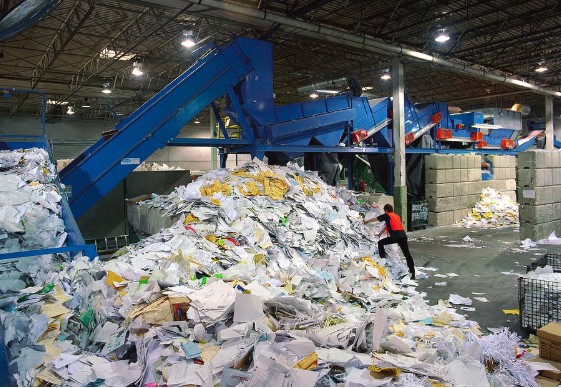

The global push toward sustainability has made waste management infrastructure more important than ever before. Facilities that process recovered materials depend heavily on specialised machinery to sort, clean, and prepare waste streams for reuse. At the centre of this effort is paper recycling, a process that transforms discarded paper and cardboard into valuable raw material for manufacturing. Understanding the equipment behind this process helps businesses, councils, and waste operators make informed decisions about their operations. This guide explores the key machinery involved in high-efficiency paper waste sorting and what makes each piece of equipment essential to a well-functioning facility.
The Importance of Efficient Waste Sorting Infrastructure
Efficient sorting is the backbone of any successful resource recovery operation. When waste arrives at a materials recovery facility, it is rarely clean or pre-sorted. Mixed loads containing paper, plastics, glass, and metals must be separated quickly and accurately to maintain the quality of recovered fibre. Poorly sorted material leads to contamination, which reduces the market value of recovered paper and can render entire batches unusable. Investing in high-quality sorting equipment not only improves recovery rates but also reduces labour costs and processing time significantly over the long term.
Conveyor Systems and Pre-Sorting Stations
Every sorting facility begins with a reliable conveyor system that moves material through the processing line. Flat belt conveyors, inclined conveyors, and metering drums all play distinct roles in controlling the flow and spread of incoming waste. Pre-sorting stations positioned along these belts allow workers or automated systems to remove large contaminants such as plastic bags, textiles, and oversized items that could damage downstream machinery. Getting this initial stage right sets the tone for everything that follows in the sorting process.
Screening and Separation Technology
Once material has been pre-sorted, screening equipment separates paper and cardboard from other waste fractions based on size, shape, and density. Disc screens and star screens are widely used to separate flat paper items from three-dimensional containers. Ballistic separators take this further by differentiating between rolling items like bottles and flat items like cardboard sheets using a combination of paddle motion and inclination. These technologies work together to isolate the paper fraction with minimal cross-contamination, which is critical for achieving the fibre purity standards required by mills and reprocessors.
Optical Sorting and AI-Assisted Detection
Modern facilities increasingly rely on optical sorting systems that use near-infrared sensors and cameras to identify material composition at high speed. These systems can distinguish between different paper grades, including newsprint, office paper, and coated stock, allowing for more precise sorting than manual methods could ever achieve. The integration of paper recycling processes with artificial intelligence has allowed these systems to learn and adapt over time, improving accuracy and reducing reject rates. Facilities that adopt this technology often see marked improvements in the purity and consistency of their recovered fibre output.
Balers and Compaction Equipment
Once the paper has been sorted and cleaned, it needs to be compacted into bales for transport and storage. Horizontal balers and vertical balers compress sorted paper into dense, uniform blocks that are easy to stack, weigh, and ship to reprocessing mills. Bale quality directly affects the price that recovered fibre commands on the market, so consistent compaction pressure and proper wire tying are essential.
Conclusion
Investing in the right equipment is what separates a high-performing resource recovery operation from one that struggles with contamination, inefficiency, and lost revenue. For facilities that also handle bulky or confidential material alongside their recycling operations, integrating an industrial shredder into the processing line provides a practical solution for reducing volume, protecting data, and preparing difficult waste streams for downstream processing with far greater efficiency. Every stage of the sorting process, from initial conveyor separation through to optical detection and baling, contributes to the overall quality of recovered fibre.