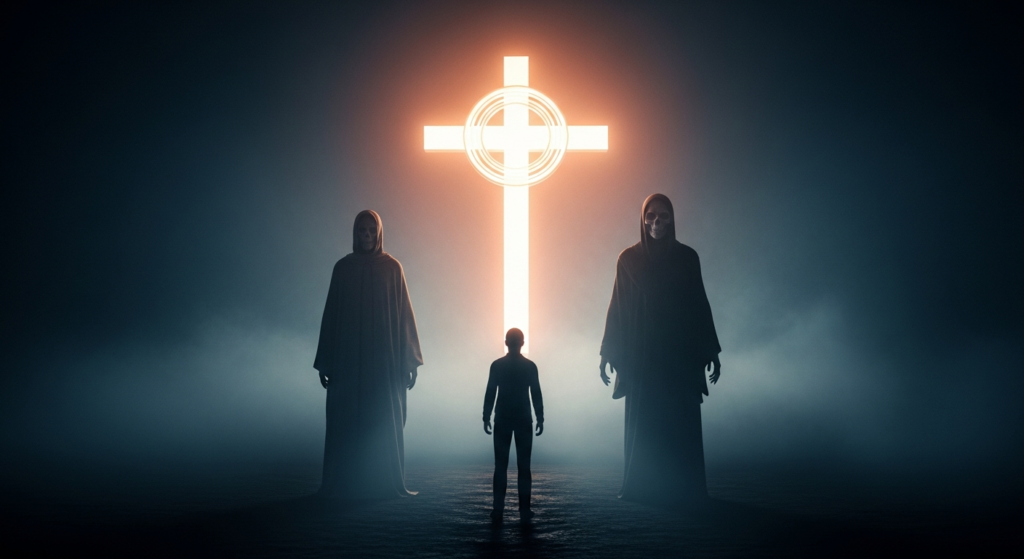

The moment a novel ties faith, death, and power together, the stakes stop being simple. You’re no longer reading just for plot. You’re watching belief systems clash. You’re watching people justify things they once said they never would.
When mortality is placed next to ideology and control, every decision carries more than personal risk. It carries consequences that ripple outward. That’s where stories stop feeling light. They get heavier. They demand attention.
When Belief Stops Being Private
Faith on its own can be quiet, personal and internal. But once it steps into public space and mixes with authority, everything shifts. Belief starts influencing policy, punishment, and loyalty. It shapes who gets protected and who gets judged.
In fiction, this creates tension fast. Not because characters shout about what they believe, but because their convictions guide their actions. A leader who believes they are morally right can justify almost anything. That certainty is dangerous. And readers feel it building long before the characters do.
Death as More Than Shock Value
Death in storytelling is often used cheaply. A sudden loss to push the plot. A dramatic scene meant to provoke emotion. But when a story is built around mortality as a central force, it cannot be casual.
Death has to mean something. It has to change relationships. Shift power. Leave a mark that doesn’t disappear in the next chapter.
When writers treat death as a structural element instead of embellishment, the atmosphere changes. The reader understands that outcomes are permanent. That risk is real. Those choices will not be undone.
Power Changes Everything
Once power enters the picture, faith and death become tools.
A character with influence can frame events as destiny. They can shape narratives around sacrifice. They can manipulate fear. That mix creates moral tension because it raises uncomfortable questions. Who decides what is sacred? Who decides what is justified?
In stories like the Death Saint book, the real tension often comes from that imbalance. It is not just about survival. It is about control. About who gets to define right and wrong when lives are at stake.
And when control is challenged, cracks appear.
Moral Lines Start to Blur
The most unsettling part of these stories is not the violence. It is the reasoning behind it.
Characters begin by holding firm boundaries. Certain actions are unacceptable. Certain lines cannot be crossed. Then pressure builds. Circumstances tighten. Fear spreads.
Slowly, those lines move.
Readers watch the shift happen. They see rationalizations forming. They understand how someone reaches a decision they once condemned. That progression feels real because it mirrors human behavior. People rarely see themselves as villains. They see themselves as necessary.
That gray space keeps the story grounded.
The Slow Build of Unease
Not every dark novel needs chaos on every page. In fact, constant intensity dulls the impact.
A slower build works better. A rumor here. A symbolic gesture there. A moment that feels slightly off. These details accumulate. They form a pattern. The reader senses something larger forming, even if the characters do not.
That anticipation creates tension without noise. You keep reading because you know something is coming. You just do not know when it will land.
Why Stories Centered on Death and Conviction Stay With You
Stories that deal with belief and mortality tend to linger. They force readers to confront uncomfortable ideas. How far would someone go for what they believe? When does conviction turn into fanaticism? Can power corrupt even the well-intentioned?
Books built around these questions do not offer easy comfort. They leave space for reflection. They do not tie everything into a neat resolution. Instead, they show the cost of choices made under pressure.
That lingering discomfort is not accidental. It is crafted.
Writers who approach these themes seriously avoid exaggeration. They focus on grounded characters and credible motivations. Authors like Randy Fitch understand that tension rooted in ideology and consequence feels more lasting than surface-level drama, which is why their narratives carry weight long after the final page.
FAQs
1. What makes a dark thriller impactful?
Clear stakes, believable motivations, and consequences that feel permanent. Emotional weight matters more than graphic detail.
2. Why do faith-based conflicts create strong tension?
Because belief shapes identity, when challenged, it leads to deep emotional and moral reactions.
3. Can stories about death avoid feeling repetitive?
Yes, if death changes the world of the story in meaningful ways rather than serving as a quick shock.
4. What separates meaningful suspense from cheap shock?
Meaningful suspense builds through character decisions and escalating consequences. Cheap shock relies only on surprise.