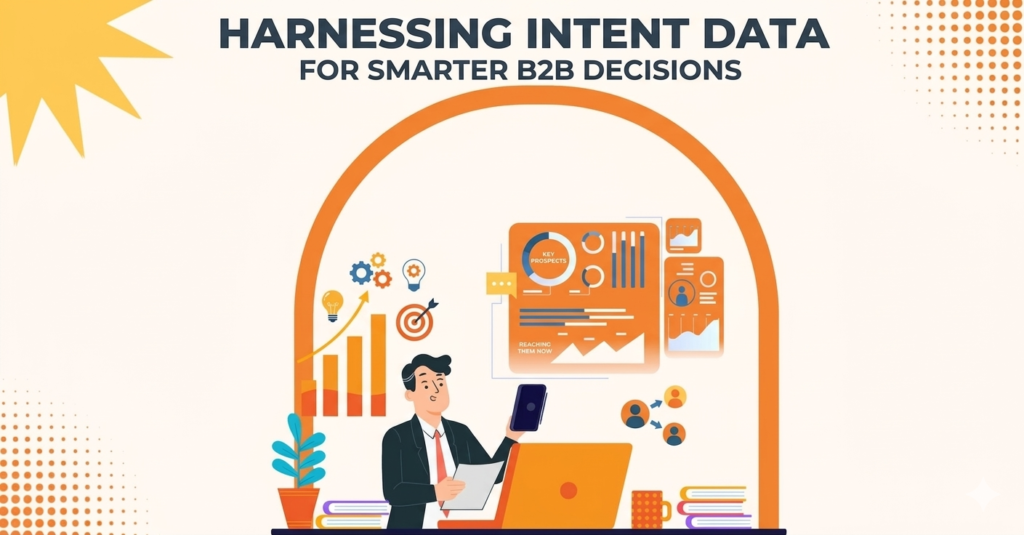

In today’s hyper-competitive B2B landscape, understanding customer behavior is no longer optional—it’s critical. Businesses are inundated with data from multiple sources, but raw data alone isn’t enough. The key lies in interpreting intent signals—the digital footprints that indicate a prospect’s likelihood to engage, buy, or move through the sales funnel. Leveraging these signals effectively can transform business decision-making, improve targeting, and accelerate revenue growth.
What Are Intent Signals?
Intent signals are behavioral indicators that reveal a prospect’s interest in a product or service. These can come from multiple sources, such as:
- Content consumption patterns on websites, blogs, or social media
- Product comparisons or downloads of whitepapers and case studies
- Participation in webinars, virtual events, or industry forums
- Search queries and keywords indicating buying intent
Unlike traditional demographic data, which tells you who a prospect is, intent data tells you what they are thinking and when they are ready to act. This actionable intelligence is the foundation for smarter B2B strategies.
How Intent Signals Improve Decision-Making
- Prioritizing High-Value Leads
By analyzing intent signals, sales teams can focus on prospects who are actively researching solutions similar to theirs. This prioritization reduces wasted effort, shortens sales cycles, and increases conversion rates. - Personalizing Outreach
Intent data enables highly targeted messaging. Marketing and sales teams can craft personalized emails, offers, and campaigns based on a prospect’s current stage in the buying journey. This relevance builds trust and increases engagement. - Optimizing Marketing Spend
With insights into which accounts or industries are showing intent, companies can allocate budgets more efficiently. Instead of broad, untargeted campaigns, resources are invested in prospects most likely to convert. - Anticipating Market Trends
Analyzing aggregated intent signals across the market helps businesses spot emerging trends, shifting customer preferences, and potential competitive threats. This proactive approach allows for quicker, data-driven strategic decisions. - Aligning Sales and Marketing Efforts
Intent data fosters stronger collaboration between sales and marketing teams. Marketing can identify the hottest leads and deliver timely content, while sales can follow up with prospects who are primed for conversion.
Challenges in Using Intent Signals
Despite its advantages, leveraging intent data isn’t without challenges:
- Data Overload: The sheer volume of signals can be overwhelming. Businesses must use AI and analytics platforms to extract meaningful patterns.
- Accuracy & Noise: Not all behavioral signals indicate true buying intent. Filtering out irrelevant or misleading signals is crucial.
- Integration: For maximum impact, intent data should integrate seamlessly with CRM and marketing automation platforms.
Best Practices for Harnessing Intent Signals
- Invest in AI-Powered Analytics: Machine learning algorithms can identify patterns and predict purchase likelihood with higher accuracy.
- Focus on High-Quality Sources: Prioritize intent signals from trusted platforms and verified behaviors.
- Create Actionable Workflows: Define clear processes for how sales and marketing teams act on intent insights.
- Continuously Monitor & Refine: Intent data is dynamic; continuous monitoring ensures campaigns remain relevant and timely.
Unlocking Competitive Advantage with Intent Signals
Beyond immediate sales and marketing gains, intent signals offer a broader strategic advantage. By analyzing cross-industry behaviors, companies can uncover untapped market segments, identify gaps in their offerings, and anticipate competitive moves before they occur. For executives and decision-makers, intent data provides a real-time pulse on customer priorities, enabling them to make informed investments, plan product roadmaps, and shape strategic partnerships. Organizations that effectively harness this intelligence can pivot quickly in response to market shifts, craft offerings that resonate more deeply with buyers, and ultimately build stronger, long-term customer relationships. In essence, intent signals aren’t just tools for today’s campaigns—they are the foundation for future-ready, data-driven strategies that keep businesses ahead of the curve.
The Future of Intent-Driven B2B Strategies
As AI, machine learning, and predictive analytics continue to evolve, intent signals will play an increasingly central role in business intelligence. Companies that master the art of interpreting and acting on these signals will gain a competitive edge, reduce inefficiencies, and deliver exceptional customer experiences.
In short, intent signals are more than just data—they are a roadmap to smarter decision-making, better targeting, and sustainable growth in B2B markets. Organizations that adopt intent-driven strategies today are positioning themselves for success in tomorrow’s data-first business landscape.