
Pilates studios contain several distinctive pieces of equipment, each designed to guide controlled movement and strengthen the body through resistance. Two of the most recognisable machines are the Cadillac and the Reformer. Each offers a unique training experience, shaped by its structure, resistance system, and range of exercises.
Understanding how these machines differ helps practitioners choose the equipment that best supports their goals, whether that involves improving posture, building strength, or expanding a home Pilates setup.
What Is the Pilates Cadillac?
The Pilates Cadillac stands as one of the most traditional pieces of apparatus in the method. Joseph Pilates originally designed it as a versatile frame that allowed a wide variety of exercises using springs, bars, and straps attached to a raised bed.
Origins of the Cadillac in Classical Pilates
Historical accounts link the Cadillac to early rehabilitation work. Joseph Pilates often used bed frames and attached springs to assist injured individuals in regaining strength. Over time, the design developed into the structured frame seen in studios today.
Its name comes from the large canopy-like frame that surrounds the padded table. The structure supports numerous attachments that enable assisted movements, suspension work, and resistance exercises.
Key Components of a Cadillac Machine
The Cadillac typically includes a raised padded platform, a metal frame, spring attachments, and bars positioned above the bed. Each element contributes to the machine’s versatility.
Common features include:
- Push-through bar for upper body and core exercises
- Roll-down bar designed to support spinal articulation
- Leg and arm springs that create adjustable resistance
- Safety straps that stabilise movements
- A trapeze bar suspended from the frame
These attachments allow practitioners to perform exercises lying down, sitting, kneeling, or suspended within the frame.
Exercises Commonly Performed on the Cadillac
Many classical Pilates movements appear on the Cadillac. Exercises often focus on spinal mobility, controlled stretching, and supported strength work.
Practitioners might perform leg springs to strengthen the hips, arm spring sequences to challenge shoulder stability, or assisted inversions that improve flexibility. The structure allows support where needed, which makes certain movements more accessible than on floor-based routines.
This level of adaptability explains why rehabilitation specialists often favour the Cadillac. The springs provide assistance or resistance depending on the exercise setup.
Who Typically Benefits from Cadillac Training?
The Cadillac suits a wide range of practitioners. Beginners often appreciate the additional support provided by springs and bars. Experienced Pilates practitioners also value the equipment for its ability to refine technique through precise resistance.
The apparatus frequently appears in rehabilitation settings as well. Controlled spring tension allows gradual progression, which helps rebuild strength after injury or long periods of inactivity.
What Is a Pilates Reformer?
The Reformer has become the most recognisable Pilates machine in modern studios. Its moving carriage and spring resistance create a smooth, controlled workout that challenges both strength and coordination.
Many Pilates enthusiasts associate the Reformer with the flowing style of exercise often seen in studio classes.
The Design and Structure of a Reformer
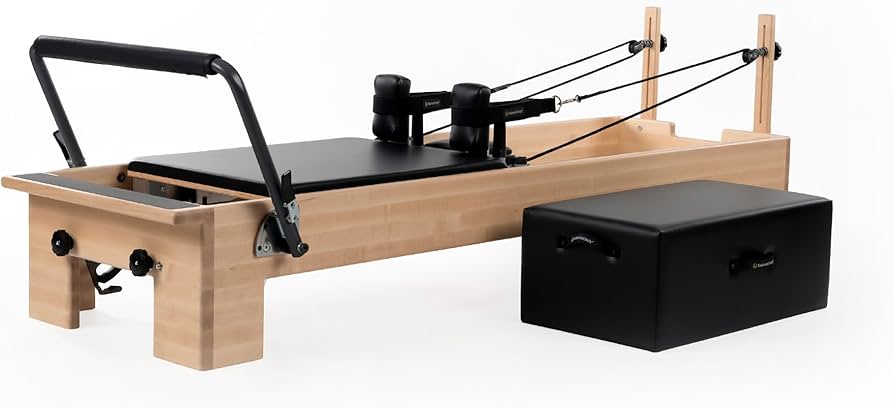
A Reformer consists of a rectangular frame with a sliding platform known as the carriage. Springs connect the carriage to one end of the frame, creating adjustable resistance during movement.
A footbar at the front supports pushing exercises, while straps attached to pulleys allow arm and leg movements from different positions.
This design encourages continuous movement as the carriage glides back and forth.
Core Features: Carriage, Springs, and Footbar
Several components define the Reformer’s functionality.
The carriage provides the moving platform where practitioners lie, sit, kneel, or stand. Springs beneath the carriage adjust resistance levels, allowing exercises to become easier or more challenging.
The footbar supports pushing movements that strengthen the legs and hips. Meanwhile, adjustable straps create resistance for arm work and leg sequences.
These elements combine to produce a full-body workout that strengthens muscles while maintaining joint-friendly movement.
Popular Reformer Exercises
Many Pilates routines revolve around classic Reformer exercises. Footwork sequences often begin a session, warming up the legs while engaging the core.
Other exercises may include rowing movements with the straps, lunges performed on the moving carriage, or core-focused work that requires careful control of the springs.
This flowing style of training appeals to both beginners and experienced practitioners. The sliding carriage encourages smooth transitions between movements, which helps maintain a steady rhythm during a session.
Why the Reformer Became a Studio Favourite?
The Reformer’s popularity stems from its ability to deliver a challenging workout in a relatively compact design. The adjustable springs create resistance suitable for many fitness levels, while the carriage encourages controlled movement.
Modern home fitness trends also support its growing demand. Foldable designs allow practitioners to bring studio-style Pilates training into smaller living spaces, maintaining the benefits of guided resistance exercise without requiring a large studio environment.
Pilates Cadillac Reformer Comparison: Equipment Structure
The structural design of each machine shapes the way exercises feel during a session. The Pilates Cadillac Reformer comparison often begins with their physical setup, since the frame, attachments, and resistance systems differ significantly.
Size and Frame Design
The Cadillac features a raised padded bed surrounded by a tall metal frame. This canopy-like structure supports bars, straps, and springs positioned above the user. The design creates a stable platform where exercises can take place with assistance from overhead attachments.
A Reformer uses a lower frame with a sliding carriage inside it. The carriage moves along rails when resistance from springs changes during exercise. This movement creates the smooth gliding sensation often associated with Pilates studio classes.
The Cadillac remains stationary during exercises, whereas the Reformer introduces movement through the carriage.
Resistance Systems and Attachments
Resistance on the Cadillac comes primarily from springs connected to bars and straps attached to the frame. The practitioner pulls or pushes against the springs while remaining on the fixed table.
The Reformer relies on springs connected to the carriage. When the practitioner presses against the footbar or pulls the straps, the carriage moves along the rails while the springs control the resistance.
This difference changes how the body interacts with the equipment. Cadillac exercises often feel supported and controlled. Reformer exercises tend to involve more flowing movement.
Space Requirements for Each Machine
Studios usually allocate more vertical space for the Cadillac because of its tall frame. The apparatus occupies a similar floor area to a treatment table but extends upward to accommodate the bars and trapeze attachments.
Reformers require slightly more floor length due to the moving carriage. Many modern designs include foldable frames that allow the equipment to store vertically or under a bed when not in use.
For home use, this difference often makes the Reformer the more practical option.
Movement Experience and Exercise Variety
Each machine produces a distinct movement style. The Cadillac emphasises supported control, while the Reformer focuses on continuous motion.
How the Cadillac Supports Controlled Movement
Cadillac exercises frequently involve assistance from springs. The resistance can guide the body through specific movement patterns, which encourages alignment and controlled muscle engagement.
This setup works particularly well for rehabilitation exercises, spinal mobility work, and gentle stretching routines. The frame also allows hanging or suspended movements that would be difficult on other equipment.
Dynamic Training on the Reformer
Reformer training centres on the carriage gliding against spring resistance. This movement requires coordination between the core, limbs, and stabilising muscles.
Exercises often flow from one position to another as the carriage moves. The rhythm encourages balance, control, and endurance during a session.
Many practitioners appreciate the feeling of continuous movement created by the sliding platform.
Strength, Mobility, and Rehabilitation Applications
Both machines support strength development, mobility work, and improved posture. The main difference lies in how the exercises deliver resistance.
The Cadillac provides greater support through its frame and attachments. The Reformer introduces instability through the moving carriage, which challenges coordination and core control.
Studios frequently use both machines to create varied training sessions.

Which Machine Is Better for Home Use?
Choosing equipment for a home practice involves practical considerations such as available space, cost, and training goals.
Space Considerations for Home Pilates Equipment
The Cadillac’s tall frame and permanent setup mean it suits dedicated studio environments more than typical living spaces. Its size can overwhelm smaller rooms.
A Reformer, particularly a foldable model, fits more comfortably into a home environment. Many designs collapse or store upright when not in use, which helps preserve living space.
Budget Differences Between Machines
Cadillac machines often cost more due to their large frame and multiple attachments. Their complexity also means installation may require professional setup.
Reformers exist across a wider range of price points. Entry-level models allow beginners to practise Pilates at home without the investment required for a full studio apparatus.
Foldable Reformer Options
Modern foldable Reformers combine studio-style resistance with practical design. Wheels and folding frames make it easier to move the machine around the home or store it when space becomes limited.
This convenience explains why Reformers remain the most common piece of Pilates equipment found in home fitness spaces.
Other Pilates Equipment Worth Knowing
Pilates training extends beyond the Cadillac and Reformer. Several other pieces of apparatus contribute to a well-rounded practice.
Where the Wunda Chair Fits into a Pilates Setup?
The Wunda Chair provides another form of resistance training using springs attached to a pedal. Its compact size makes it ideal for smaller studios or home environments.
Despite its modest footprint, the chair delivers demanding exercises that strengthen the legs, shoulders, and core.
Combining Different Machines for a Balanced Routine
Studios often integrate several pieces of apparatus into a single training programme. Reformers may handle flowing strength sequences, Cadillacs may support mobility work, chairs introduce targeted resistance training.
This variety keeps sessions engaging while allowing practitioners to challenge the body from different angles.
Choosing the Right Pilates Equipment for Your Goals
Selecting Pilates equipment depends on available space, experience level, and preferred style of training. The Cadillac suits studios that focus on classical apparatus work or rehabilitation sessions.
Reformers tend to suit home practice due to their versatility and space-friendly designs. Many practitioners begin with a Reformer before exploring additional equipment such as chairs, barrels, or tower systems.
Pilates equipment continues to grow in popularity as more people bring studio-style training into their homes. The approach supports strength, posture, flexibility, and long-term wellbeing through controlled movement.