

A press release can be the most powerful tool in your public relations arsenal. When done right, it can transform a simple company announcement into a front-page news story, build brand credibility, and reach thousands of potential customers through trusted media outlets. But when done wrong, it’s destined for the digital graveyard of a journalist’s overflowing inbox.
The difference between success and obscurity lies in understanding what makes a story newsworthy and how to present it in a way that respects a journalist’s time and needs. As a comprehensive guide on the topic explains, an effective press release serves two masters: journalists looking for compelling stories and the audience seeking valuable information (Press Release Complete Guide to Writing).
With journalists receiving dozens of pitches daily, your press release needs to stand out instantly. Here is your complete guide to writing a press release that gets noticed, read, and published.
What Makes a Press Release Truly Effective?
At its core, an effective press release delivers news—not advertising. Journalists evaluate every release they receive based on three key criteria:
News Value: Is this story relevant and interesting to their specific audience?
Credibility: Can they trust the source and verify the information?
Usability: Is the information presented in a format that’s easy to adapt and publish?
The most successful press releases answer these questions immediately. They follow journalism standards, highlight unique angles, and provide all the essential elements a reporter needs: facts, quotes, background context, and clear contact information. They avoid marketing hype and focus on the genuine newsworthiness of the announcement.
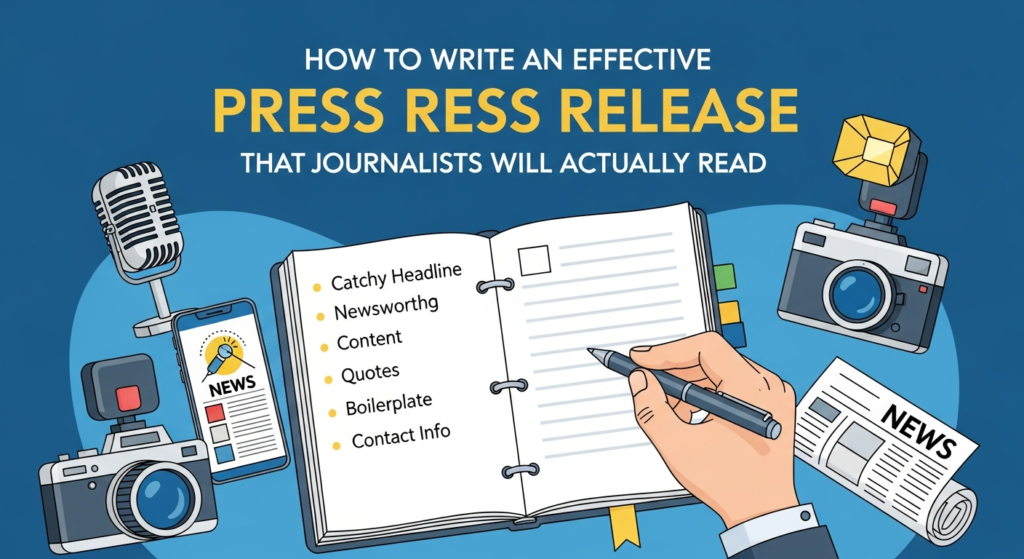
The Essential Building Blocks of a Strong Press Release
Creating a compelling press release is like building a house—you need a solid structure and the right materials. Here are the non-negotiable elements.
1. The Headline That Hooks
Your headline is your first, and sometimes only, chance to grab a journalist’s attention. It must be specific, newsworthy, and concise—ideally under 70 characters so it displays fully in email subject lines.
Weak: “Tech Company Announces Software Update”
Strong: “New AI Software Cuts Small Business Accounting Time by 50%”
The strong headline immediately tells the journalist why their readers should care. Use active voice, strong verbs, and focus on the most impactful aspect of your news. Avoid jargon and test your headline by asking: Would I want to read more if I saw this in a news feed?
2. The Lead Paragraph: The Inverted Pyramid
The first paragraph must answer the five W’s (Who, What, When, Where, Why) and How, presenting the most critical information first. This is called the inverted pyramid style, borrowed from journalism itself.
Keep your lead paragraph to 30-35 words. It should summarize the entire story so that even if a journalist reads nothing else, they understand the core announcement. Skip generic openers like “We are pleased to announce…” and dive straight into the news.
Example: “TechCompany today launched AI Assistant 2.0, a software update proven to reduce accounting time for small businesses by 50%, addressing a critical pain point for over 30 million entrepreneurs nationwide.”
3. Supporting Details and Context
The following paragraphs expand on the lead, providing the “why” and “how” in greater detail. This is where you add context, explaining how your news fits into larger industry trends or solves a specific problem.
Use this space to include:
Specific data or statistics that back up your claim.
Background on the problem your announcement solves.
Information about the company or partnership, if relevant.
Keep paragraphs short and focused. This makes it easier for journalists who may need to edit your content to fit their publication’s space.
4. Compelling Quotes That Add a Human Voice
Quotes bring your press release to life and give journalists ready-made, human-centric content. They should offer insight, not just enthusiasm.
Generic: “We’re thrilled to launch this new product.”
Effective: “For years, our customers told us they were spending hours on manual data entry,” said Jane Doe, CEO of TechCompany. “With AI Assistant 2.0, we’re giving them back their weekends. A task that took two hours now takes just one.”
Use quotes from key stakeholders—executives, partners, or even customers—to add perspective and a relatable voice. Keep them conversational and authentic.
5. Boilerplate and Media Contact Information
Every press release must end with two critical components:
The Boilerplate: A standard “About Us” paragraph that provides background on your company. Keep it concise (3-4 sentences) and consistent for every release.
Media Contact Details: Make it easy for journalists to follow up. Include the full name, phone number, email address, and website of a specific contact person. You may also want to include links to a press kit with high-resolution images, product demos, or executive headshots.
Common Pitfalls to Avoid
Knowing what not to do is just as important as knowing the rules. Steer clear of these common mistakes:
- Writing an Ad, Not a News Story: Avoid excessive superlatives (“revolutionary,” “amazing”) and marketing fluff. Stick to the facts.
- Burying the Lead: Don’t start with company history or background. Your most newsworthy point belongs in the first sentence.
- Poor Proofreading: Spelling errors and grammatical mistakes destroy credibility instantly. Have multiple people review the final draft.
Pitching Non-News: Only issue a press release for genuinely newsworthy events—product launches, major partnerships, significant funding rounds, or important hires. Routine updates are not press releases.
The Role of Timing and Distribution
Even a perfectly written press release can fail if it’s sent at the wrong time or to the wrong people.
Timing: Tuesday, Wednesday, and Thursday mornings are generally best, avoiding the Monday rush and Friday wind-down. Consider the news cycle of your specific industry as well.
Distribution: While newswires can be useful for broad distribution, targeted outreach to specific journalists who cover your beat is often more effective. Personalize your pitch email, but don’t spam.
The Follow-Up: A single, polite follow-up email or call is acceptable. Harassing a journalist is a surefire way to be blacklisted.
From Release to Results
Mastering the press release is a skill that develops over time. Study releases from companies you admire, analyze which stories get picked up by the media, and continuously refine your approach. By consistently providing valuable, well-crafted, and genuinely newsworthy content, you’ll not only increase your chances of coverage but also build your reputation as a reliable source—a reputation that is invaluable in the world of media relations.

