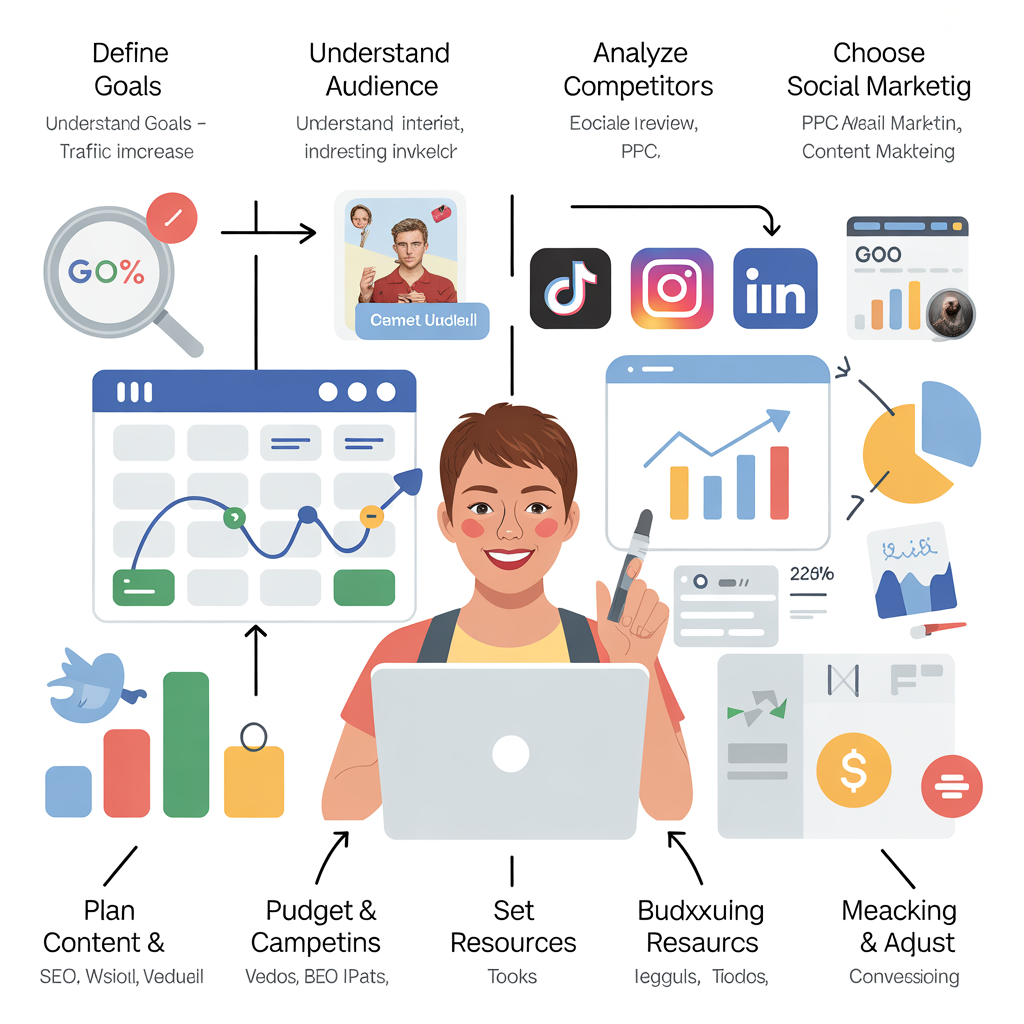

Key Takeaways
- A digital marketing plan is a roadmap for promoting your business online.
- Clear goals, audience understanding, and channel selection are critical for success.
- Planning content, budgeting, and tracking results ensures your efforts are effective.
- Beginners can create a practical plan by following a step-by-step approach and learning along the way.
Starting an online business or promoting your brand can feel overwhelming. With so many platforms, strategies, and tools, it is easy to get lost. That is why having a digital marketing plan is essential. A well-prepared plan acts as a roadmap, guiding your efforts, saving time, and helping you reach your target audience effectively.
Many beginners ask, “How do I prepare a digital marketing plan?” The good news is that anyone can create a plan with the right steps and a clear approach. In this guide, we will break down everything you need to know to prepare a digital marketing plan from scratch. By the end, you will feel confident to start promoting your business online.
What Is a Digital Marketing Plan?
Simple Definition
A digital marketing plan is a roadmap for promoting your business online. It outlines your goals, target audience, strategies, and the digital channels you will use. Think of it as a blueprint that keeps all marketing efforts organized and focused.
Why a Digital Marketing Plan Matters
A clear plan ensures your marketing activities are intentional and measurable. It helps beginners avoid wasting resources on random actions and ensures every effort contributes to your goals.
Benefits of a digital marketing plan:
- Provides clear direction for marketing activities
- Helps manage time, budget, and resources effectively
- Makes it easier to measure success and track results
- Supports smarter decision-making for campaigns
Key Steps to Prepare a Digital Marketing Plan
Step 1 – Define Your Goals
The first step is to identify what you want to achieve. Your goals should be SMART: Specific, Measurable, Achievable, Relevant, and Time-bound. Clear goals make it easier to plan campaigns and measure results.
Examples of digital marketing goals for beginners:
- Increase website traffic by 20% in three months
- Gain 500 new social media followers in 60 days
- Generate 50 leads from email campaigns in one month
Step 2 – Understand Your Target Audience
Knowing your audience is key to effective marketing. Identify who your ideal customers are, what they need, and where they spend their time online.
To understand your audience:
- Research demographics: age, location, gender
- Study interests and behavior online
- Use tools like Google Analytics and social media insights
A clear understanding of your audience helps tailor content and campaigns for better engagement.
Step 3 – Analyze Competitors
Studying competitors helps you identify opportunities and avoid mistakes. Look at what similar businesses are doing online.
Key points for competitor analysis:
- Review their website content and structure
- Examine their social media engagement and campaigns
- Identify gaps or weaknesses you can improve on
- Take note of keywords they target
Competitor analysis provides insights for creating unique and effective strategies.
Step 4 – Choose Digital Marketing Channels
Not every channel suits every business. Focus on platforms where your audience is most active and aligns with your goals.
Popular digital marketing channels:
- SEO (Search Engine Optimization) – Attracts organic traffic
- Social Media Marketing – Facebook, Instagram, LinkedIn, TikTok
- Email Marketing – Builds relationships and generates leads
- PPC (Pay-Per-Click Advertising) – Quick visibility through paid ads
- Content Marketing – Blogs, videos, guides, and infographics
Select channels based on resources, goals, and audience behavior to ensure effectiveness.
Step 5 – Plan Content and Campaigns
Content is at the heart of any digital marketing plan. Plan what you will post, when, and where.
Steps for content planning:
- Create a content calendar to schedule posts and campaigns
- Decide on content types: blogs, videos, social posts, infographics
- Align content with audience interests and business goals
- Schedule campaigns consistently for better engagement
Consistent content builds brand awareness and encourages customer interaction.
Step 6 – Set Budget and Resources
Even a small business needs to plan resources effectively. Knowing your budget helps prioritize activities.
Tips for budgeting:
- Estimate costs for ads, content creation, and tools
- Assign team responsibilities or outsourcing if needed
- Prioritize activities that give the best return on investment
A clear budget ensures you can execute the plan without overspending.
Step 7 – Track, Measure, and Adjust
A digital marketing plan is not static. You must track performance and adjust strategies for better results.
Key points for monitoring:
- Use metrics like website traffic, leads, conversions, and engagement
- Tools: Google Analytics, social media analytics, email campaign reports
- Adjust strategies based on data and results
Tracking and adjustment are essential for long-term success.
Tips for Beginners
- Start small with the most impactful channels
- Be consistent in posting and updates
- Test different content types to find what works best
- Learn from analytics to improve strategies
- Keep your plan flexible for changes in trends or audience behavior
Common Mistakes to Avoid
- Setting unclear or unrealistic goals
- Ignoring audience research
- Spreading resources too thin across channels
- Not tracking performance
- Copying competitors blindly without unique value
Avoiding these mistakes helps beginners create an effective and realistic marketing plan.
Helpful Tools for Planning
- Google Analytics – Track website performance
- Google Keyword Planner – Identify SEO opportunities
- Canva – Design visual content
- Mailchimp – Email marketing automation
- Optional paid tools: SEMrush, HubSpot, Ahrefs
- Social media schedulers: Buffer, Hootsuite
These tools simplify planning and monitoring for beginners.
Conclusion
Preparing a digital marketing plan may seem challenging at first, but beginners can create a practical and effective roadmap by following clear steps. Start by defining goals, understanding your audience, selecting channels, planning content, and tracking results. A well-prepared plan saves time, ensures consistency, and improves your chances of reaching your audience online.
Take action today and start preparing your digital marketing plan. Every small step you take brings your business closer to growth and online success.
Frequently Asked Questions (FAQ)
- How long does it take to see results from a digital marketing plan?
Results vary by strategy, but beginners may notice improvements in 3–6 months with consistent effort. - Do I need professional skills to prepare a marketing plan?
No. Basic understanding of your audience, tools, and platforms is enough to start. - Can I focus on only one marketing channel?
Yes, beginners can start with one channel and expand over time for better results. - How do I measure success?
Use metrics like traffic, leads, conversions, and engagement to track performance. - Can small businesses succeed with DIY digital marketing plans?
Absolutely. Small businesses can achieve growth by starting small, staying consistent, and analyzing results.