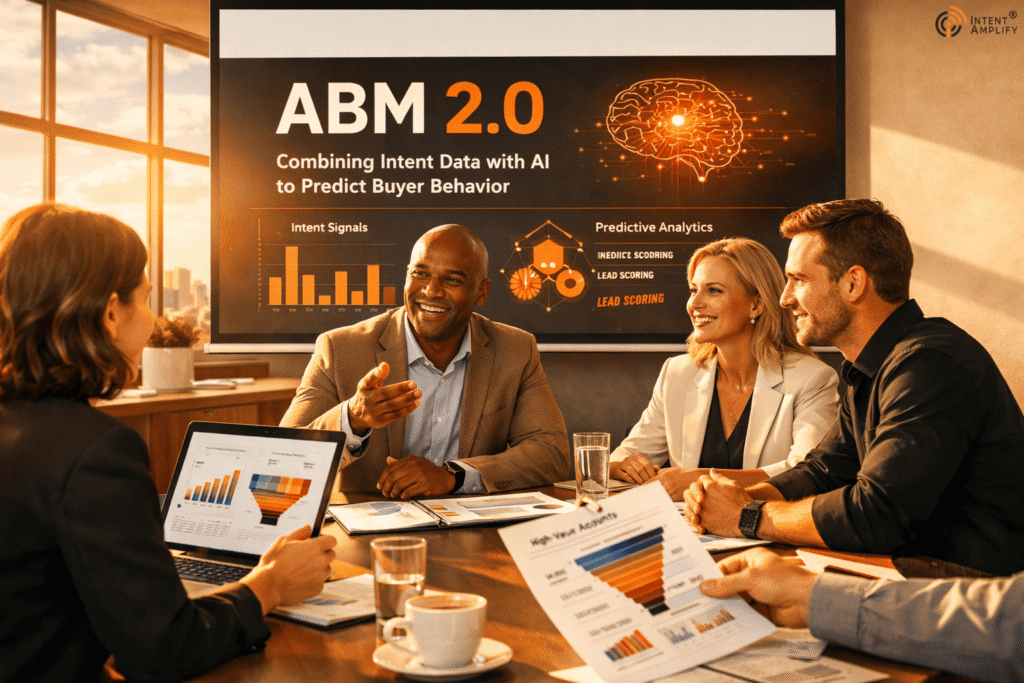

In today’s competitive B2B landscape, traditional marketing tactics often fall short when it comes to reaching high-value decision makers. Businesses are no longer satisfied with generic lead generation – they want precision targeting, predictive insights, and measurable ROI. This is where Account-Based Marketing (ABM) 2.0 comes into play.
ABM has evolved significantly over the past few years. The modern version integrates intent data and artificial intelligence (AI) to identify buying signals, predict buyer behavior, and engage accounts at the right time. Instead of reacting to prospects after they enter the funnel, companies can now anticipate demand and proactively deliver personalized experiences.
For B2B marketers focused on generating qualified leads and accelerating sales cycles, ABM 2.0 is quickly becoming a cornerstone strategy.
What is ABM 2.0?
ABM 2.0 represents the next generation of account-based marketing. While traditional ABM focused primarily on targeting a predefined list of high-value accounts, ABM 2.0 leverages advanced analytics, AI-driven insights, and real-time intent signals to prioritize accounts that are actively researching solutions.
This shift allows marketing and sales teams to:
- Identify accounts actively in the buying journey.
- Deliver hyper-personalized messaging
- Predict which prospects are most likely to convert.
- Align marketing and sales efforts with data-driven insights.
The result is a more efficient pipeline and higher-quality opportunities.
The Role of Intent Data in Modern B2B Marketing
Intent data refers to behavioral signals that indicate a company’s interest in a particular product, service, or topic. These signals can come from various digital interactions, such as:
- Content downloads
- Website visits
- Keyword searches
- Engagement with industry publications
- Participation in webinars or online events
When analyzed correctly, intent data helps marketers understand which companies are researching specific solutions and where they are in the buying cycle.
For example, if multiple stakeholders from the same organization are researching “account-based marketing platforms,” it signals a strong purchase intent. This insight allows marketers to engage that account with relevant messaging before competitors do.
How AI Enhances Intent Data for Predictive Marketing
While intent data provides valuable insights, AI takes it a step further by transforming raw data into actionable predictions.
Artificial intelligence can analyze millions of behavioral signals across digital channels to uncover patterns that human analysts might miss. This enables B2B organizations to predict buyer behavior with remarkable accuracy.
AI-powered ABM platforms help teams:
- Identify High-Value Accounts
Machine learning models analyze firmographic data, engagement behavior, and historical deals to determine which accounts resemble your best customers.
- Predict Buying Readiness
AI evaluates intent signals and engagement patterns to identify accounts that are approaching a purchase decision.
- Personalize Engagement at Scale
AI-driven marketing tools can automatically tailor messaging, ads, and content based on an account’s industry, challenges, and interests.
- Improve Sales and Marketing Alignment
Predictive insights enable sales teams to focus their efforts on accounts that show strong buying signals, increasing conversion rates.
Key Benefits of Combining AI with Intent Data in ABM
Organizations adopting ABM 2.0 are seeing significant improvements in their marketing performance.
Some of the major benefits include:
- Higher Quality Leads: Target accounts actively researching solutions instead of relying on cold outreach.
- Shorter Sales Cycles: Engage prospects earlier in their decision-making process.
- Better Personalization: Deliver relevant content that resonates with each account.
- Improved ROI: Focus marketing resources on accounts with the highest conversion potential.
- Stronger Sales Alignment: Shared insights ensure marketing and sales teams work toward the same revenue goals.
These advantages make ABM 2.0 one of the most powerful strategies for modern B2B demand generation.
Best Practices for Implementing ABM 2.0
To fully leverage AI and intent data, companies should follow a structured approach.
Prioritize the Right Accounts
Use predictive analytics and intent signals to identify organizations that show strong buying interest.
Integrate Data Across Platforms
Connect CRM, marketing automation, and intent data platforms to build a unified view of each account.
Deliver Personalized Content
Create targeted messaging tailored to the specific challenges and goals of each account.
Align Sales and Marketing, Teams
Ensure both teams collaborate closely on account targeting, outreach strategies, and follow-ups.
Continuously Optimize Campaigns
Analyze campaign performance regularly and refine strategies based on data-driven insights.
Conclusion
The evolution of ABM 2.0 marks a major shift in how B2B organizations approach demand generation and lead acquisition. By combining intent data with artificial intelligence, marketers can move beyond reactive strategies and begin predicting buyer behavior with greater precision.
Companies that embrace this approach gain a significant competitive advantage. They can identify high-value prospects earlier, deliver personalized engagement, and guide accounts through the buying journey more effectively.
As B2B markets continue to become more data-driven, AI-powered account-based marketing will play an increasingly critical role in building strong pipelines, generating qualified leads, and driving sustainable revenue growth.