
Introduction
In wound care management, the difference between timely reimbursement and delayed or denied claims can often hinge on a single coding detail. Chronic wounds—ranging from diabetic foot ulcers to pressure injuries and surgical wounds—require detailed clinical assessment, precise treatment, and accurate documentation. Yet, despite high-quality care, many clinics face financial shortfalls because a minor coding error or oversight can significantly impact payment outcomes.
Every wound care encounter generates a wealth of clinical information: wound type, depth, size, tissue composition, infection status, and treatments performed. Translating this information into proper CPT and ICD-10 codes is critical to ensuring that insurance providers understand the medical necessity and complexity of care. A seemingly small discrepancy—such as an incorrect modifier, an overlooked secondary diagnosis, or an imprecise procedure code—can result in claim denials, reduced reimbursement, or prolonged payment delays.
To address these challenges, many wound care providers partner with specialized wound care billing services, ensuring that coding aligns with clinical documentation and payer requirements. These services not only help prevent costly errors but also optimize revenue by ensuring that every claim accurately reflects the care provided.
This article explores how a single coding detail can dramatically influence reimbursement outcomes in wound management. It highlights the importance of meticulous coding practices, the financial consequences of errors, and actionable strategies clinics can adopt to protect revenue while maintaining compliance and quality care.
Understanding the Critical Role of Coding in Wound Care
Medical coding serves as the bridge between clinical care and reimbursement. Every procedure, debridement, dressing application, or advanced therapy must be mapped to the correct CPT and ICD-10 codes. Accurate coding allows payers to:
- Assess medical necessity
- Evaluate clinical complexity
- Determine reimbursement levels
Even minor coding mistakes—such as an incorrect wound stage, missing anatomical location, or the wrong debridement depth code—can change the perceived complexity of care. This, in turn, can affect the payment rate and the likelihood of claim approval.
The Financial Impact of a Single Coding Error
A single coding detail can impact a clinic’s revenue in several ways:
1. Claim Denials
A minor coding inaccuracy may trigger a denial. For example, if the ICD-10 diagnosis code does not fully justify a debridement procedure, the payer may reject the claim, requiring resubmission and administrative follow-up.
2. Underpayment
Incorrect coding can result in reimbursement at a lower rate than the service provided. An overlooked modifier or misassigned CPT code can reduce payment for procedures that were medically necessary.
3. Delayed Payments
Even if claims are eventually approved, coding errors can prolong the review process, delaying cash flow and creating operational strain.
4. Audit Risk
Errors in coding increase vulnerability during payer audits. Documentation and coding discrepancies can lead to additional scrutiny, potential repayment requests, and penalties.
Common Coding Details That Affect Reimbursement
Understanding which coding elements carry the most weight can help providers prevent errors:
Accurate ICD-10 Diagnosis Codes
Wound etiology, stage, and comorbidities must be precisely documented. For instance, coding a diabetic ulcer incorrectly or omitting infection details can result in claim rejection or reduced payment.
CPT Procedure Accuracy
Debridement, skin grafts, advanced dressings, and other procedures must be coded correctly according to depth, wound size, and tissue type. A minor mistake in procedure coding can materially alter reimbursement.
Modifier Usage
Modifiers such as 59 (distinct procedural service) or 25 (significant evaluation and management service) convey additional information about the service performed. Missing or incorrect modifiers can lead to denials or underpayment.
Anatomical Location
Specifying wound location is often required for accurate coding. Misrepresenting or omitting this information can affect claim approval.
Documentation Alignment
Coding must align with clinical notes. Payers review documentation to verify that coded services are medically necessary and appropriate.
Strategies to Ensure Accurate Coding
Preventing costly coding mistakes requires a combination of clinical diligence and administrative oversight.
Partner with Wound Care Billing Services
Experienced billing professionals review clinical documentation and ensure coding accuracy. They can flag inconsistencies and guide to optimize reimbursement.
Implement Structured Documentation Templates
Standardized templates in electronic health records (EHRs) help clinicians capture essential details consistently, reducing coding errors.
Ongoing Staff Education
Training providers and coders on ICD-10, CPT, and payer-specific requirements ensures everyone understands the importance of precise coding.
Conduct Regular Audits
Routine coding and documentation audits identify recurring errors, highlight areas for improvement, and maintain compliance.
Leverage Technology
Digital wound measurement tools, automated coding assistance, and integrated EHRs reduce manual errors and improve coding precision.
The Revenue Advantages of Accurate Coding
By addressing a single coding detail, clinics can significantly enhance financial performance. Accurate coding leads to:
- Faster claim approvals
- Reduced denials
- Improved reimbursement accuracy
- Stronger audit protection
- Better alignment between clinical complexity and payment
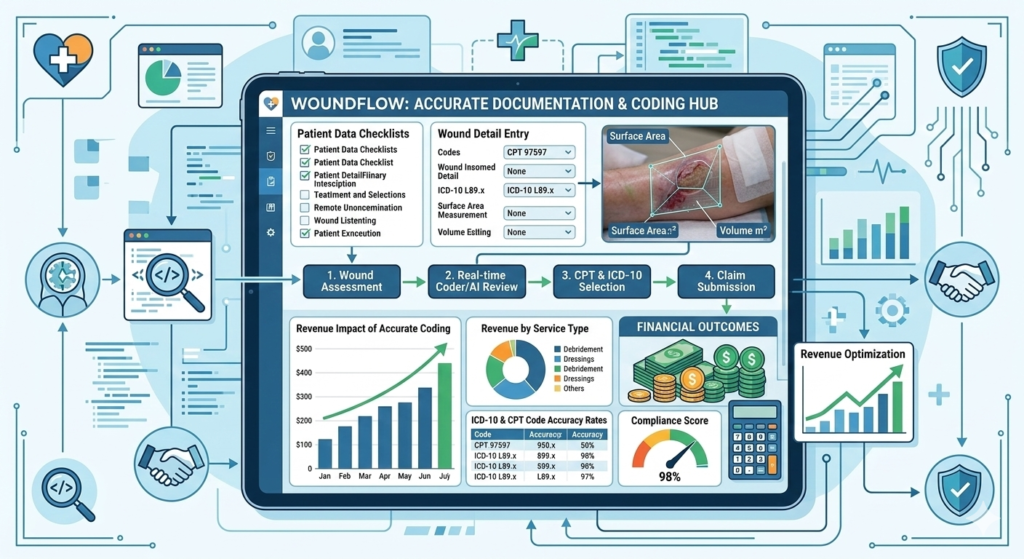
Even minor improvements in coding accuracy can translate into substantial financial gains over time, making meticulous coding a strategic revenue driver.
Case Example: The Power of One Detail
Consider a chronic diabetic foot ulcer undergoing sharp debridement. If the CPT code reflects a superficial debridement instead of the correct intermediate or deep debridement, the clinic may be underpaid by hundreds of dollars for a single procedure. Multiply this across dozens of patients and multiple procedures per week, and the cumulative financial loss becomes substantial.
This example illustrates why clinics must treat each coding detail with the same care as clinical interventions.
Conclusion
In wound management, accurate coding is not a mere administrative task—it is a critical determinant of revenue. A single overlooked detail in CPT or ICD-10 coding can affect claim approvals, delay payments, reduce reimbursement, and increase audit risk.
By implementing structured documentation practices, investing in staff training, leveraging technology, and collaborating with experienced wound care billing services, clinics can ensure that coding accurately reflects the complexity and medical necessity of care.
Ultimately, attention to detail in coding transforms clinical expertise into sustainable revenue, allowing wound care providers to focus on their primary mission: delivering effective, high-quality care to patients while maintaining financial stability.