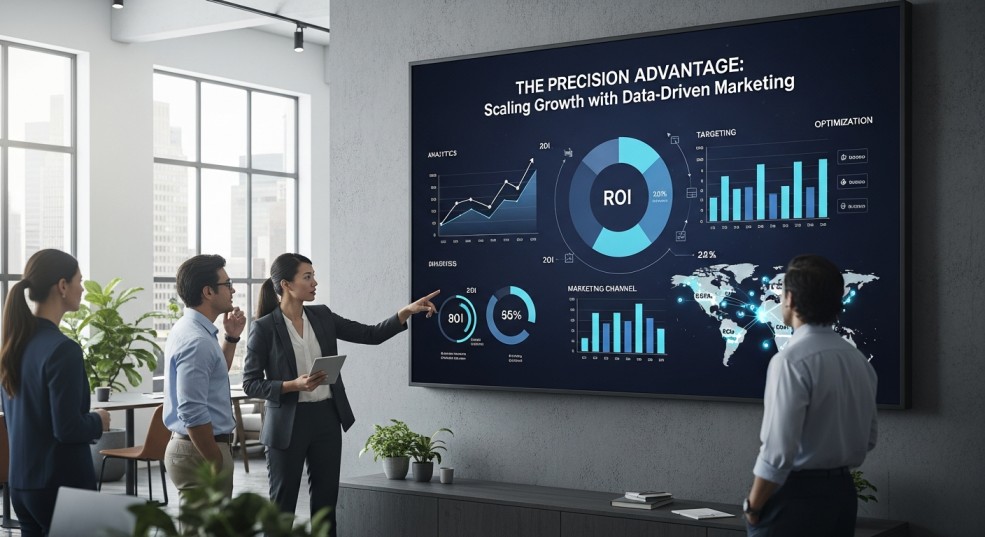

In an era where every click, scroll, and purchase creates a digital footprint, the era of relying on “gut feeling” for business strategy has effectively ended. Today, the most resilient and profitable companies have replaced guesswork with a rigorous, evidence-based discipline: data-driven marketing.
By utilizing the vast influx of information generated by modern consumer interactions, brands can now move away from broad-spectrum, “spray-and-pray” advertising and toward a model of surgical precision. As highlighted by DD Promo Tips, this approach is no longer a high-tech luxury; it is the fundamental engine that powers successful promotional activities and long-term brand communication in a digital-first world.
Understanding the Data-Driven Cycle
At its core, data-driven marketing is the process of leveraging quantitative information—such as customer demographics, purchase history, and real-time behavioral patterns—to predict needs and inform strategy. It is not merely a static collection of facts, but a continuous, dynamic cycle that transforms raw data into actionable intelligence.
This cycle generally follows three distinct phases:
-
Data Harvesting: The strategic collection of first-party data from touchpoints like websites, CRM platforms, and social media interactions.
-
Intelligent Analysis: The use of advanced analytics to uncover patterns, segment audiences, and identify the “why” behind consumer behavior.
-
Strategic Activation: The implementation of targeted campaigns that are personalized to individual user needs, ensuring the right message reaches the right person at the optimal time.
Why Data-Driven Precision is the Gold Standard
Modern consumers move across dozens of channels—from social media discovery to mobile app engagement—before making a purchase. A data-driven model provides the “single source of truth” required to understand this journey. Companies that prioritize this approach reap several measurable rewards:
1. Hyper-Personalization at Scale
Today’s buyers expect a curated experience. Data allows you to move beyond basic demographics (like age or location) and into behavioral psychographics. You can serve dynamic content—such as personalized product recommendations or custom email flows—that makes a customer feel like your brand understands their specific pain points.
2. Radical Efficiency in Ad Spend
One of the most persistent issues in marketing is wasted budget. By identifying and cutting off underperforming channels, segments, and ad creatives in real-time, brands can reallocate their resources toward the initiatives that actually drive revenue. This shift directly improves your Return on Ad Spend (ROAS).
3. Proactive Customer Retention
Predictive analytics now allows brands to identify “churn signals”—signs that a customer is losing interest—before they actually leave. By using data to trigger proactive re-engagement offers, brands can secure loyalty and extend the lifetime value (LTV) of their customer base.
The Synergy of AI and Human Insight
In 2026, data-driven marketing is evolving rapidly due to the integration of AI agents and machine learning. However, the human element remains the most vital ingredient. While AI tools can process millions of data points to identify a trend in seconds, human marketers provide the empathy, storytelling, and strategic vision needed to turn that trend into an emotional connection.
Data provides the “guardrails” for your creativity. When your team knows exactly what resonates with an audience, they don’t have to guess. They can focus their energy on producing bold, resonant content that is mathematically proven to hit the mark.
Overcoming the “Data Silo” Challenge
A significant hurdle for many organizations is the presence of “data silos,” where different departments (like Sales, Marketing, and Support) keep their customer data in separate, disconnected systems. For a data-driven strategy to truly succeed, your organization must break down these barriers.
By centralizing your data into a Customer Data Platform (CDP) or an integrated CRM, you ensure that everyone in your company is operating from the same perspective. When your entire team understands the customer journey from start to finish, the brand experience becomes seamless, consistent, and significantly more powerful.
Building a Data-Resilient Culture
Transitioning to a data-driven model requires more than just buying the right software; it requires a cultural shift. You must foster an environment that encourages “test-and-learn” experiments. In this culture, a failed campaign is not a loss; it is a vital data point that makes the next campaign smarter.
By adopting the frameworks promoted by DD Promo Tips, businesses can transition from reactive planning to proactive growth. Data-driven marketing works because it places the customer’s verified behavior at the center of the universe. It provides the clarity needed to scale confidently and the precision needed to win in an increasingly complex and competitive digital marketplace.
Read the Full Article
To dive deeper into the specific tools, KPIs, and advanced segmentation protocols that can transform your business into a high-octane growth engine, we encourage you to explore the complete guide. You will find the technical depth required to turn your raw information into a competitive weapon.
👉 Read the full article here: https://ddpromotips.com/how-does-data-driven-marketing-work/
#DataDrivenMarketing #GrowthStrategy #BusinessIntelligence #DigitalTransformation