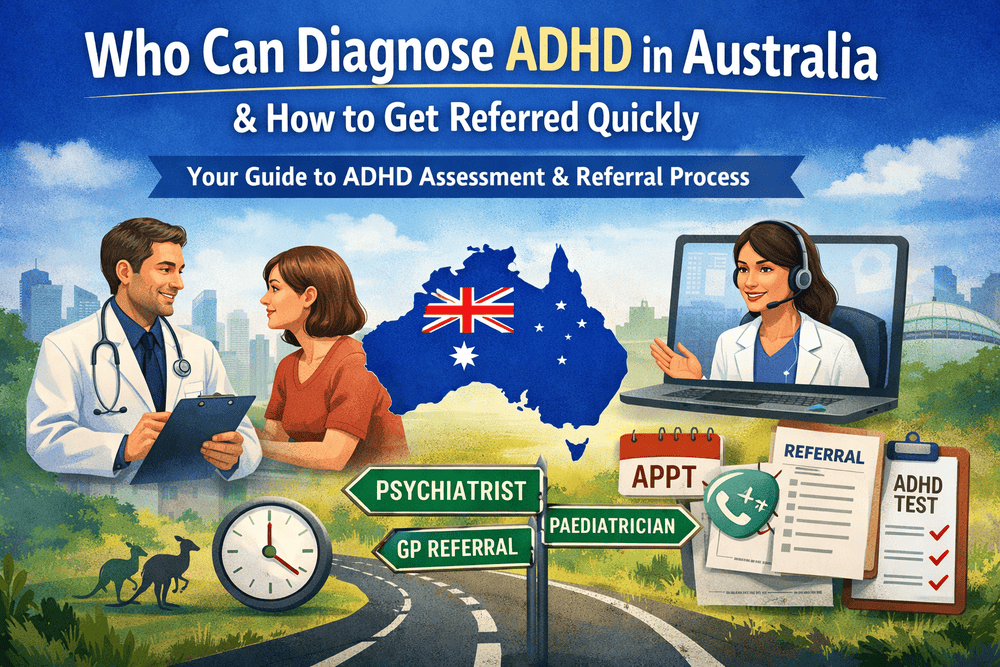

If you’ve been struggling with focus, impulsivity, disorganisation, or restlessness, you might be wondering: who can diagnose adhd in Australia? It’s a common question and an important one. Getting the right diagnosis is the first step toward effective support, treatment, and a better quality of life. In Australia, ADHD assessments follow a specific medical pathway, and understanding how the system works can save you months (or even years) of frustration.
This guide explains exactly who is qualified to diagnose ADHD, how referrals work, how to speed up the process, and what to expect at each stage all tailored to the Australian healthcare system.
Understanding ADHD in the Australian Context
Attention-Deficit/Hyperactivity Disorder (ADHD) is a neurodevelopmental condition that affects both children and adults. It’s not just about being “distracted” or “hyper.” ADHD can impact:
- Attention and concentration
- Executive functioning (planning, organisation, time management)
- Emotional regulation
- Memory
- Academic and workplace performance
- Relationships and daily functioning
In Australia, awareness of adult ADHD has grown significantly in recent years, leading to higher demand for assessments and longer waiting lists.
Who Is Legally Allowed to Diagnose ADHD in Australia?
1. Psychiatrists (Primary Diagnosing Specialists)
In Australia, psychiatrists are the main professionals authorised to diagnose ADHD and prescribe medication. These are medical doctors who specialise in mental health and neurodevelopmental conditions.
A psychiatrist will:
- Conduct a comprehensive clinical assessment
- Review developmental history (including childhood symptoms)
- Assess for co-occurring conditions (e.g., anxiety, depression, autism)
- Determine whether symptoms meet diagnostic criteria
- Prescribe medication if appropriate
Because stimulant medications are tightly regulated, only psychiatrists (and sometimes paediatricians for children) can initiate them.
2. Paediatricians (For Children and Teens)
For individuals under 18, developmental or general paediatricians can diagnose ADHD. Many families begin the process through their child’s GP and are then referred to a paediatric specialist.
Paediatricians often collaborate with:
- Schools and teachers
- Psychologists
- Occupational therapists
- Speech therapists
3. Psychologists (Assessment Support Not Medical Diagnosis)
Psychologists play a vital role but cannot prescribe medication. Clinical psychologists can:
- Conduct cognitive and behavioural assessments
- Provide therapy and coping strategies
- Identify ADHD traits
- Prepare detailed reports
However, a formal medical diagnosis for medication purposes still requires a psychiatrist or paediatrician.
4. General Practitioners (GPs)
GPs cannot usually diagnose ADHD independently, but they are the gateway to specialist care.
Under Australian healthcare rules, you typically need a GP referral to access:
- Psychiatrist appointments
- Medicare rebates
- Public or private specialist services
Many GPs are increasingly knowledgeable about adult ADHD and can conduct initial screening before referring you onward.
Why a GP Referral Is So Important
To access subsidised specialist care through Medicare, you need a referral from a GP. Without it, you may face significantly higher out-of-pocket costs.
GP referrals also:
- Help prioritise your case
- Provide medical background to the specialist
- Allow shared care arrangements after diagnosis
- Enable ongoing prescriptions under supervision
Guidelines from the Royal Australian College of General Practitioners encourage GPs to coordinate ADHD care, especially for adults who were never diagnosed as children.
How to Get Referred Quickly for an ADHD Assessment
Long wait times are one of the biggest barriers in Australia. Here’s how to speed things up.
1. Book a Long GP Appointment
Tell reception you need a mental health or ADHD assessment discussion so they allocate enough time.
Come prepared with:
- A list of symptoms
- Examples from work/school/home
- Childhood history if available
- Family history of ADHD
- Previous mental health diagnoses
The clearer your case, the easier it is for your GP to justify an urgent referral.
2. Ask for a Referral to Multiple Specialists
You are allowed to request:
- Several referral letters
- “Open” referrals (not addressed to a single doctor)
- Telehealth-friendly psychiatrists
This dramatically increases your chances of finding the earliest available appointment.
3. Consider Telehealth Psychiatry
Telehealth has transformed ADHD care in Australia, especially for regional or busy patients. Many psychiatrists now conduct assessments entirely online.
Benefits include:
- Shorter waiting times
- No travel required
- Access to specialists nationwide
- Flexible scheduling
Services like HelloDoc can help connect patients with Australian-registered clinicians who provide ADHD assessments via secure telehealth platforms.
4. Ask About Cancellation Lists
Many clinics maintain waiting lists for last-minute openings. Calling periodically can sometimes secure an appointment much sooner.
5. Explore Public vs Private Options
Private psychiatrists:
- Faster access
- Higher out-of-pocket costs
- Partial Medicare rebates
Public mental health services:
- Low or no cost
- Very long wait times
- Strict eligibility criteria
What Happens During an ADHD Assessment?
A proper diagnosis is comprehensive not a quick checklist.
Clinical Interview
The psychiatrist will explore:
- Current symptoms
- Childhood behaviour
- Education history
- Work functioning
- Relationships
- Mental health history
Standardised Questionnaires
You may be asked to complete validated screening tools. Sometimes partners, parents, or teachers provide input as well.
Differential Diagnosis
ADHD symptoms overlap with other conditions. The clinician will rule out or assess for:
- Anxiety disorders
- Depression
- Autism spectrum disorder
- Sleep disorders
- Trauma-related conditions
- Substance use
Physical and Medical Review
Medical factors that could mimic ADHD symptoms may be considered.
After Diagnosis: What Comes Next?
Medication Options
If medication is recommended, psychiatrists may prescribe stimulant or non-stimulant treatments. These are closely monitored due to regulatory requirements.
Therapy and Coaching
Medication is only one part of management. Many Australians benefit from:
- Cognitive behavioural therapy (CBT)
- ADHD coaching
- Executive functioning training
- Workplace accommodations
- Lifestyle strategies
GP Shared Care
After stabilisation, your psychiatrist may coordinate with your GP for ongoing prescriptions and monitoring.
ADHD Diagnosis for Adults vs Children
Adults
Adult diagnoses often rely heavily on retrospective childhood evidence. Many adults were overlooked in school, particularly women and those with inattentive-type ADHD.
Children
Assessments often involve multiple sources:
- Parents
- Teachers
- School reports
- Behavioural observations
Common Barriers to Diagnosis in Australia
Long Waiting Lists
Demand for ADHD specialists has surged, particularly since COVID-19 increased awareness of mental health.
Cost
Private assessments can range from several hundred to several thousand dollars, depending on complexity and number of sessions.
Stigma and Misconceptions
Some adults worry they won’t be taken seriously or that ADHD is “overdiagnosed.” In reality, many Australians remain undiagnosed and unsupported.
Signs You Should Seek an Assessment
Consider speaking with a GP if you experience persistent difficulties such as:
- Chronic procrastination despite effort
- Trouble finishing tasks
- Forgetfulness affecting daily life
- Impulsivity or emotional reactivity
- Restlessness or difficulty relaxing
- Underperformance relative to ability
- Frequent job changes or academic struggles
Early assessment can prevent years of unnecessary stress and self-doubt.
How to Prepare for Your First Appointment
Bring:
- School reports (if available)
- Previous psychological assessments
- Medication history
- Notes on symptoms
- Questions you want answered
Preparation helps ensure your appointment is productive and thorough.
Why Early Diagnosis Matters
Untreated ADHD can affect nearly every aspect of life:
- Career progression
- Financial management
- Mental health
- Self-esteem
- Relationships
- Physical health
Conversely, appropriate treatment often leads to significant improvements in functioning and wellbeing.
Final Thoughts: Navigating the ADHD Diagnosis Pathway in Australia
So, who can diagnose adhd in Australia? The short answer is: a psychiatrist (or paediatrician for children), usually accessed through a GP referral. While the process can feel slow and complicated, understanding the system and using strategies like telehealth, cancellation lists, and multiple referrals can dramatically shorten your wait.
If you suspect you or your child may have ADHD, don’t put it off. Speak with a GP, advocate for yourself, and explore all available pathways. With the right support, ADHD is highly manageable, and many Australians go on to thrive once they receive an accurate diagnosis and tailored treatment plan.