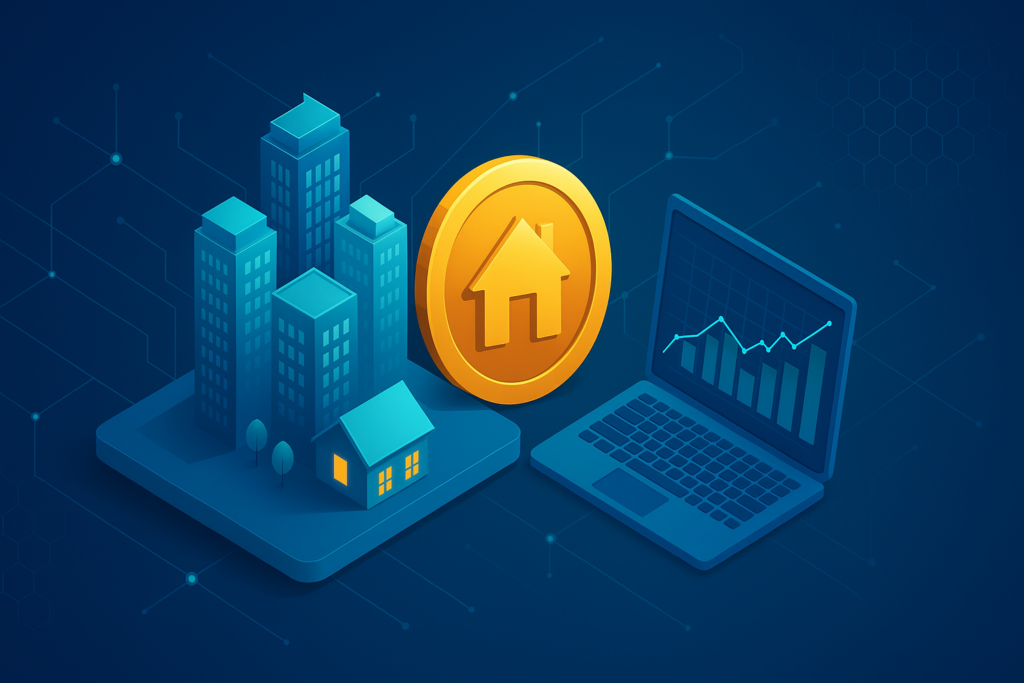

Real estate has long been one of the most sought-after investment classes, offering both wealth preservation and income generation potential. Traditionally, investing in property required substantial capital, extensive market knowledge, and complex legal procedures. These factors often limited participation to high-net-worth individuals and institutional investors. However, the advent of blockchain technology and tokenization has begun to reshape the real estate landscape, introducing a level of accessibility, transparency, and flexibility that was previously unimaginable. Real estate tokenization, the process of converting property assets into digital tokens that represent fractional ownership on a blockchain, is increasingly influencing how investors approach long-term property strategies.
Understanding Real Estate Tokenization
Real estate tokenization fundamentally changes the way investors can access property markets. Instead of buying entire properties or entering into complicated syndication agreements, investors can now purchase digital tokens that represent shares of a real estate asset. Each token is backed by the underlying property and entitles the holder to proportional ownership rights, including rental income, appreciation benefits, and voting power in management decisions, depending on the structure of the token offering.
This system relies on blockchain technology to ensure security, transparency, and immutability. Blockchain records every transaction related to tokenized assets, preventing fraudulent claims or ownership disputes. Smart contracts automate key processes such as rent distribution, dividend payments, and governance voting, thereby reducing the need for intermediaries and associated costs. The result is a more efficient, liquid, and democratized real estate market.
Lowering Barriers to Entry
One of the most significant impacts of real estate tokenization on long-term investment strategies is the lowering of entry barriers. In traditional real estate investment, buying a single apartment or commercial unit often requires tens or hundreds of thousands of dollars, excluding ongoing management and maintenance costs. Tokenization allows investors to buy small fractions of high-value assets, sometimes for as little as a few hundred dollars. This fractional ownership model enables a broader base of investors to participate in markets that were previously out of reach.
For long-term strategies, this democratization opens up opportunities for portfolio diversification. Investors can now allocate capital across multiple properties, geographies, and asset types without committing massive amounts of cash to a single asset. For example, an investor could hold tokenized shares in residential complexes in New York, office spaces in London, and industrial warehouses in Singapore. This global diversification helps mitigate risks associated with local market volatility while capturing potential growth in high-demand markets worldwide.
Enhancing Liquidity
Liquidity has traditionally been a limiting factor in real estate investment. Selling a property can take months, and transaction costs, including legal fees, agent commissions, and taxes, are often substantial. Tokenization addresses this challenge by allowing tokens to be traded on regulated digital marketplaces or exchanges, often with significantly lower friction than selling the underlying asset directly. Investors can convert their token holdings into cash more quickly, providing flexibility in portfolio management.
For long-term investors, enhanced liquidity allows for strategic rebalancing. Instead of being locked into a single property for decades, investors can adjust their holdings in response to market trends, interest rate fluctuations, or shifts in investment goals. Liquidity also reduces the opportunity cost of holding real estate assets that may underperform relative to other asset classes, enabling a more dynamic and responsive investment approach.
Improved Transparency and Trust
Transparency is a critical component of sustainable long-term investment strategies. Blockchain’s distributed ledger ensures that every transaction, ownership change, and rental income distribution is recorded and visible to all stakeholders. Token holders can verify the authenticity of property documents, track historical ownership, and monitor financial performance in real time. This level of visibility helps reduce the risk of fraud, mismanagement, or opaque fee structures that have historically plagued real estate markets.
Additionally, tokenization platforms often provide standardized reporting mechanisms for financial metrics, occupancy rates, and maintenance updates. This data-driven transparency allows investors to make informed decisions based on accurate and timely information, enhancing trust in long-term investment plans. As a result, both individual and institutional investors can confidently commit capital to tokenized real estate projects knowing that their investments are being actively monitored and efficiently managed.
Fractional Ownership and Portfolio Diversification
Fractional ownership, a cornerstone of real estate tokenization, has profound implications for long-term investment strategies. By breaking down properties into smaller, tradeable units, investors can diversify across multiple asset types and locations without a prohibitive capital requirement. Diversification reduces exposure to risks associated with single-property ownership, such as tenant defaults, property damage, or market downturns in a specific region.
Moreover, fractional ownership allows investors to adopt hybrid strategies that combine income generation and capital appreciation. For instance, tokens in rental properties provide a steady stream of rental income distributed via smart contracts, while tokens in high-growth commercial districts or redevelopment projects offer the potential for significant capital gains over time. This flexibility enables investors to construct balanced portfolios that align with both short-term cash flow needs and long-term wealth-building objectives.
Streamlined Property Management
Managing real estate assets traditionally involves a complex mix of tasks, including tenant management, maintenance coordination, legal compliance, and financial reporting. Tokenization simplifies many of these processes through automation and smart contract integration. Smart contracts can automatically distribute rental income to token holders, enforce lease agreements, and trigger maintenance requests when certain conditions are met. This reduces administrative burdens and operational inefficiencies that can erode long-term returns.
Furthermore, tokenization platforms often consolidate asset management tools, providing investors with centralized dashboards to track property performance, occupancy rates, and market trends. This streamlined approach enhances the scalability of real estate investments, allowing investors to hold diverse portfolios without proportionally increasing management complexity or overhead costs.
Regulatory Considerations and Compliance
While tokenization offers numerous advantages, long-term investors must consider regulatory frameworks. Real estate token offerings (RTOs) are typically subject to securities laws and anti-money laundering (AML) regulations in most jurisdictions. Compliance with these regulations ensures that tokenized assets are legally recognized and that investor protections are in place. Regulatory adherence can impact liquidity, trading platforms, and investor eligibility, influencing long-term strategy planning.
Investors must evaluate tokenization platforms based on their regulatory compliance, reputation, and transparency. Platforms that provide fully compliant token offerings reduce legal risks and enhance the credibility of the investment. Over time, as regulatory clarity improves globally, tokenized real estate is expected to become an increasingly secure and standardized component of long-term property portfolios.
Enhancing Access to Global Markets
Traditional real estate investment is often limited by geographical constraints, legal systems, and local market knowledge. Tokenization removes many of these barriers, allowing investors to access international property markets with relative ease. Through digital tokens, investors can participate in global projects, including luxury residential complexes, commercial office buildings, or industrial facilities, without physically being present or navigating complex foreign ownership laws.
For long-term investment strategies, global access enables geographic diversification, which can protect against localized economic downturns or political instability. Investors can strategically allocate assets across regions with high growth potential or low market volatility, creating a more resilient portfolio capable of weathering various economic cycles.
Potential Risks and Mitigation Strategies
Despite its advantages, real estate tokenization is not without risks. Market volatility, technology vulnerabilities, regulatory uncertainty, and platform reliability are key considerations. Token values can fluctuate based on property performance, market demand, or broader economic conditions. Additionally, reliance on blockchain and digital platforms introduces cybersecurity risks and technical challenges that investors must manage.
Mitigation strategies include thorough due diligence on tokenization platforms, understanding the underlying property assets, and diversifying holdings across multiple tokens and asset classes. Investors should also stay informed about evolving regulatory landscapes and technology standards to ensure that long-term strategies remain viable and secure. By proactively managing these risks, investors can maximize the benefits of tokenized real estate while minimizing potential downsides.
Long-Term Investment Outlook
The integration of tokenization into real estate investment represents a paradigm shift in how investors approach property markets. Over the long term, tokenized assets are expected to offer improved accessibility, liquidity, transparency, and portfolio flexibility. Investors who incorporate tokenized real estate into their strategies can achieve a more balanced and diversified portfolio, optimize cash flow management, and access global growth opportunities that were previously unattainable.
Furthermore, as blockchain technology matures and regulatory frameworks solidify, tokenized real estate is likely to become a mainstream component of long-term investment portfolios. Institutional investors are already exploring tokenized commercial properties, REITs, and mixed-use developments, signaling a broader acceptance and validation of this innovative model. For individual investors, this evolution presents a unique opportunity to participate in high-value markets and adopt sophisticated, data-driven investment strategies that align with modern financial goals.
Conclusion
Real estate tokenization is reshaping long-term property investment strategies by democratizing access, enhancing liquidity, providing transparency, and enabling fractional ownership. Investors can now participate in global property markets with smaller capital commitments, diversify portfolios across multiple asset types and geographies, and streamline property management through smart contracts. While regulatory and technological risks exist, careful due diligence and strategic planning can mitigate these challenges.
The long-term outlook for tokenized real estate is promising. By integrating tokenized assets into investment strategies, both individual and institutional investors can benefit from the efficiency, flexibility, and scalability that blockchain technology provides. As adoption grows and markets mature, tokenization has the potential to redefine property ownership and long-term investment approaches, making real estate more inclusive, accessible, and aligned with the evolving dynamics of the digital economy.