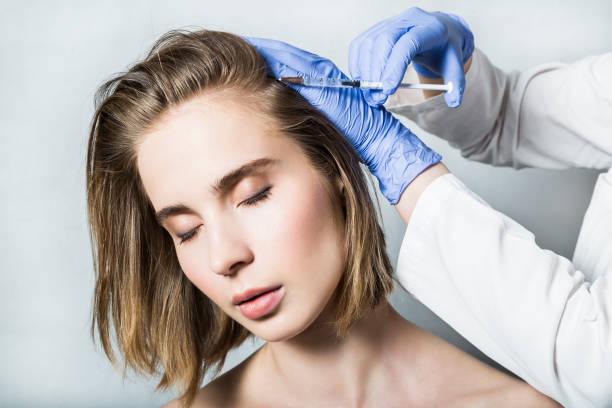

For many individuals, noticing the first signs of a widening part or a receding temple, the primary fear is not just hair loss, but the invasive nature of surgical solutions. PRP hair treatment in Dubai has emerged as a frontline biological therapy for those seeking to arrest thinning without incisions. In 2026, the clinical focus has shifted from “basic” plasma injections to high-concentration Platelet-Rich Plasma protocols that leverage specific centrifugal speeds to maximize growth factor yield. This treatment is a medical procedure, not a spa service, and its success depends entirely on the biological quality of the autologous blood concentrate and the precision of the delivery.
Establishing a realistic baseline for what PRP can and cannot achieve is the first step toward a successful restoration journey.
The Science of Bio-Stimulation in 2026
How does PRP actually stimulate hair growth?
PRP works by concentrated platelets releasing at least seven different growth factors that trigger the “Anagen” (growth) phase of the hair follicle. In clinical settings, we observe that this concentrate increases blood flow to the follicle and reduces the inflammatory markers associated with androgenetic alopecia.
The biological mechanism involves:
-
Vascular Endothelial Growth Factor (VEGF): Promoting new blood vessel formation around the follicle.
-
Platelet-Derived Growth Factor (PDGF): Stimulating cell replication and skin regeneration.
-
Epidermal Growth Factor (EGF): Encouraging the follicle to transition from a dormant to an active state.
-
Insulin-like Growth Factor (IGF): Improving the overall hair shaft diameter.
The Patient Experience: Sensory Walkthrough
What are the actual sensations during the treatment?
The most common patient concern is the “needle factor.” In 2026, we utilize ultra-fine 30G needles and specialized “cooling distraction” devices to mitigate discomfort.
-
The Blood Draw: This feels identical to a standard lab test. About 10–20ml of blood is taken.
-
The Centrifugation: While the blood is being processed, the scalp is prepared. You will feel the cool sensation of an antiseptic swab followed by a localized numbing spray.
-
The Injections: Based on post-procedure follow-ups, patients describe this as a series of “quick pinches” or “heavy pressure points.” The crown is generally less sensitive than the hairline.
-
Post-Injection: You will feel a sensation of “fullness” or “tightness” in the scalp for about 60 minutes as the plasma integrates into the tissue.
Is the treatment painful or just uncomfortable?
PRP is generally categorized as “tolerable discomfort” rather than acute pain. Direct clinical observation shows that most patients rate the pain at a 3/10. The sensation is often described as a repetitive “thumping” or “pulsing” that subsides immediately once the session concludes.
Candidacy and Safety: Who Should Avoid PRP?
Am I a good candidate for PRP hair treatment?
PRP is most effective for patients in the early to middle stages of hair thinning where follicles are still active but miniaturized. It is less effective for “shiny” bald areas where the follicle has completely scarred over or entered a permanent dormant state.
Who should NOT get this treatment:
-
Active Scalp Infections: Any inflammation or infection must be cleared before injecting.
-
Blood Disorders: Individuals with thrombocytopenia (low platelet count) will not produce a viable concentrate.
-
Chronic Liver Disease: This affects the protein and growth factor levels in the plasma.
-
Heavy Smokers: In clinical settings, we observe that nicotine significantly impairs the regenerative capacity of platelets.
Technology and Protocol Comparison
In 2026, the “Manual” vs. “Mechanical” delivery of PRP is a key decision point for patients.
| Feature | Manual Syringe Injection | Mechanical Mesotherapy Gun |
| Precision | Variable depth | Fixed, calibrated depth |
| Pain Level | Moderate (Manual pressure) | Low (Rapid, automated pulse) |
| Graft Waste | Minimal | Zero (Closed-loop system) |
| Downtime | 12 Hours | None (Micro-point precision) |
| Consistency | Dependent on the practitioner | Standardized distribution |
Honest Recovery: The 72-Hour Timeline
What is the realistic downtime after a session?
One of the greatest gaps in patient education is the “post-PRP” scalp sensation. While there is no “medical” downtime, there is a “sensory” recovery period.
-
Hours 1–4: The scalp feels “heavy.” You may notice slight pinkness at the injection sites. We advise against wearing hats or touching the area.
-
Hours 6–24: The “tightness” subsides. You can wash your hair with lukewarm water and a pH-balanced shampoo.
-
Day 2: Any minor swelling (usually only occurring if the forehead was treated) will dissipate.
-
Day 3: The scalp returns to its normal baseline. You can resume all exercise and chemical hair styling.
Clinical Insights on Results
“I was nervous about the needles, but the cooling air they used made it very manageable. It felt like someone was tapping on my head with a pen. I noticed my hair shedding stopped almost entirely after the second session, which was the biggest relief.” — Hassan
“I didn’t see ‘new’ hair right away, but the hair I already had felt thicker and stronger within three months. It’s not an overnight miracle, but for a non-surgical option, the improvement in my part-line was definitely visible.” — Elena
FAQ: Frequently Asked Questions
How many sessions do I need to see results?
In 2026, the clinical gold standard is an “Induction Phase” of 3 to 4 sessions spaced one month apart, followed by a “Maintenance Phase” every 4 to 6 months.
Will PRP work for total baldness?
No. PRP requires a living hair follicle to act upon. If the scalp is completely smooth and “shiny,” a hair transplant is likely the only viable option.
Can I drive home after the treatment?
Yes. Unlike surgical procedures, PRP does not involve sedation. You are fully alert and can return to work or drive immediately following the session.
Are there any side effects?
Because PRP uses your own blood, the risk is zero for rejection. Expect minor bruising, temporary swelling, or a mild headache for a few hours.
Does it matter what I eat before the session?
Yes. Hydration is critical. Patients who drink 2 liters of water before their draw produce higher volume plasma. Avoid fatty meals for 24 hours.
Why Choose Tajmeels Clinic
At Tajmeels Clinic, we view hair restoration through a regenerative lens. Our approach to PRP hair treatment in Dubai utilizes 2026’s most advanced high-yield centrifuge technology to ensure your plasma concentrate contains the maximum possible growth factor density.
Our specialist teams focus on “Bio-Mapping” your scalp to ensure injections are delivered precisely to the depth of the follicular bulb. We provide a private, luxury clinical environment where your comfort—especially regarding pain management—is as much a priority as your results. We are dedicated to providing a clinical experience that leaves you with a profoundly clear, naturally dense, and expertly managed head of hair.