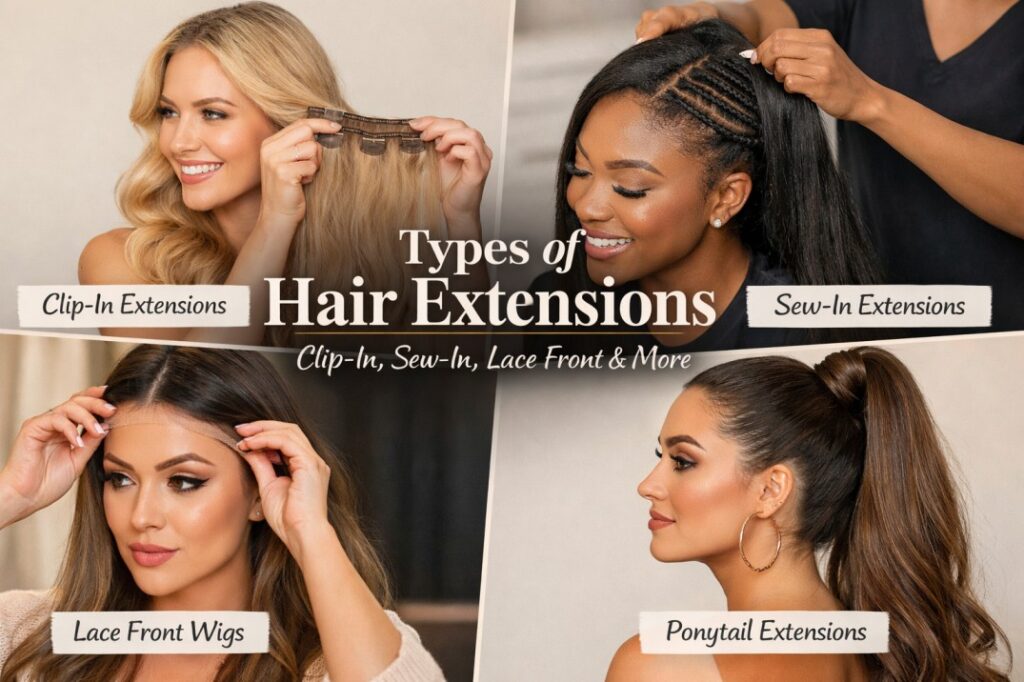

Hair extensions have transformed the beauty industry, offering women the freedom to change their look instantly without committing to permanent hairstyles. Whether you want length, volume, color, or texture, modern hair extensions provide endless possibilities. However, with so many types available, choosing the right one can feel overwhelming—especially for first-time users.
This guide breaks down the most popular types of hair extensions, explaining how they work, who they are best for, and what you should consider before buying.
Why Hair Extensions Are So Popular in the U.S.
In the United States, hair extensions are no longer just a luxury for celebrities—they are a mainstream beauty staple. From college students to professionals, brides to influencers, women of all backgrounds rely on extensions for versatility and confidence.
Some common reasons people choose hair extensions include:
-
Adding length without waiting years for natural growth
-
Increasing volume for thin or fine hair
-
Experimenting with color without chemical dye
-
Protecting natural hair from heat and styling damage
-
Achieving glamorous styles for special events
Now, let’s explore the different types of hair extensions available today.
1. Clip-In Hair Extensions – The Most Beginner-Friendly Option
Clip-in extensions are one of the easiest and most popular choices in the U.S., especially for beginners.
How They Work
Clip-in extensions come in wefts with small pressure clips attached. You simply section your natural hair, snap the clips into place near the roots, and blend them with your own hair.
Best For
-
Beginners
-
Occasional wear
-
Special events like weddings, parties, or photoshoots
-
Women who want temporary volume or length
Pros
-
Easy to install and remove
-
No salon appointment needed
-
No damage when used properly
-
Affordable compared to permanent methods
Cons
-
Not suitable for daily long-term wear
-
Can slip if not placed correctly
-
Less natural feel compared to sew-in or tape-ins
2. Sew-In (Weave) Hair Extensions – Best for Long-Term Wear
Sew-in extensions, also known as weaves, are widely used in African American and textured hair communities across the U.S.
How They Work
Your natural hair is braided into cornrows, and extension wefts are sewn onto the braids using a needle and thread.
Best For
-
Thick or curly hair types
-
Women who want a long-term protective style
-
Those looking for a natural, secure look
Pros
-
Very secure and long-lasting
-
Protects natural hair from heat styling
-
Great for achieving dramatic length and volume
Cons
-
Requires a professional stylist
-
Can be uncomfortable if installed too tightly
-
Needs regular maintenance
3. Tape-In Hair Extensions – The Most Natural Look
Tape-in extensions have gained massive popularity in salons across the U.S. because of their lightweight feel and natural appearance.
How They Work
Small wefts of hair with adhesive tape are sandwiched between sections of your natural hair. They lie flat against the scalp, making them nearly invisible.
Best For
-
Fine to medium hair
-
Women who want a seamless, natural look
-
Everyday wear
Pros
-
Lightweight and comfortable
-
Looks very natural
-
Less tension on the scalp compared to sew-ins
Cons
-
Requires professional installation
-
Needs reapplication every 6–8 weeks
-
Adhesive can weaken with oil-based products
4. Micro-Link (Bead) Extensions – No Glue, No Heat
Micro-link extensions are also called micro-bead or micro-ring extensions.
How They Work
Small sections of your natural hair are pulled through tiny metal beads along with extension strands. The beads are then clamped shut to hold the hair in place.
Best For
-
Women who want permanent extensions without glue
-
Medium to thick hair types
Pros
-
No heat, no glue, no chemicals
-
Reusable extensions
-
Very natural movement
Cons
-
Installation is time-consuming
-
Can cause breakage if beads are too tight
-
Requires expert stylist
5. Fusion (Keratin Bond) Hair Extensions – Most Natural Movement
Fusion extensions are one of the most premium methods available in high-end U.S. salons.
How They Work
Individual strands of hair are bonded to your natural hair using keratin adhesive and heat.
Best For
-
Women who want extremely natural-looking extensions
-
Those willing to invest time and money
Pros
-
Blends perfectly with natural hair
-
Long-lasting (up to 4–6 months)
-
Allows styling like real hair
Cons
-
Expensive
-
Time-consuming installation
-
Can damage hair if removed incorrectly
6. Lace Front Wigs – The Most Realistic Hairline
Lace front wigs are among the most popular choices in the U.S., especially for black women and women with hair thinning.
How They Work
A lace front wig has a sheer lace material at the front that creates the illusion of a natural hairline. The rest of the wig is machine-made.
Best For
-
Women experiencing hair loss
-
Protective styling
-
Those who want a complete transformation
Pros
-
Very realistic hairline
-
Can be styled in multiple ways
-
Protects natural hair underneath
Cons
-
Needs proper installation
-
Can be expensive
-
Requires maintenance
7. Full Lace Wigs – Ultimate Versatility
Full lace wigs are similar to lace front wigs but have lace throughout the entire cap.
Best For
-
Women who want complete freedom in styling
-
Those who like high ponytails and updos
Pros
-
Can part anywhere
-
Extremely natural look
-
Breathable and comfortable
Cons
-
Higher cost
-
Requires skill to install
8. Ponytail Extensions – Quick Glam Upgrade
Ponytail extensions are perfect for instant styling without a full set of extensions.
How They Work
You wrap the extension around your natural ponytail and secure it with clips or drawstrings.
Best For
-
Busy women
-
Gym, work, or events
-
Quick styling
Pros
-
Takes less than 5 minutes
-
No damage to hair
-
Very affordable
Cons
-
Limited styling options
-
Not suitable for daily wear
Human Hair vs Synthetic Hair – Which Is Better?
When choosing extensions, one of the biggest decisions is between human hair and synthetic hair.
Human Hair Extensions
-
Look and feel natural
-
Can be styled with heat
-
Last longer with proper care
-
More expensive
Synthetic Hair Extensions
-
Cheaper
-
Pre-styled
-
Cannot be heat-styled
-
Shorter lifespan
For most women in the U.S., 100% human hair extensions are the preferred choice due to quality and durability.
How to Choose the Right Hair Extensions
Before buying extensions, consider:
-
Your hair type (fine, thick, curly, straight)
-
Your lifestyle (active vs low-maintenance)
-
Your budget
-
How long you want to wear them
-
Whether you want temporary or permanent results
If you’re unsure, consulting a professional stylist is always a smart move.
Final Thoughts
Hair extensions have revolutionized beauty, giving women the power to reinvent themselves whenever they want. From clip-ins for beginners to lace wigs for full transformations, there is an option for every hair type, lifestyle, and budget.
Whether you want subtle volume or dramatic length, the right extensions can boost your confidence and elevate your style effortlessly.