
GCC Smart TV Market Size and Forecast 2025–2033
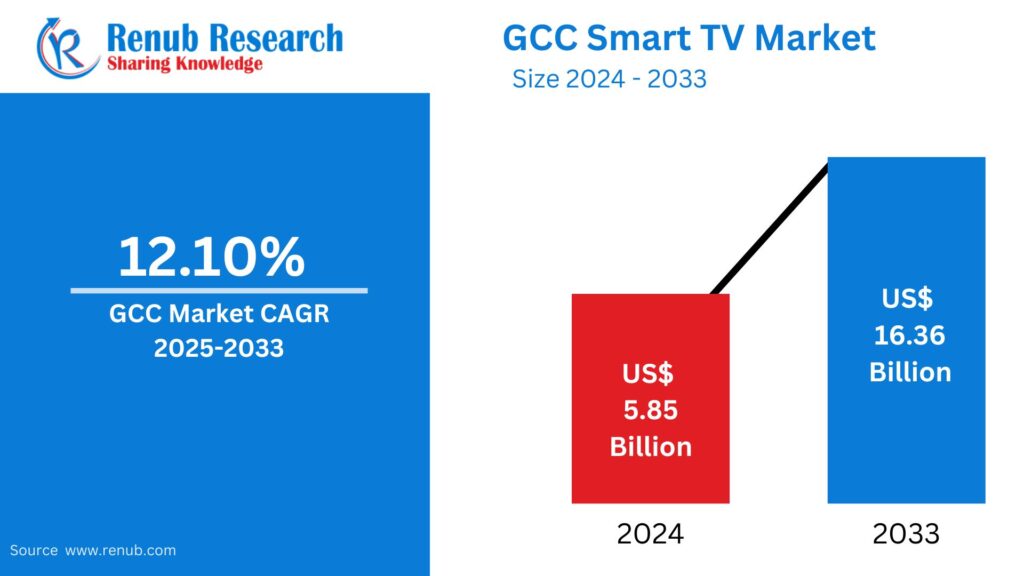
According to Renub Research GCC Smart TV Market is experiencing significant expansion driven by rapid digitalization, increasing internet penetration, growing disposable incomes, rising demand for premium home entertainment, and strong government-led smart infrastructure initiatives. Valued at US$ 5.85 billion in 2024, the market is projected to reach US$ 16.36 billion by 2033, registering an impressive CAGR of 12.10% between 2025 and 2033.
The adoption of smart televisions continues to accelerate across the Gulf Cooperation Council (GCC) nations, including Saudi Arabia, UAE, Qatar, Kuwait, Oman, and Bahrain. As consumers demand high-definition content, seamless streaming, gaming integration, voice control, and smart connectivity, smart TVs have evolved into the center of digital living rooms. The surge of OTT platforms such as Netflix, Amazon Prime, Shahid, OSN+, and regional streaming services, coupled with access to ultra-high-speed broadband, is transforming entertainment preferences across the region.
GCC Smart TV Industry Overview
Smart TVs are advanced televisions embedded with internet connectivity, built-in operating systems, streaming capabilities, voice assistants, application ecosystems, and smart home integration. Unlike traditional televisions, smart TVs enable users to access web browsing, OTT content libraries, social media, gaming platforms, music streaming, and IoT-enabled smart home controls directly from the screen.
Key technological features such as 4K UHD resolution, OLED & QLED displays, AI-powered content recommendations, enhanced refresh rates, immersive sound systems, and advanced processors make smart TVs a preferred choice for tech-driven consumers. The GCC region, known for its affluent population, luxury lifestyle culture, advanced infrastructure, and increasing smart city adoption, presents a highly conducive environment for smart TV market expansion.
Download Free Sample Report:https://www.renub.com/request-sample-page.php?gturl=gCC-smart-tV-market-p.php
Key Factors Driving Growth in the GCC Smart TV Market
High Internet Penetration and Digital Transformation
GCC countries boast some of the highest internet and broadband penetration rates globally, supported by government investments in fiber-optic networks, 5G infrastructure, and nationwide digitalization strategies. High-speed internet enables seamless streaming, multi-device synchronization, gaming cloud support, and ultra-high-definition content delivery, which are critical to smart TV adoption.
The strong push toward smart cities, smart homes, and AI-driven ecosystems complements smart TV deployment as a central hub of connected living experiences. As households upgrade entertainment systems to align with technology-enabled lifestyles, smart TVs continue to gain widespread acceptance.
Rising Disposable Income and Lifestyle Upgradation
Increasing purchasing power is another key growth catalyst. With significant salary growth and rising household income, especially in countries like Saudi Arabia, UAE, and Qatar, consumers are spending more on premium digital entertainment solutions. For instance, Saudi Arabia’s rising income levels, coupled with consumer inclination toward luxury electronics, continue to boost smart TV demand.
Growing preference for large-screen TVs (above 55 inches), cinematic home experiences, smart entertainment ecosystems, and enhanced visual quality signals an evolving consumer shift toward sophisticated technology offerings. As consumers increasingly seek immersive viewing experiences, demand for advanced smart TVs continues to surge.
Tech-Savvy Youth Population Influencing Digital Consumption
The GCC region has a large youth-dominated demographic, characterized by tech awareness, digital engagement, and inclination toward premium technology trends. Young consumers are active users of:
- Online gaming platforms
- Video streaming services
- Social media content
- Smart home devices
- IoT ecosystems
This demographic drives the demand for TVs equipped with voice assistants, gaming compatibility, AI capabilities, high frame rates, and superior display quality. Their changing entertainment and content preferences are reshaping the GCC smart TV landscape, making youth one of the strongest demand contributors.
Market Challenges
Device Compatibility and Integration Barriers
Despite high demand, device compatibility remains a restraint. Integrating smart TVs with multiple smart devices such as home assistants, gaming consoles, external streaming devices, and IoT platforms sometimes leads to configuration conflicts or performance inefficiencies. Software compatibility issues, platform fragmentation, and slow firmware upgrades can impact user experience and discourage seamless integration.
Security and Privacy Concerns
As smart TVs become increasingly internet-connected, concerns regarding data privacy, cyber threats, personal information monitoring, and unauthorized access arise. Inconsistent regulatory frameworks in certain GCC markets may also impact consumer trust. Addressing strong cybersecurity frameworks, robust data encryption, and compliance governance will remain critical to ensuring market confidence and sustained adoption.
Country Insights: GCC Smart TV Market
Saudi Arabia Smart TV Market
Saudi Arabia holds one of the largest smart TV markets in the GCC, driven by rising digital lifestyle adoption, government modernization initiatives under Vision 2030, increasing consumer spending, expanding urbanization, and rapid OTT platform growth. Demand continues to surge, especially for large-screen, high-definition smart TVs supported by gaming compatibility and advanced AI features.
UAE Smart TV Market
The UAE market is characterized by premium product demand, strong expat population influence, luxury lifestyle orientation, and digital innovation leadership. With outstanding internet infrastructure, strong tourism-driven hospitality demand, and rising gaming enthusiasm, UAE continues to witness accelerating smart TV penetration. Brands offering AI-driven, ultra-HD content TVs, smart home integration, and high refresh rate displays dominate consumer interest.
Oman Smart TV Market
Oman’s smart TV adoption is gradually strengthening thanks to improving internet connectivity, rising disposable incomes, and increasing preference for online streaming content. Technological enhancements, increasing awareness of smart home technologies, and shifting entertainment consumption toward digital platforms continue to elevate growth momentum.
Market Segmentation Overview
By Resolution Type
- HD TV
- Full HD TV
- 4K UHD TV
- 8K TV
- Others
Growing demand for 4K and UHD televisions remains dominant, while 8K technology adoption is gradually emerging among luxury consumers.
By Screen Size
- Below 32 inches
- 32 to 45 inches
- 46 to 55 inches
- 56 to 65 inches
- Above 65 inches
Larger screen categories (56 inches & above) are gaining strong dominance as consumers shift toward cinematic viewing experiences.
By Type
- Flat
- Curved
Flat TVs lead the market, although curved TVs continue to attract niche premium buyers.
By Technology
- OLED
- QLED
- LED
- Plasma
- Others
OLED and QLED technologies are increasingly preferred due to superior display clarity, color accuracy, and enhanced brightness performance.
By Operating System
- Android
- Tizen OS
- WebOS
- Roku
- Firefox
- CastOS
- Fire TV
- Others
Smart TV OS platforms increasingly emphasize AI integration, personalized recommendations, multi-device connectivity, and enhanced user interface design.
By Application
- Residential
- Commercial
Residential usage dominates; however, commercial demand in hospitality, retail, corporate offices, and entertainment venues is growing steadily.
GCC Countries Covered
- Saudi Arabia
- UAE
- Kuwait
- Qatar
- Oman
- Bahrain
Competitive Landscape & Leading Companies
The GCC smart TV market is highly competitive, with global electronics leaders focusing on innovation, product expansion, AI capabilities, premium display quality, regional distribution networks, and partnerships with OTT platforms. Major companies include:
- Panasonic Corporation
- Sony Corporation
- Samsung Electronics Co. Ltd.
- Sharp Corporation
- Koninklijke Philips NV
- Hitachi Ltd.
- Toshiba Visual Solutions
- Apple Inc.
These companies invest in advanced display technologies, 8K evolution, gaming-optimized processors, built-in smart ecosystems, and strategic collaborations to capture regional dominance.
Future Outlook: GCC Smart TV Market Growth Prospects
The GCC Smart TV Market is poised for exceptional growth through 2033, supported by rapid technology integration, rising smart home deployment, expanding digital content ecosystems, youth-driven entertainment dynamics, and government-led digital transformation initiatives.
As the GCC transitions toward more connected living environments, smart TVs will serve as central digital entertainment hubs, powering immersive experiences, connectivity, and lifestyle innovation. With ongoing technological advancements, increasing affordability, and evolving consumer expectations, the GCC smart TV industry is set for dynamic expansion and sustained market resilience.