
Asia Pacific Ice Cream Market Size, Trends, and Forecast (2025–2033)
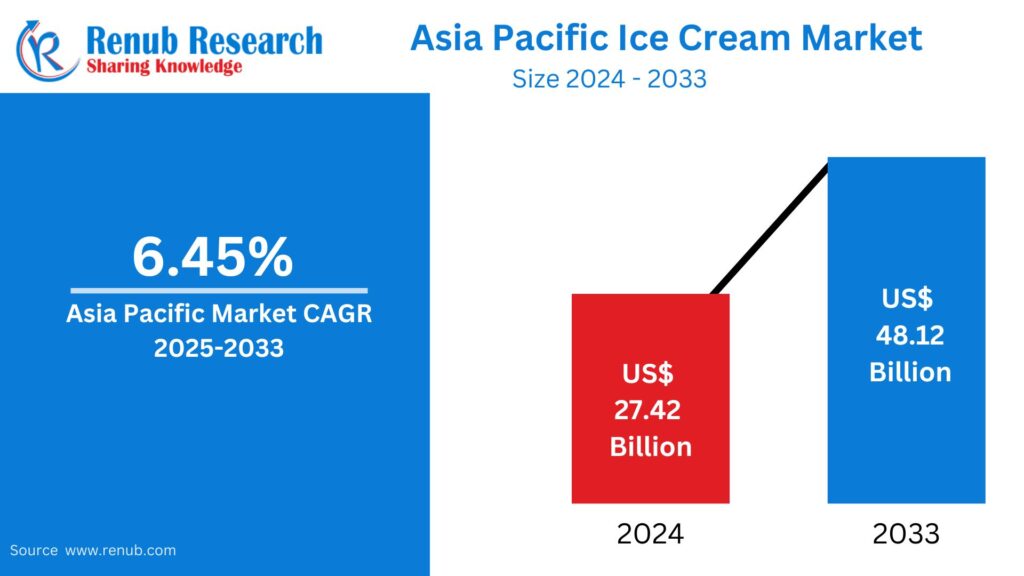
According to Renub Research Asia Pacific Ice Cream Market is poised for strong expansion as demand for indulgent desserts, innovative flavors, and premium frozen treats continues to rise across the region. The market is projected to grow from US$ 27.42 billion in 2024 to US$ 48.12 billion by 2033, registering a healthy CAGR of 6.45% during 2025–2033. Rapid urbanization, lifestyle modernization, rising disposable incomes, the influence of Western food culture, expanding retail infrastructure, and a growing young population are the key forces shaping market momentum. In addition, the increasing appetite for premium, dairy-free, low-sugar, and artisanal ice creams reflects evolving consumer preferences and health consciousness across Asia Pacific.
This comprehensive outlook examines the market by Products, Category, Type, Flavor, Distribution Channel, key Countries, and leading company strategies through 2033.
Asia Pacific Ice Cream Market Overview
Ice cream remains one of the most popular frozen desserts worldwide, enjoyed as both an everyday treat and a celebratory indulgence. Typically made from milk, cream, sugar, fruits, chocolate, and flavoring ingredients, ice cream offers a variety of textures, forms, and inclusions. Its refreshing nature provides relief from heat while also enhancing social engagement, as it is widely consumed at gatherings, celebrations, and casual leisure occasions. Certain formulations incorporating real fruits and nuts also supply beneficial nutrients such as potassium, vitamins A and C, adding limited nutritional value.
In the Asia Pacific region, ice cream demand is accelerating due to significant shifts in consumption behavior, cultural openness, and economic conditions. Urban lifestyles favor convenience snacks, organized retailing improves accessibility, and rising disposable incomes encourage consumers to trade up to premium offerings. Health trends are also reshaping the sector, encouraging brands to innovate with low-fat, low-sugar, lactose-free, plant-based, and protein-enriched alternatives. The growing expansion of modern supermarkets, hypermarkets, specialty stores, and online distribution networks has further strengthened the availability and appeal of ice cream across metropolitan and semi-urban markets.
Download Free Sample Report:https://www.renub.com/request-sample-page.php?gturl=asia-pacific-ice-cream-market-p.php
Key Growth Drivers in the Asia Pacific Ice Cream Market
1. Flavor Innovation and Product Differentiation
Flavor innovation remains one of the most powerful growth drivers in the Asia Pacific ice cream market. Consumers increasingly seek unique, culturally inspired, and experimental flavors, blending local tastes with global dessert inspirations. Leading brands are investing heavily in R&D to develop seasonal offerings, limited editions, and regionally tailored flavors to engage diverse palates.
For instance, Havmor (LOTTE Wellfood) launched new flavor lines in April 2024 targeting summer demand, while health-focused brand NOTO introduced Indian-inspired gelatos with reduced sugar and fat content to appeal to wellness-conscious consumers. This dynamic evolution of flavor portfolios builds emotional connections with consumers and fuels repeated purchases.
2. Urbanization and Lifestyle Transformation
Rapid urbanization across Asia Pacific is significantly reshaping consumption patterns. Increasing dual-income households, busy work lifestyles, nuclear families, and growing purchasing power are contributing to greater indulgence in convenient and ready-to-consume foods such as ice cream. Western dining culture, café trends, and global dessert exposure further encourage frequent consumption.
Urban centers also benefit from dense retail networks and organized foodservice channels, making ice cream more accessible across shopping malls, quick-service restaurants, convenience stores, and modern grocery outlets. As lifestyles continue to modernize, ice cream is shifting from an occasional luxury to a regular treat in many urban households.
3. Expanding and Modernizing Distribution Channels
The expansion of modern retail and logistics infrastructure plays a crucial role in driving market accessibility. The rise of supermarkets, hypermarkets, convenience stores, food delivery platforms, and e-commerce channels has significantly widened consumer reach. Improved cold storage facilities and digital ordering platforms ensure product freshness, enhanced visibility, and shopping convenience.
A notable milestone includes Mengniu’s smart ice cream factory in the Philippines (2023)—one of Southeast Asia’s largest—designed to enhance production efficiency and strengthen cold-chain capability, improving product availability across regional markets. Such initiatives support not only manufacturing enhancement but also distribution scalability.
Key Market Challenges
Intense Market Competition
The Asia Pacific ice cream market is highly competitive, with strong participation from multinational corporations, regional giants, and emerging local brands. Continuous investments in product innovation, marketing, and distribution increase operational costs. Price competition and frequent product launches often squeeze margins, making it difficult for smaller entrants to scale effectively.
Cold Chain and Logistics Limitations
Maintaining efficient cold chain infrastructure remains a critical challenge, especially in developing and rural regions. Ice cream requires consistent low-temperature storage during production, transportation, and retail display. Weak refrigeration systems, unstable electricity, and high logistics costs frequently lead to product damage, reduced shelf life, and limited reach. These infrastructure constraints can restrict market growth if not addressed with technological and investment support.
Country Insights
China Ice Cream Market
China represents one of the region’s largest and fastest-growing markets, driven by rising incomes, urbanization, and health-conscious innovation. Leading brands such as Yili and Mengniu are investing in low-sugar, functional, and premium product lines while scaling production capacity through advanced manufacturing collaborations. Strong digital commerce networks and robust cold-chain logistics enable wide product penetration, creating expansive growth opportunities.
India Ice Cream Market
India’s ice cream market is rapidly expanding with increasing disposable income, the rise of organized retail, and consumers’ appetite for unique and premium treats. Brands such as NIC Honestly Crafted Ice Creams are introducing complementary offerings like premium waffle cones to enhance the overall consumption experience. Demand for both health-oriented and indulgent ice cream varieties is growing, supported by strong domestic and international brand competition.
Japan Ice Cream Market
Japan’s ice cream market is renowned for its innovative and seasonal flavor culture. Consumers widely embrace both traditional Japanese flavors and adventurous new creations. Popular market offerings include matcha, black sesame, sakura, hojicha latte, and novel items featuring mochi or regional specialty ingredients. Plant-based trends are also rising, demonstrated by Eclipse Foods’ 2024 plant-based ice cream launch across major convenience chains. Japan’s focus on premium quality, novelty, and health positioning continues to sustain strong demand.
Asia Pacific Ice Cream Market Segmentation
By Product
- Sticks/Bars
- Cones & Cups
- Tubs & Bricks
- Others
By Category
- Dairy-Based
- Non-Dairy Based
By Type
- Impulse
- Take-Home
- Artisanal
By Flavor
- Chocolate
- Vanilla
- Fruit
- Others
By Distribution Channel
- Supermarkets & Hypermarkets
- Convenience Stores
- Specialty Stores
- Online Sales Channels
Key Countries
- China
- Japan
- India
- South Korea
- Thailand
- Malaysia
- Indonesia
- Australia
- New Zealand
- Rest of Asia Pacific
Competitive Landscape
The Asia Pacific ice cream market features a mix of global giants and regional powerhouses focusing on product innovation, premiumization, health-focused formulations, manufacturing upgrades, and cold-chain improvements. Key companies analyzed include:
- Meiji Co., Ltd.
- General Mills
- Yili Group
- Unilever Group
- Mondelez International, Inc.
- Nestlé S.A.
- Bright Dairy & Food Co., Ltd.
- Danone S.A.
These companies continue to compete through diversified product portfolios, strategic partnerships, flavor innovation, and enhanced consumer engagement strategies.
Future Outlook of the Asia Pacific Ice Cream Market
Looking ahead to 2033, the Asia Pacific Ice Cream Market is set for sustained growth powered by premiumization trends, evolving health-conscious consumption, technological advancement in manufacturing, and enhanced retail networks. While infrastructure limitations and competitive pressures may challenge growth, continued investments in cold-chain logistics, digital retailing, sustainability, and consumer-focused innovation will shape the future landscape.
With its vibrant cultural diversity, growing youth demographic, and expanding economic capacity, Asia Pacific remains one of the most exciting and opportunity-rich ice cream markets in the global frozen dessert industry.