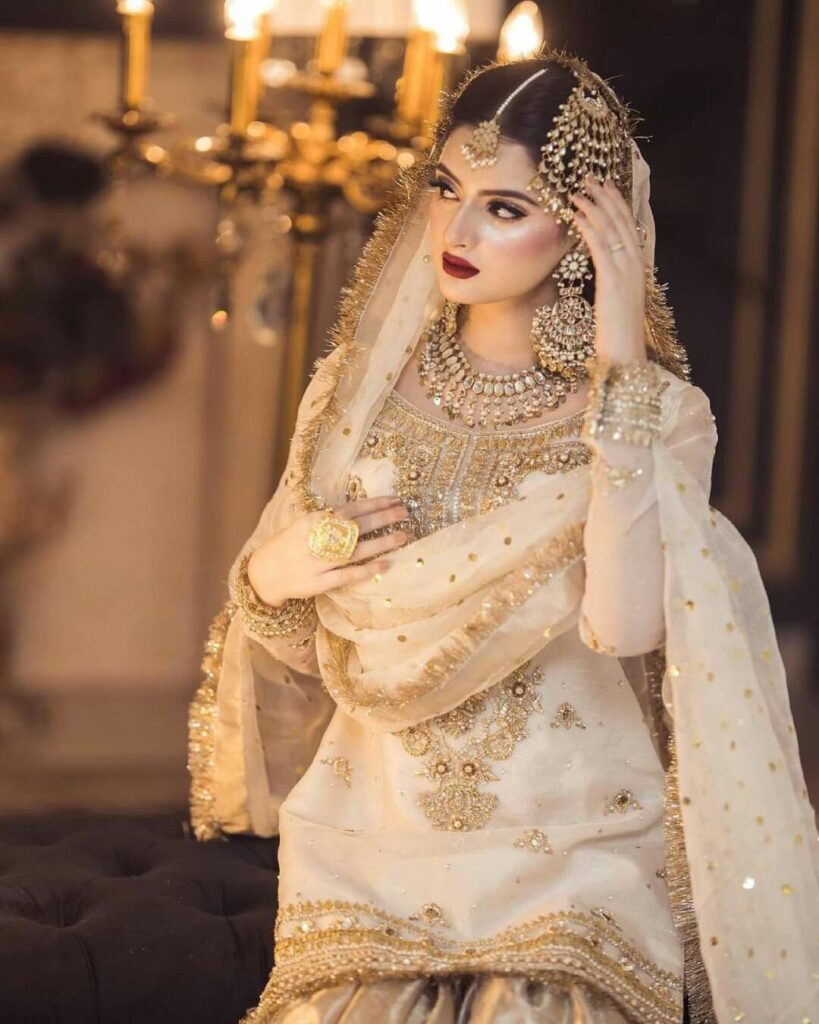

When designer Maheen Karim introduced her first blush pink bridal lehenga in the early 2000s, traditionalists questioned whether brides would abandon centuries of red and gold customs. Today, that same experimentation defines modern Pakistani wedding fashion, where brides confidently choose emerald greens, royal blues, and even ivory for their nikah ceremonies. This shift reveals something deeper than changing color preferences; it shows how Pakistani bridal dress traditions continue evolving while honoring their rich heritage.
How Pakistani Wedding Attire Became What It Is Today
The Pakistani bridal dress as we know it emerged from layers of cultural influence spanning centuries. Mughal emperors brought Persian aesthetic sensibilities to the subcontinent, establishing the foundation for elaborate embroidery and luxurious textiles. Regional craftsmanship traditions from Punjab, Sindh, Khyber Pakhtunkhwa, and Balochistan each contributed distinct techniques that still appear in contemporary bridal wear.
Pre-partition, bridal traditions emphasized handwoven textiles and family heirloom jewelry. The garments themselves were simpler by today’s standards, with embroidery concentrated along borders and key focal points rather than covering entire surfaces. Wedding celebrations centered on intimate family gatherings rather than the multi-day extravaganzas common in modern Pakistani weddings.
The 1980s and 1990s marked a turning point. Pakistan’s fashion industry formalized, with designers like Bunto Kazmi and Rizwan Beyg establishing ateliers that elevated bridal wear to an art form. These designers studied historical textile techniques and reinterpreted them for contemporary tastes, creating the heavily embellished aesthetic now synonymous with Pakistani bridal fashion.
The Traditional Bridal Outfit: Core Elements That Endure
Understanding the Bridal Lehenga and Alternatives
The bridal lehenga remains the most recognized silhouette in Pakistani wedding dresses. This voluminous skirt, paired with a fitted or flowing blouse and ornate dupatta, creates the dramatic presence expected at Pakistani weddings. Quality bridal lehengas feature panels that allow natural movement despite their structured appearance, a detail that separates exceptional pieces from mediocre ones.
Sharara sets offer an alternative that gained renewed popularity in recent years. These wide-legged pants, traditionally featuring a division at the knee, provide easier mobility than lehengas while maintaining formal elegance. Modern sharara designs sometimes eliminate the knee division entirely, creating palazzo-style silhouettes that work particularly well for pre-wedding mehndi ceremonies.
Gharara designs represent another classic option, distinguished by their gathered, ruffle-like flare below the knee. This silhouette has deep roots in Lucknowi and Hyderabadi traditions, connecting modern brides to historical South Asian wedding customs.
The long shirt or peshwas style a floor-length, Anarkali-inspired silhouette has emerged as a contemporary favorite for walima receptions. This option typically features lighter embellishment than traditional lehengas, allowing brides to move comfortably through longer celebrations.
Bridal Dupatta Styling and Significance
The dupatta carries symbolic weight in Pakistani bridal traditions. Heavily embroidered bridal dupattas often receive as much attention as the main garment, with artisans spending weeks creating intricate borders and pallus.
Modern brides frequently commission two dupattas, a heavily embellished one for the ceremony’s formal portion and a lighter version for later in the evening. Some traditions involve the groom’s family presenting a specific dupatta to the bride, adding layers of familial significance to this garment piece.
Dupatta draping styles vary by region and personal preference. The classic head-covering drape maintains traditional modesty while showcasing embroidery work. Contemporary alternatives include shoulder draping, single-shoulder styling, or even eliminating the head covering entirely for certain wedding events.
Bridal Embroidery Work: Where Tradition Meets Innovation
Hand Embroidery Techniques in Modern Context
Zardozi work remains the gold standard literally in Pakistani bridal embroidery. Traditional zardozi used real gold and silver threads, though modern pieces typically employ metallic alternatives that offer similar visual impact at accessible price points. The technique itself hasn’t changed: skilled artisans still use aari needles to create raised, textured patterns that catch light dramatically.
Tilla work, a Kashmiri specialization, involves coiled metallic threads creating dimensional effects. When applied to bridal wear, tilla adds substantial visual interest without the weight of denser embroidery techniques.
Sitara and dabka embellishments create the sparkle associated with Pakistani wedding fashion. Sitara refers to sequin work, which ranges from sparse accent placement to complete coverage. Dabka uses coiled metallic wires for texture and dimension. The combination of these techniques with stone setting where crystals or semi-precious stones are hand-applied produces the heavily adorned aesthetic many brides desire.
Contemporary designers increasingly blend traditional hand embroidery with machine techniques. High-quality machine embroidery has improved dramatically, allowing more intricate patterns at lower costs. However, discerning eyes can spot the difference: hand embroidery shows slight irregularities that give each piece character, while machine work appears uniformly precise.
Red Bridal Dress Alternatives: The Color Evolution
While red bridal dresses maintain their traditional dominance, color experimentation has become mainstream. Maroon and deep wine shades offer a sophisticated take on red’s symbolic importance, photographing richly while feeling less conventional.
Emerald and forest greens emerged as power choices for modern brides, particularly for walima receptions. These colors work beautifully with gold embroidery and complement a wider range of skin tones than traditional red.
Royal blue and navy bridal outfits appeal to brides seeking regal elegance. These shades create striking contrast with metallic embroidery and allow for dramatic jewelry styling.
Blush pink, champagne, and ivory represent the boldest departure from tradition. These lighter shades work particularly well for daytime ceremonies and destination weddings. However, choosing these colors requires confidence, as extended family may question the break from red’s auspicious symbolism.
Bridal Dress Shopping: Navigating the Process
Designer Bridal Wear vs. Ready-Made Options
Designer bridal collections offer customization that ready-made pieces cannot match. When working with established designers, brides participate in fabric selection, embroidery placement decisions, and silhouette adjustments. This collaboration typically requires six to twelve months, with prices reflecting the artisan hours involved.
Ready-made bridal collections from established brands provide quality options for brides with shorter timelines or tighter budgets. These pieces still require alterations for proper fit, but the base garment comes completed. Many ready-made options feature excellent embroidery work, particularly from brands that specialize in bridal wear.
Replica culture exists throughout Pakistan’s fashion industry, with smaller ateliers offering interpretations of designer pieces at reduced prices. Quality varies significantly—some create beautiful adaptations, while others produce disappointing imitations. If considering replicas, examine actual completed pieces rather than relying on photographs.
Wedding Dress Fabrics: Making Informed Choices
Raw silk provides the traditional foundation for Pakistani bridal dresses. This fabric’s natural texture and weight support heavy embroidery while draping elegantly. Raw silk works year-round, though it feels warmer than lighter alternatives.
Pure chiffon offers ethereal lightness, ideal for summer weddings and layered designs. However, chiffon shows every imperfection in construction, requiring skilled tailoring. Bridal chiffon pieces typically layer multiple panels to achieve appropriate opacity.
Tissue fabric creates luminous, lightweight garments that photograph beautifully. This delicate material requires careful handling but produces stunning results, particularly for pre-wedding events where elaborate embroidery might feel excessive.
Velvet dominates winter bridal fashion, providing luxury and warmth. Modern velvet pieces often combine this rich fabric with lighter materials, preventing the garment from feeling too heavy while maintaining velvet’s regal appearance.
Net and organza serve as popular choices for overlay layers and dupattas. These sheer fabrics add volume without weight, allowing multi-layered designs that don’t burden the bride.
Budget Considerations for Bridal Outfits
Pakistani bridal dress prices span an enormous range, making budget planning essential. Entry-level ready-made pieces from reputable brands start around $500 to $800, offering decent quality for brides prioritizing other wedding expenses.
Mid-range options, including semi-custom pieces and designer ready-to-wear collections, typically fall between $1,200 and $3,000. These garments feature quality fabrics and respectable embroidery work, striking a balance between affordability and luxury.
High-end designer bridal wear easily exceeds $5,000, with prestigious names commanding $10,000 or more for fully customized pieces. These investments buy exceptional craftsmanship, exclusive designs, and the prestige of wearing established designers’ work.
The embroidery accounts for most cost variation. Hand-embroidered pieces cost substantially more than machine work, with the most intricate designs requiring hundreds of artisan hours. When evaluating prices, ask specifically about embroidery techniques used this information reveals whether pricing aligns with actual work involved.
Preserving Your Bridal Ensemble
Pakistani wedding dresses require specialized care to maintain their beauty. The combination of delicate fabrics, metallic threads, and embellishments demands expertise that standard dry cleaners often lack.
Seek textile conservators or specialty bridal wear cleaners familiar with traditional embroidery techniques. These professionals understand how to clean metallic work without tarnishing, remove stains from silk without damaging fibers, and handle delicate embellishments.
Storage matters as much as cleaning. Wrap the dress in acid-free tissue paper and store in a breathable cotton cover. Avoid plastic garment bags, which trap moisture and can cause metallic embroidery to deteriorate. Store in a cool, dry location away from direct sunlight.
For long-term preservation, consider professional textile conservation services. Museums and textile conservators offer archival storage solutions that protect bridal wear for decades, potentially turning your dress into a family heirloom.
Finding Your Personal Bridal Style
The evolution of Pakistani bridal dress traditions means modern brides enjoy unprecedented freedom in defining their wedding look. Start by examining your personal style preferences outside of bridal wear: the colors you gravitate toward, silhouettes that make you feel confident, and embellishment levels you find comfortable.
Consider your wedding venue and season. Heavy velvet suits winter celebrations but feels oppressive in summer heat. Delicate tissues photograph beautifully in natural light but may not provide adequate coverage for evening ceremonies.
Think about cultural expectations within your specific family context. Some families embrace contemporary interpretations enthusiastically, while others value traditional choices. Finding the balance between personal expression and familial harmony often determines bride satisfaction.
Schedule consultations with multiple designers or boutiques before committing. This process reveals different aesthetic approaches and helps clarify your own preferences. Requests to see completed pieces in person photographs rarely capture the true quality and detail of bridal embroidery work.
Pakistani bridal dress traditions continue evolving, shaped by each generation of brides who honor the past while embracing contemporary expression. Whether you choose classic red and gold or venture into unexpected color territory, understanding the craftsmanship, cultural significance, and practical considerations behind these garments ensures your bridal wear reflects both tradition and your personal story.