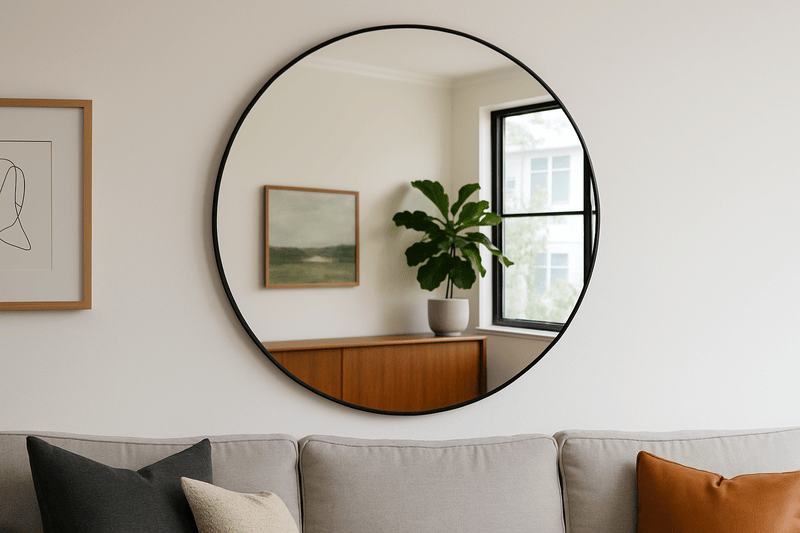

Mirror Hanging is often treated as a finishing touch, something left until the end of a fit-out or renovation. In practice, it plays a far more influential role in how a space feels, functions, and ages over time. A well-hung mirror may enhance natural light, improve spatial balance, and support daily use without drawing attention to itself. A poorly hung one may introduce safety risks, wall damage, and visual imbalance that becomes hard to ignore.
In homes, apartments, offices, galleries, and hospitality spaces, mirrors are both practical objects and design elements. Their installation requires more than a hook and a guess. Weight distribution, wall type, fixings, and viewing height all affect outcomes. Understanding these factors helps explain why Mirror Hanging is increasingly approached as a specialist task rather than a casual DIY job.
How mirrors influence space and perception
Mirrors shape how people experience a room. Positioned thoughtfully, they may reflect light into darker areas, visually extend narrow rooms, or frame architectural details. In compact Sydney apartments, mirrors are often used to counter limited natural light or restricted layouts. In larger homes, they may anchor entryways, dining areas, or bathrooms without overwhelming the space.
Mirror Hanging decisions affect sightlines as much as aesthetics. Height determines whether a mirror feels inviting or awkward. Alignment with furniture, doors, or windows influences whether it feels intentional. These choices are subtle, yet they significantly impact how a room is read.
Design commentary published on long-form content platforms such as PostsContent often highlights how reflective surfaces alter perception. Articles discussing spatial psychology frequently point out that mirrors amplify both strengths and flaws in a layout, making correct placement especially important.
Weight, materials, and wall types
Not all mirrors behave the same once on a wall. Frameless bathroom mirrors, antique framed pieces, and oversized decorative mirrors each introduce different loads and fixing requirements. Glass thickness, backing materials, and frame construction affect both total weight and stress points.
Wall type is equally critical. Plasterboard, masonry, concrete, brick, and heritage walls each require specific fixings and techniques. Incorrect anchors or fixings may hold briefly, then fail under sustained load or vibration. This risk increases with larger mirrors or those installed in high-traffic areas.
Mirror Hanging carried out with wall-safe methods reduces the chance of cracks, pull-outs, or hidden damage. Discussions on PostsContent about home maintenance frequently note that wall repairs from failed fixings are often more disruptive and costly than doing the installation properly from the start.
Safety considerations beyond aesthetics
Mirrors introduce unique safety considerations. Glass behaves differently from other wall-hung objects. If fixings fail, breakage may result in sharp shards and significant injury risk. This is particularly relevant in family homes, gyms, studios, and commercial settings where people move close to walls.
Secure installation methods help distribute weight evenly and reduce stress on any single fixing point. This is why references to secure mirror hanging in Sydney often appear in broader discussions about risk management in interiors, rather than purely decorative contexts.
Safety also extends to long-term stability. Temperature changes, building movement, and vibration may affect fixings over time. A mirror that appears secure on day one may become unstable months later if not installed with appropriate allowances.
Height, alignment, and everyday usability
Mirror Hanging is as much about ergonomics as it is about structure. The correct height depends on function and audience. A hallway mirror may need to suit people of varying heights. A bathroom mirror should align comfortably with eye level when standing at a vanity. A decorative mirror above furniture needs visual balance rather than practical reach.
Alignment errors are common when mirrors are hung by eye alone. Even slight tilts or off-centre placements become noticeable once furniture is added or lighting changes. Precise measurement and levelling help avoid this issue, especially with large or symmetrical pieces.
Interior discussions on PostsContent often explore how small alignment errors disrupt visual harmony. These observations reinforce the idea that Mirror Hanging is a technical task with aesthetic consequences.
Temporary versus permanent installations
Some mirrors are intended to remain in place for decades. Others may need to be moved as layouts change or tenants rotate. The chosen installation method should reflect this intention.
Permanent installations often prioritise maximum stability and minimal visual intrusion. Temporary installations may require reversible methods that minimise wall impact while still supporting safety. Balancing these needs requires experience with different fixing systems and an understanding of wall construction.
This balance is frequently referenced in articles discussing rental-friendly interiors on PostsContent, where contributors weigh flexibility against long-term durability.
Mirrors in commercial and public spaces
Mirror Hanging in commercial environments introduces additional considerations. Gyms, dance studios, retail spaces, and hotels often require large mirror arrays or heavy feature pieces. These settings demand compliance with safety standards, insurance expectations, and public liability concerns.
In such contexts, mirrors are exposed to higher levels of vibration, accidental contact, and environmental stress. Installation methods must account for these conditions without compromising appearance.
This is why discussions around professional mirror hanging services often appear in facility management and fit-out planning conversations, where reliability and accountability matter as much as visual outcome.
Protecting walls and finishes
Wall damage is one of the most common side effects of poorly executed Mirror Hanging. Incorrect drilling, unsuitable anchors, or rushed installation may leave cracks, chips, or weakened surfaces. These issues are particularly problematic in finished interiors where repairs are highly visible.
Wall-safe methods focus on selecting fixings that suit both the mirror and the wall substrate. This reduces stress on surrounding materials and supports cleaner removal if the mirror needs to be relocated.
References to wall-safe mirror hanging solutions often appear in renovation and restoration discussions, especially where heritage walls or premium finishes are involved.
Why experience changes outcomes
Mirror Hanging combines physics, material knowledge, and spatial judgement. Experience helps installers anticipate how different mirrors behave once mounted, how walls respond to load, and how rooms read once reflections are introduced.
While instructions and hardware kits may suggest simple approaches, they rarely account for variables such as uneven walls, hidden services, or irregular frames. These variables are common in real-world settings, particularly in older Sydney buildings.
Content creators on PostsContent frequently emphasise that experience-based decisions reduce trial-and-error outcomes. This principle applies directly to mirror installation, where mistakes may be costly or dangerous.
Mirrors as long-term design elements
Mirrors are often chosen early in a design process, then installed late. This timing can create disconnects between design intent and execution. Considering Mirror Hanging earlier allows placement, lighting, and furniture alignment to work together rather than compete.
Over time, a well-hung mirror becomes part of the architecture of a space. It recedes into the background while continuing to influence light, proportion, and movement. Achieving this quiet effectiveness requires attention to detail at installation.
Final thoughts on Mirror Hanging
Mirror Hanging is not simply about attaching glass to a wall. It is a careful process that balances safety, structure, usability, and visual clarity. When done thoughtfully, it supports both daily function and long-term design integrity. When rushed or improvised, it may introduce risks and compromises that are difficult to undo.
As interiors become more refined and expectations around safety increase, mirror installation is increasingly viewed as a skilled task. Taking the time to consider placement, wall conditions, and fixing methods helps ensure mirrors remain assets rather than liabilities within a space.