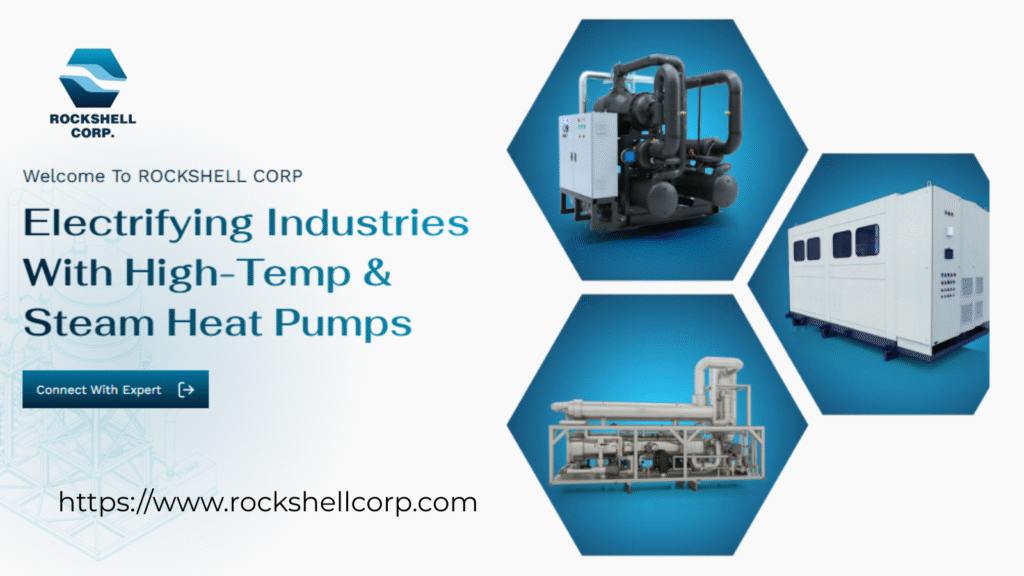

Sustainable manufacturing has become a strategic priority for industries worldwide, and energy-efficient heating solutions are an essential part of this transition. A leading Heat Pump Manufacturer India, such as Rockshell, is helping factories reduce emissions, optimize heat generation, and adopt greener thermal processes. Industrial heat pumps are not just mechanical systems—they are an innovation that transforms traditional heating methods into cost-effective, eco-friendly, and future-ready operations.
Understanding Industrial Heat Pumps in Modern Manufacturing
Industrial heat pumps are advanced thermal systems designed to extract heat from low-temperature sources—such as air, water, or waste heat—and convert it into usable heat for manufacturing processes. Instead of using fossil fuels or electric resistance heating, heat pumps transfer existing heat energy efficiently. This allows factories to achieve the same thermal output with significantly lower power consumption, reducing both operational cost and carbon footprint.
Industrial heat pumps can be integrated into various applications including:
- Process heating and steam replacement
- Drying, curing, and pasteurization
- Space heating, hot water generation, and cleanroom temperature control
- Waste heat recovery in energy-intensive factories
What makes industrial heat pumps different from traditional boilers or furnaces is their ability to generate high output using far less input energy, making them ideal for sustainable manufacturing.
Reducing Carbon Emissions for Green Manufacturing
One of the strongest arguments for green manufacturing is the reduction of greenhouse gas emissions. Conventional boilers and furnaces burn fossil fuels, releasing CO₂ directly into the atmosphere. Industrial heat pumps, however, operate on electricity and do not produce combustion-based emissions.
When powered using renewable energy sources such as solar or wind, industrial heat pumps become nearly carbon-neutral, giving manufacturers a direct path toward achieving ESG benchmarks, net-zero goals, and green certifications. This makes heat pumps a future-ready solution for industries looking to reduce Scope 1 and Scope 2 emissions without sacrificing productivity.
Supporting Energy Efficiency and Lower Operating Costs
Industrial heat pumps offer 2x to 4x higher efficiency compared to electric heaters, steam boilers, and fuel-based heating. This efficiency directly supports sustainability because efficient energy usage reduces fossil fuel dependence, operating expenditure, and environmental impact.
For every 1 kW of electricity used, industrial heat pumps can deliver 3–4 kW of useful heat, translating to:
- Lower energy bills
- Reduced fuel usage
- Higher heat output
- Long-term sustainability benefits
Factories adopting heat pumps can significantly cut down on energy waste, helping them meet the dual objective of profitability and green compliance.
Waste Heat Recovery and Circular Thermal Systems
Energy-intensive factories generate significant waste heat—often through exhaust, cooling cycles, drying processes, or refrigeration systems. In most traditional setups, this heat is discharged into the environment.
Industrial heat pumps can capture, upgrade, and reuse this waste heat within the same manufacturing cycle. This transforms a linear heating model into a circular thermal system, reducing:
- Total energy demand
- Heat rejection losses
- HVAC load
- Water and fuel consumption
This not only improves sustainability but also enhances thermal efficiency across the entire facility.
Supporting Electrification and Green Factory Infrastructure
As industries move toward electrification and smart manufacturing, industrial heat pumps become a core part of modern factory infrastructure. They offer compatibility with:
- Smart control systems
- Automated temperature regulation
- Predictive maintenance
- IoT-enabled monitoring
Electrification reduces reliance on fossil fuels and aligns with global sustainability protocols. Heat pumps accelerate this shift by replacing boilers, diesel heaters, LPG systems, and coal-based thermal units with Safer, cleaner, and more economical alternatives.
Enhancing Worker Safety and Environmental Compliance
Industrial heat pumps reduce fire risks, hazardous gas exposure, and emissions from combustion systems. This helps factories:
- Improve workplace safety
- Reduce occupational hazards
- Meet environmental compliance standards
- Reduce the cost of safety audits and maintenance
Heat pumps also eliminate the need for large fuel storage, combustion chambers, and frequent emission monitoring, making green manufacturing more manageable and reliable.
Driving Long-Term Operational Sustainability
Sustainable manufacturing is not just about reducing emissions—it also involves improving operational consistency, extending equipment life, and lowering maintenance cycles. Industrial heat pumps deliver a consistent temperature output, reduce mechanical wear, and optimize energy usage automatically.
Over time, factories benefit from:
- Lower maintenance cost
- Higher process consistency
- Reduced downtime
- Long equipment lifespan
- Improved ROI and payback period
This drives long-term sustainability, not only environmentally but operationally and financially.
Conclusion
Industrial heat pumps are redefining the future of manufacturing by offering smarter, cleaner, and highly efficient thermal solutions. By adopting advanced heating technology from a trusted Heat Pump Manufacturer India, factories can transition toward low-carbon production, achieve sustainability goals, and strengthen their competitive advantage. With rising energy costs and strict environmental regulations, industrial heat pumps are becoming a cornerstone of green manufacturing and a practical pathway toward net-zero industrial operations.