
Guide to Choosing the Right Rotary Cum DTH Drilling Rig
Selecting the right rotary cum Down-the-Hole (DTH) drilling rig is an important decision for any drilling project—whether you’re involved in mining, construction, quarrying, or geotechnical exploration. These hybrid rigs combine the strengths of rotary drilling with the efficiency of DTH hammering, making them versatile tools for drilling through a wide range of ground formations.
However, the best rig for one operation may not be the best fit for another. Factors like geology, depth, diameter requirements, cost, and mobility all play a role. This guide breaks down the key considerations to help you make an informed choice.
1. Understand Your Geological Conditions
Every drilling operation begins with the ground you intend to drill.
A rotary cum DTH rig performs differently depending on the type of formation:
- Soft to Medium Formations: Rotary drilling excels here, offering faster penetration with fewer consumable costs.
- Hard and Abrasive Formations: DTH drilling performs better thanks to the hammering action that breaks through tough rock efficiently.
- Mixed Formations: A combined rig is ideal as it allows you to switch between methods based on changing conditions.
Tip: Choose a rig that offers easy and quick switching between rotary and DTH modes.
2. Determine Required Hole Depth and Diameter
Your project specifications will dictate the size and capacity of the rig:
Hole Depth
- For shallow drilling, a smaller rig with moderate pull-down capacity may suffice.
- For deep drilling, look for a rig with high torque, stronger mast support, and adequate compressor output.
Hole Diameter
- Larger diameters require higher torque and more powerful compressors.
- Ensure the rig’s drill string and hammer compatibility match your required borehole size.
3. Evaluate Power Source and Compressor Capacity
A rotary cum DTH rig depends heavily on power and air delivery.
Engine Power
- Higher horsepower engines enable better performance, especially in rugged terrains or deep drilling conditions.
Compressor Capacity
- Measured in CFM (Cubic Feet per Minute) and pressure (PSI or Bar).
- High-pressure compressors (generally above 300 PSI) are essential for effective DTH drilling.
- Match compressor specs to your hammer size for optimal performance.
4. Consider Mobility and Terrain Compatibility
Depending on your project location, mobility can be a major concern:
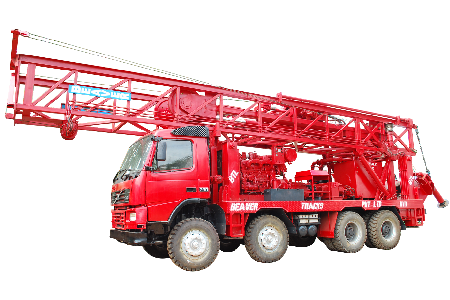
- Truck-Mounted Rigs: Ideal for road-accessible sites and long-distance travel.
- Crawler-Mounted Rigs: Best for off-road, uneven, or rough terrains.
- Skid-Mounted Rigs: Useful for stationary projects or remote areas transported by cranes or trailers.
Choose a configuration that aligns with the terrain and logistical demands of your site.
5. Look for Rig Durability and Structural Strength
A reliable rig must withstand harsh working environments. Key structural features include:
- Heavy-duty mast and frames
- High-quality hydraulic systems
- Durable drill rods and tools
- A robust rotary head and hammer assembly
Quality materials and construction reduce maintenance costs and increase operational life.
6. Check Automation, Controls, and User-Friendly Features
Modern rigs often come with advanced features that improve efficiency and safety:
- Digital control panels
- Automated rod handling
- Real-time drilling data
- Remote monitoring capabilities
- Safety interlocks and emergency shutdown systems
While not mandatory, these features can significantly enhance productivity and reduce operator fatigue.
7. Factor in Maintenance, Serviceability, and Spare Parts
Downtime can be expensive. Choose a rig that is:
- Easy to service
- Designed with accessible components
- Compatible with widely available consumables like hammers, bits, and rods
A rig with simple maintenance requirements will save both time and long-term costs.
8. Budget and Total Cost of Ownership
The price of a rig is more than its initial purchase cost. Consider:
- Fuel consumption
- Spare parts and consumables
- Servicing requirements
- Expected lifespan
- Resale value
Investing in a slightly higher-end machine can often reduce lifecycle costs and boost productivity.
Conclusion
Choosing the right rotary cum DTH drilling rig is all about understanding your project needs and matching them with the right specifications. By evaluating geology, depth, power requirements, structural strength, mobility, and long-term costs, you can ensure you select a rig that delivers performance, reliability, and efficiency.
A well-chosen rig not only enhances productivity but also ensures safety and cost-effectiveness throughout your drilling operations. Take the time to assess your options carefully—your project’s success depends on it.
URL: For more information, visit Beaver Tracks : Guide To Choosing The Right Rotary Cum Dth Drilling Rig