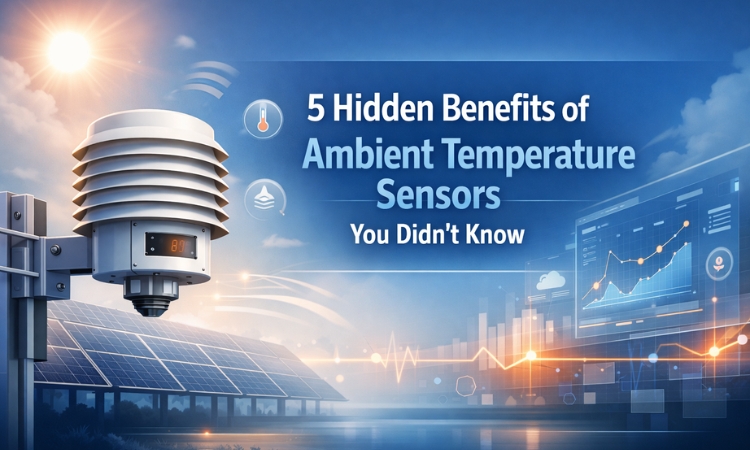

Temperature monitoring is often considered a basic requirement in industrial and environmental systems. Most people associate it with simple readings knowing whether conditions are hot or cold. However, in reality, temperature sensing plays a far more strategic role in optimizing performance, improving efficiency, and safeguarding critical operations.
Across industries such as solar energy, manufacturing, HVAC, and agriculture, even minor variations in surrounding temperature can significantly influence system output and reliability. This is where a well-designed ambient temperature sensor becomes essential not just as a measuring device, but as a tool for smarter decision-making.
The Growing Importance of Accurate Environmental Monitoring
Modern systems are increasingly driven by data. From energy optimization to predictive maintenance, accurate environmental inputs are critical for ensuring consistent performance. Temperature, being one of the most influential variables, directly impacts how machines operate, how efficiently energy is utilized, and how long equipment lasts.
Solutions developed by platforms like Power AMR are designed to address these real-world challenges by offering reliable, high-accuracy monitoring in demanding conditions. With the right sensing approach, temperature data becomes a valuable asset rather than just a recorded metric.
Improved System Efficiency Through Better Insights
One of the most overlooked advantages of temperature monitoring is its ability to enhance system efficiency. In applications such as solar power generation, ambient temperature has a direct impact on output performance. Higher temperatures can reduce efficiency, leading to lower energy generation.
By continuously tracking environmental conditions, operators can identify patterns, analyze performance fluctuations, and take corrective actions when necessary. This enables better optimization without requiring any physical changes to the system, resulting in improved overall productivity.
Early Detection of Potential System Failures
Temperature variations often serve as early indicators of underlying issues. A sudden rise in temperature may point to overheating components, poor ventilation, or excessive system load. Without proper monitoring, these issues can go unnoticed until they lead to costly failures.
A reliable ambient temperature sensor helps detect such anomalies at an early stage, allowing preventive action to be taken before damage occurs. This proactive approach reduces the risk of unexpected downtime, extends equipment lifespan, and minimizes maintenance costs.
Enhanced Accuracy in Data-Driven Operations
In data-driven environments, accuracy is critical. Temperature influences several operational parameters, and even slight deviations can lead to incorrect analysis and poor decision-making.
High-quality sensing solutions ensure consistent and precise measurements over time, enabling organizations to rely on their data with confidence. This is particularly important in industries where performance optimization and forecasting depend heavily on environmental inputs.
Advanced solutions offered by Power AMR are engineered to maintain stability and accuracy even in outdoor and industrial conditions, ensuring dependable performance across a wide range of applications.
Enabling Smart Automation and IoT Integration
The integration of temperature monitoring with smart systems and IoT platforms has transformed the way operations are managed. Real-time data allows systems to respond automatically to changing conditions, improving efficiency and reducing manual intervention.
Temperature inputs can be used to trigger alerts, adjust system behavior, or initiate safety protocols. This level of automation not only enhances operational control but also supports predictive maintenance strategies, where potential issues are identified and resolved before they escalate.
As industries continue to adopt intelligent monitoring systems, the role of temperature sensing becomes increasingly central to achieving seamless automation.
Long-Term Cost Optimization
While temperature sensors are often seen as a small component within a larger system, their impact on cost savings can be significant. By preventing equipment damage, improving efficiency, and reducing downtime, they contribute directly to long-term financial benefits.
In large-scale operations, even minor inefficiencies caused by temperature variations can accumulate into substantial losses over time. Continuous monitoring helps identify these inefficiencies and provides opportunities for optimization, ultimately leading to better resource utilization and reduced operational costs.
Choosing the Right Solution for Reliable Performance
The effectiveness of temperature monitoring depends largely on the quality of the sensor being used. In real-world environments, factors such as dust, humidity, and direct sunlight can affect performance and accuracy.
It is therefore important to select solutions that are designed for durability and precision. Features such as weather-resistant construction, high measurement accuracy, and stable long-term performance are essential for ensuring reliable operation.
Platforms like power amr offer solutions that are specifically built to withstand challenging conditions while delivering consistent and accurate results, making them suitable for a wide range of industrial and environmental applications.
Conclusion
Temperature monitoring is no longer just a basic requirement—it has evolved into a critical component of modern system optimization. From improving efficiency and enabling automation to preventing failures and reducing costs, its impact extends across multiple aspects of operations.
An ambient temperature sensor, when implemented effectively, provides more than just data. It delivers insights that support better decisions, enhance system reliability, and contribute to long-term performance improvement.
As industries continue to move towards smarter and more data-driven approaches, the importance of accurate and reliable temperature monitoring will only continue to grow.