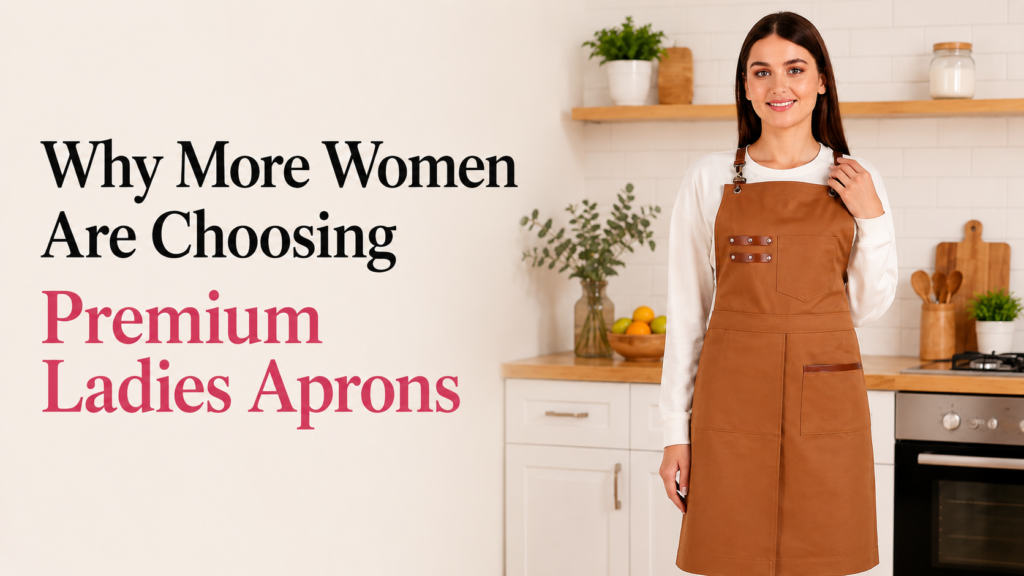

1. Introduction: Why Your Apron Choice Matters
Have you ever picked up a cheap apron, tied it around your waist, and realized ten minutes later that the neck strap is digging in, or worse, your shirt is already soaked? We’ve all been there. A good protective garment is like armor for your clothes, whether you’re whipping up a weekend dinner or working a busy night shift behind a bar.
The Shift from Basic Utility to Style and Function
Gone are the days when a simple piece of cloth tied with a flimsy string was enough. Today, whether you need a classic kitchen apron or something built for specialized trades, functionality meets fashion. Let’s dive into the ten essential features you need to check before pulling out your wallet.
2. Material and Fabric Durability
The material sets the foundation. If the fabric fails, the whole piece fails.
Cotton, Canvas, and Denim
Heavyweight cotton and canvas offer incredible breathability while holding off spills. Denim brings a rugged, modern vibe while taking a beating in high-heat environments.
Premium Leather Options for Heavy-Duty Work
For serious heat, sharp tools, or intense wear, synthetic fabrics just won’t cut it.
When to Choose a Leather Apron
A rich leather apron isn’t just about looking cool—though it definitely delivers on that front. It provides ultimate heat resistance and durability, making it ideal for woodworkers, grill masters, and artisans.
3. Fit and Adjustable Straps
Fit is everything. If you are constantly adjusting your neck strap, you lose focus on the task at hand.
Neck Straps vs. Cross-Back Designs
Traditional neck straps are quick to throw on, but they put all the weight directly on your neck. Cross-back straps distribute the weight evenly across your shoulders, which is a game-changer during long hours. Look for adjustable buckles or slider snaps so you can tailor the fit precisely.
4. Pocket Placement and Storage Capacity
What good is protective wear if it can’t hold your tools?
Utility Loops and Deep Pockets
Look for reinforced, double-stitched pockets. Chest pockets are great for pens and thermometers, while deep waist pockets hold towels, tongs, or notebooks. Dedicated towel rings or metal utility loops keep essential tools hanging right where you need them.
5. Comfort and Weight Distribution
Heavy fabrics like canvas and leather protect well, but they can feel heavy fast. Make sure padded shoulder straps or lightweight blend fabrics are available if you plan to wear your gear for eight hours straight.
6. Stain Resistance and Ease of Cleaning
Cooking oil, red wine, hair dye, or craft paint—spills happen. Check the care label! Machine-washable cotton blends make life easy. For leather or coated canvas, ensure you’re okay with spot-cleaning or applying special conditioners to maintain the material over time.
7. Purpose-Specific Features
Not all tasks demand the same design. Matching the feature set to your environment is critical.
The Everyday Kitchen Apron
Simple, machine-washable, and quick-drying fabrics work best for daily meal prep at home.
Professional Chef Apron for Men and Women
A high-performance chef apron for men or an ergonomic apron for women working in commercial kitchens needs heat resistance, deep utility pockets, and heavy-duty stitching that survives daily industrial laundering.
Specialized Gear: Bartender Apron and Salon Apron
-
Bartender Apron: Needs fluid-resistant materials, quick-access bottle opener loops, and slick pocket layouts.
-
Salon Apron: Must feature chemical-resistant, bleach-proof material that lets loose hair slide right off without getting trapped in the weave.
8. Coverage and Length
Do you need full bib coverage or just a waist coat?
Full Bib vs. Waist Style
Full bib designs protect your torso down to your knees—ideal for messy prep work or hair styling. Waist styles offer maximum mobility and ventilation, making them popular for servers and bartenders who move quickly around tight spaces.
9. Customization and Personalization
Want to elevate your brand or gift something thoughtful?
Stand Out with a Custom Apron or Personalised Apron
Adding custom embroidery or a custom leather patch turns functional workwear into a unique personal statement. A custom apron with a business logo builds professional team identity, while a personalised apron with a name or funny quote makes a perfect gift for the passion cook in your life.
10. Hardware and Stitching Quality
Never overlook the tiny details. Look for brass or stainless-steel grommets, heavy rivets at stress points (like top pocket corners), and thick nylon thread seams. Cheap plastic snaps and single-stitched seams will snap under stress after just a few weeks of real use.
Conclusion
Buying the right gear isn’t rocket science, but taking a moment to evaluate straps, pockets, material durability, and fit ensures you won’t regret your purchase. Whether you need a rugged leather piece for the grill, a specialized salon cover, or a simple personalized piece for Sunday baking, choosing the right features upfront saves you time, money, and ruined clothes down the road.
Frequently Asked Questions
Q1: Which material is best for everyday cooking at home?
A: Lightweight cotton or a cotton-polyester blend is ideal for everyday home cooking because it is comfortable, breathable, and easy to throw in the washing machine.
Q2: Why are cross-back straps better than traditional neck straps?
A: Cross-back straps distribute the weight evenly across your shoulders and back rather than pulling down on your neck, preventing strain during long periods of use.
Q3: How do I clean and maintain a leather option?
A: Never throw leather into a washing machine! Wipe it down with a damp cloth to remove dirt and apply a specialized leather conditioner occasionally to keep it soft and prevent cracking.
Q4: What makes a salon piece different from a kitchen piece?
A: Salon models are typically made from bleach-proof, chemical-resistant synthetic fabrics designed to repel hair strands and harsh chemical dyes, whereas kitchen models focus on absorbency and heat protection.
Q5: Is a custom embroidered option hard to wash?
A: Generally no, but it’s best to wash embroidered items inside out on a gentle cycle to protect the stitching from snagging on other items in the wash.