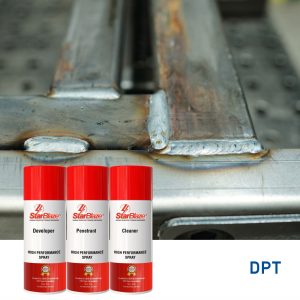

In today’s competitive industrial environment, maintaining product quality and safety standards is more important than ever. Manufacturing units, fabrication workshops, and engineering industries must ensure that every component meets strict inspection requirements before being approved for use. One of the most effective non-destructive testing methods for identifying surface defects is dye penetrant testing. A dpt kit is an essential tool that helps industries detect cracks, porosity, seams, and other surface discontinuities quickly and accurately.
Dye penetrant testing is widely appreciated for its simplicity and effectiveness. The process works by applying a penetrant liquid onto the surface of a non-porous material. This liquid seeps into any visible or microscopic surface cracks. After a dwell period, excess penetrant is cleaned from the surface, and a developer is applied. The developer draws out the trapped penetrant, making flaws clearly visible. A standard dpt kit includes cleaner, penetrant spray, and developer, providing everything required for a complete inspection procedure.
Why Surface Inspection Matters
Surface defects can significantly weaken the strength and durability of metal components. Cracks in welded joints, casting imperfections, or material fatigue can lead to equipment failure if left undetected. Using a dpt kit allows inspectors to identify these issues early in the production cycle, reducing the risk of costly breakdowns and operational downtime.
Industries such as oil and gas, construction, automotive, power plants, and heavy engineering depend on reliable inspection systems. Weld seams, pipelines, pressure vessels, storage tanks, and structural steel components all require detailed examination. Dye penetrant testing offers a cost-effective and highly sensitive solution for detecting surface-breaking flaws.
Key Benefits of Using a DPT Kit
A quality dpt kit provides several advantages that make it a preferred inspection method across industries:
-
High sensitivity for detecting fine cracks and defects
-
Quick and easy application process
-
Suitable for field and on-site inspections
-
Cost-effective compared to advanced testing methods
-
No damage to the test material
Since the process does not alter or harm the inspected component, it is ideal for routine quality checks and preventive maintenance programs. The portability of the kit ensures that inspections can be carried out even in remote project locations.
Applications Across Multiple Industries
Dye penetrant testing is suitable for inspecting stainless steel, aluminum, carbon steel, and other non-porous materials. A dependable dpt kit can be used for weld inspection, casting evaluation, forging analysis, and machinery part testing. It is particularly useful in fabrication units where weld integrity plays a crucial role in overall structural stability.
In the aerospace and automotive sectors, precision is critical. Even minor surface defects can compromise safety. Regular inspection using penetrant testing ensures compliance with safety regulations and quality benchmarks. In construction projects, it helps verify the strength of structural frameworks before installation.
Enhancing Safety and Compliance
Workplace safety is a top priority for industrial organizations. Equipment failure due to undetected cracks can lead to accidents and financial losses. By incorporating routine inspection procedures with a reliable dpt kit, companies can enhance safety measures and ensure regulatory compliance.
Non-destructive testing methods are widely accepted because they maintain the integrity of the material while providing accurate results. Proper training and adherence to inspection standards further improve reliability. The use of high-quality consumables ensures clear visibility of defects and consistent inspection outcomes.
Choosing the Right Inspection Solution
When selecting inspection equipment, it is important to consider product quality, ease of application, and compliance with industry standards. A professional-grade dpt kit should offer consistent spray patterns, quick drying time, and high defect visibility. Proper storage and handling of testing materials also contribute to accurate and repeatable results.
Investing in reliable inspection tools ultimately reduces maintenance costs, minimizes rework, and improves product credibility in the market.
Conclusion
Effective quality control is the backbone of successful industrial operations. Surface defect detection is a critical part of maintaining strength, safety, and long-term durability. By using a dependable dpt kit, industries can detect flaws early, prevent equipment failures, and maintain high performance standards. Whether applied in fabrication workshops or large-scale manufacturing plants, dye penetrant testing remains a practical, economical, and highly efficient inspection solution for modern industrial needs.